Hey there, small business owners! Let’s cut to the chase—if you’re running a landscaping company, a small recycling yard, a farm with tree debris piling up, or even a construction outfit that’s got leftover wood, branches, and yard waste, you know that a good tub grinder isn’t just a “nice-to-have”—it’s a money-maker. I’ve been in the tub grinder game as a supplier for years, talking to hundreds of small business owners just like you, and the question I get most is: “What’s the best tub grinder for my small operation?” No fluff, no overhyped big-brand garbage that’s way too much machine for what you need—let’s break this down like we’re hanging out at a job site, not a stuffy conference room. Tub Grinder
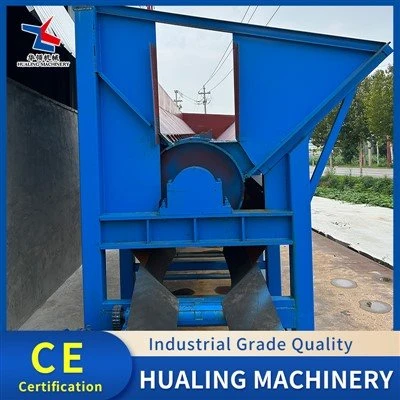
First off, let’s get one thing straight: small business doesn’t mean you need a tiny, flimsy grinder that breaks after 10 loads. Nor does it mean you should drop $80k on a unit that’s bigger than your truck and requires a dedicated driver (that’s a waste of cash if you’re only grinding part-time or have a ¼-acre debris pile at most). The best tub grinder for small business boils down to three non-negotiables: it’s sized for your daily debris volume, it’s low on maintenance headaches, and it doesn’t eat your profit margins on fuel and repairs. I’ve seen guys buy the flashy 40-horsepower model thinking it’s “just right,” then get stuck because it can’t handle a 10-inch oak branch without stalling. And I’ve seen others grab a beat-up used grinder off Facebook Marketplace that dies every other week, costing them more in downtime than a new unit would’ve.
Let’s talk about sizing first, because that’s where most people mess up. If you’re grinding less than 5 cubic yards of debris a day—like a landscaper doing three residential yards a week, or a farm with a monthly tree trim—you don’t need a grinder with a 60-inch tub. Wait, hold on, what’s a tub, anyway? For the uninitiated, the tub is that big open hopper on top where you feed debris in. Think of it like the feeding tray on a blender—bigger tub means you can toss more in at once, fewer loads, but more weight to move. For small business, the sweet spot is a tub that’s 42 to 52 inches wide. Let’s do the math: a 42-inch tub is perfect for that occasional big branch (up to 8 inches thick) but small enough that you don’t need a full-size skid steer to load it—you can use your compact utility tractor or even a regular pickup with a small trailer, which is a huge win. I recently had a customer who runs a small tree service in Ohio; he tried a 56-inch tub grinder first, and he said he was wasting half his week just moving the unit around because it was too heavy for his work trucks. Switched to a 46-inch unit, and now he’s doing twice as many jobs with half the transport time. That’s the kind of small win that adds up to big money for you.
Next up: power. Again, don’t overdo it. You’re not grinding stumps or entire logs every day—most small business debris is yard waste, small branches, pallets, and maybe some light construction wood. A gas-powered unit might sound cheap at first, but let’s be real: gas is expensive, and if you’re running the grinder for more than 3 hours a week, you’re gonna end up paying more in fuel than you would for a diesel. Diesel is the way to go for small operations because it’s more efficient, has better torque (that means it doesn’t stall when you shove a big branch in), and the engines last way longer. I know some guys will say “but electric is cleaner,” but electric tub grinders are usually only good for indoor use (like lumber yards) and they require a permanent power hook-up—useless if you’re working at a remote job site or in someone’s backyard. So skip the electric for small business, unless you’ve got a fixed spot to grind 8 hours a day every single day.
Wait, but don’t just look at horsepower numbers like they’re a trophy. A lot of brands will brag about 50 HP, but if that’s a gas engine with bad torque, it’s gonna bog down every time you feed a thick piece of wood. Look for “net horsepower” vs. “gross horsepower”—gross is the number the manufacturer puts on the box, but net is the actual power that gets to the grinder head. That’s the real number that matters. For our small business sweet spot, you want a net diesel HP of between 25 and 40. Anything over 40 and you’re wasting fuel and paying more for the unit. I had a guy who runs a small recycling side gig—he was using a 50 HP gas grinder, and he told me he was spending $150 a week on fuel, plus $200 a month on new blades because the underpowered engine was making the blades slip and wear out fast. Switched to a 32 HP diesel unit, and now he spends $60 a week on fuel, and his blades last three times longer. That’s an extra $1,200 a year in his pocket—nothing to sneeze at.
Now, let’s get to the part that keeps my customers up at night: maintenance. Nothing kills a small business faster than a grinder that breaks down mid-job, leaving you with a pile of debris and an unhappy customer. So what makes a tub grinder low-maintenance? First, easy blade changes. You don’t want to be a mechanic for an hour every time you need to swap a blade—look for a grinder that lets you access the blades from the side, with just a wrench, no special tools. A lot of big-brand grinders make you lift the entire tub or disassemble the feed chute to change blades, which is a huge waste of time. Second, durable parts that are easy to find. If you can order a replacement bearing or a filter from your local hardware store, that’s way better than waiting three days for a part to ship from the manufacturer, and way cheaper than paying a mechanic $100 an hour to do it. Third, protection features. A good tub grinder has a metal grate at the bottom of the tub that keeps big, unground chunks from falling through, but it also prevents metal (like nails from pallets) from getting into the rotor. Wait, metal? Yeah, pallets almost always have hidden nails, and if a nail hits your rotor, that’s a $1,000 repair job right there. Look for a grinder with a magnetic guard, too— it catches small metal bits before they get to the blades. I can’t tell you how many times a customer has told me they skipped a magnetic guard and had to replace their rotor, which cost them more than the whole grinder’s worth in some cases.
Wait, and let’s not forget portability. If you’re a small business, you’re probably moving your grinder between job sites, or storing it in a small garage or shed. A tub grinder that weighs more than 3,000 pounds is gonna be a pain to tow—you need a heavy-duty truck, a good trailer, and you might even need a special license in some states. The sweet spot for small business is a grinder that weighs between 1,800 and 2,500 pounds. That’s light enough to tow with a ½-ton pickup (like a Ford F-150 or a Chevy Silverado, which most small business owners already own) and doesn’t require a CDL. A lot of my customers love this because they don’t have to rent a trailer or pay for a second truck just to move the grinder. Plus, if you’re short on storage, a smaller grinder fits in a standard garage, which is way better than leaving it outside (rust is a killer for equipment, especially in areas with snow or high humidity).
Now, let’s talk about my customers’ biggest regret: buying too much machine, or too little. I had a customer last year who runs a small farm—he tried to save money by buying a used 10-year-old tub grinder off Craigslist for $5,000. It looked good, but it was a 70-inch tub with a 60 HP diesel engine. Turned out it was way too big for his needs—he only had a few trees to trim a month, so he was spending half the time starting it up and half the time waiting for it to warm up, and when he did grind, he was burning through fuel way faster than he needed to. Also, it was heavy—he had to rent a trailer to move it, which cost him $100 a trip, and it didn’t fit in his barn, so it rusted out the first winter. He ended up selling it for $3,000 and buying a 46-inch, 32 HP diesel grinder from me for $12,000 (wait, before you gasp—used that big was only worth $5k, but the new one pays for itself in less than two years in fuel and downtime savings). Now he uses it for tree trimmings, small farm debris, and even grinding corn stalks for his livestock. No more wasted time or money.
Another customer: a small landscaping company in Texas, doing residential yards and small commercial properties. He bought a tiny 20 HP gas grinder for $3,000, thinking it was perfect for small yards. But after a month, he was stuck every time he tried to grind a 5-inch branch—he’d stall the engine, and it would take 10 minutes to restart, leaving his crew standing around. He also had to change blades every week because the small blades got dull fast. He upgraded to a 38 HP diesel, 52-inch tub grinder, and now he can grind a whole yard’s worth of debris in an hour, no stalls, blades last a month, and he even takes on extra jobs grinding debris for local homeowners who don’t have a grinder—extra revenue he didn’t have before.
So, to wrap this up, the best tub grinder for small business isn’t the biggest, fanciest, most expensive one on the market. It’s the one that matches your daily workload, is sized for your existing equipment (your truck, your storage), runs on diesel for efficiency, is low on maintenance, and doesn’t require a second truck or a CDL to move. Let me spell that out real quick: tub size between 42 and 52 inches, net diesel HP between 25 and 40, weight under 2,500 pounds, easy blade access, magnetic guard for metal, and portable enough for your existing pickup.
Now, I get it—you’ve got questions. Is there a specific model that fits this? What if I grind a little more than that some weeks? How do I know if it’s gonna be reliable? The best part is, as a tub grinder supplier, I don’t push every model on the shelf. I work with small business owners to figure out exactly what you need, not what the sales guy is pushing that month. I’ve been in the field with these grinders, I’ve talked to hundreds of users, and I know which ones hold up and which ones break after 10 loads.
If you’re tired of wasting money on fuel, downtime, or a grinder that’s too much (or too little) for your small operation, hit me up to talk through your specific needs. We can chat about how much debris you grind a week, how you plan to move the grinder, what your budget is, and find the unit that actually makes your work easier, not harder. No pressure, no sales pitch—just real talk for small business owners.
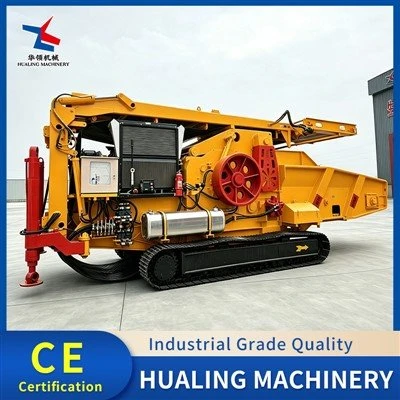
Don’t let a bad grinder hold you back. Let’s get you set up with something that works as hard as you do.
Wood Chipper Machine References:
- National Agri-Marketing Association. (2022). Small Farm Equipment Guide: Tub Grinder Best Practices for Yard and Agricultural Debris.
- Construction Equipment Association. (2023). Portable Grinders for Small Commercial Operations: Sizing and Efficiency Recommendations.
- Waste360. (2022). Small-Scale Recycling Equipment: Balancing Capacity, Cost, and Maintenance for Independent Operators.
- Outdoor Power Equipment Institute. (2023). Diesel vs. Gasoline-Powered Equipment for Part-Time Small Business Operations.
Shandong Hualing Machine Manufacturing Co., Ltd.
As one of the most professional tub grinder manufacturers and suppliers in China, we also support customized service with low price. Please rest assured to buy discount tub grinder in stock here from our factory. If you have any enquiry about quotation, please feel free to email us.
Address: Industrial Park, Dagong Village, Changshan Town, Zouping City, Shandong Province
E-mail: hualing@sdhualing.com
WebSite: https://www.hualingmachine.com/
