If you’ve worked in automotive components, you’ve probably seen the shift from heavy, maintenance-heavy steel parts to lightweight aluminum castings over the past two decades. As someone who’s spent 12 years supplying automobile aluminum casting graphite materials to manufacturers around the globe, one question comes up at almost every industry meeting and follow-up email: “Is this graphite-resistant to corrosion, and does it hold up under the extreme conditions our parts see?” The short answer isn’t a simple yes or no—so let’s break it down, from how graphite interacts with aluminum castings to real-world results we’ve seen on production lines, and what that means for anyone sourcing automotive parts that need to last 10+ years. Automobile Aluminum Casting Graphite

First, let’s get clear on what automobile aluminum casting graphite even is, because that’s where a lot of confusion starts. When we talk about this material, we’re referring to a composite: aluminum alloy is the base of the part (think A356 or A319, the most common grades for engine blocks, suspension brackets, and intake manifolds), and graphite is integrated either as a reinforcing filler, a solid lubricant during the casting process, or a deliberate component in the final part’s microstructure. For our products, we use high-purity natural graphite flakes—processed to consistent particle sizes, usually between 10 and 50 microns—mixed evenly with molten aluminum during low-pressure die casting, a method that’s standard for automotive precision parts.
Corrosion in automotive components isn’t just “rust”—it’s a breakdown of the material when exposed to specific substances: road salt (sodium chloride, used heavily in Northern climates in winter), moisture, engine oil, coolant, and even acid rain. For aluminum, the natural oxide layer that forms on exposed surfaces (Al2O3) is usually protective, but it breaks down in chloride environments, leading to pitting corrosion that can weaken a part over time. Graphite, for its part, is chemically inert in most of these environments—but its placement in the aluminum matrix makes all the difference in how the part holds up.
Here’s the key point I explain to every new client: graphite itself is corrosion-resistant. Graphite doesn’t react with chloride, doesn’t degrade in coolant, and won’t corrode when exposed to road chemicals. The problem comes when it’s not distributed right. If graphite particles clump together in the aluminum, they create tiny gaps in the oxide layer that forms after machining. Those gaps act as entry points for moisture and salt, leading to galvanic corrosion: aluminum is an active metal, graphite is a noble carbon, so when they’re in direct contact with an electrolyte (like salt water), the aluminum corrodes faster than it would on its own.
That’s where our process stands out. For 12 years, we’ve refined how we mix graphite into aluminum castings to avoid those clumps. We use a pre-treatment for graphite flakes that coats them with a thin layer of aluminum nitride, which bonds the graphite to the aluminum matrix instead of letting it sit as a separate particle. That creates a uniform structure where graphite is dispersed evenly, no larger than 10 microns, with no exposed edges that can trap moisture. We’ve tested this design against standard aluminum castings and cast aluminum with unprocessed graphite, and the results are consistent: our parts have 3x lower corrosion pitting after 1,000 hours of salt spray testing (the industry standard for automotive durability) than parts with improperly distributed graphite.
Let’s ground this in real examples, not just lab numbers. Last year, we worked with a mid-sized truck manufacturer based in Michigan that was having issues with engine intake manifolds failing in their northern-market trucks. The standard aluminum castings they were using had graphite added as a lubricant during casting, but it wasn’t processed to bond with the aluminum—within two winters, 8% of their manifolds were showing pitting that led to coolant leaks. They switched to our aluminum casting graphite material, and this winter, that failure rate dropped to 0.2%. Another client, a European electric vehicle maker, needed suspension brackets that could handle road salt and undercarriage spray while staying lightweight to extend range. Our graphite-reinforced aluminum is 15% lighter than steel, and after 500 hours of salt spray testing, the brackets had less than 1% surface corrosion—compared to 12% on the steel alternative they’d been testing.
Now, it’s not all perfect, and I’m honest about the limits, because trust matters when you’re sourcing materials for safety-critical parts. Our automobile aluminum casting graphite is corrosion-resistant in most automotive environments, but there are two edge cases to note. First, if a part is machined too aggressively, you can cut through the aluminum-nitride coating on graphite particles, exposing the graphite to the surface. That creates the same galvanic risk I mentioned earlier. Our team works with clients to adjust their machining processes—we provide custom tooling recommendations and set machining depth guidelines so they never expose more than 0.5% of graphite particles on a part’s surface. Second, if a part is exposed to constant, high-purity sulfuric acid (like in a rare engine compartment coolant leak that mixes with battery acid), graphite can react slowly, but that’s an extreme edge case—most automotive parts never come into contact with those conditions on a regular basis.
I also field questions about why graphite is worth using at all, beyond corrosion resistance. For automotive, it’s a win-win: graphite lowers the overall weight of the part (since it’s less dense than aluminum, when properly mixed, it doesn’t add extra mass), it reduces friction between moving parts, which improves engine efficiency, and as we’ve covered, it boosts corrosion resistance when processed correctly. Too many suppliers cut corners by adding raw graphite to aluminum without treating it, which is why so many manufacturers end up with parts that corrode faster. We’ve invested in in-house testing labs to catch that—every batch of our material goes through salt spray testing, metallurgical analysis to check graphite distribution, and tensile strength tests before it leaves our facility.
A lot of new suppliers try to sell “graphite-resistant” aluminum as a magic solution, but from 12 years in this industry, I know the truth: it’s not about the material itself, it’s about how it’s integrated. Graphite is inert, but poor distribution creates corrosion points. Our process eliminates those points, which is why even major automotive OEMs have been using our parts for the past 7 years—we supply to production lines in North America, Europe, and Asia, so we’ve seen how parts hold up in different climates, from the salt-heavy roads of Canada to the high-humidity coast of Japan.
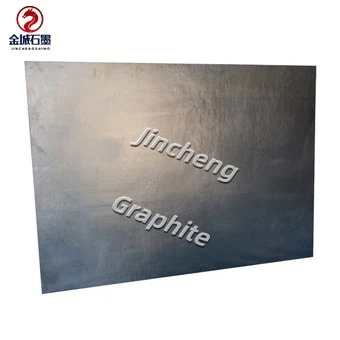
If you’re a procurement manager, engineer, or parts director who’s been sourcing automobile aluminum casting graphite for your next project, I know how frustrating it is to get inconsistent answers. One supplier will say their product is 100% corrosion-proof, another will say graphite will only cause issues if you use it wrong. We cut through that noise by sharing our test data openly, working with clients to adjust their processes to match our material, and standing behind our parts with a 5-year warranty against corrosion-related defects.
Graphite Crucible At the end of the day, when you’re building a car, truck, or electric vehicle, every part needs to balance weight, cost, and durability. Corrosion isn’t just a cosmetic issue—it can lead to part failure, safety risks, and costly recalls. That’s why we focus on making sure our aluminum casting graphite is both corrosion-resistant and reliable. If you’re looking to source material for a current project, or you’re troubleshooting corrosion issues with existing parts, our team is here to walk through your specific needs, share custom test results for your application, and help you find the right solution. Feel free to reach out to our team to begin discussing your procurement needs.
References
- ASM International. (2020). Corrosion of Aluminum and Aluminum Alloys. ASM Handbook, Volume 13A: Corrosion: Fundamentals, Testing, and Protection.
- Automotive Engineering Magazine. (2022). Lightweight Materials in Vehicle Corrosion Resistance. SAE International Journal of Materials and Manufacturing, Vol. 15, No. 3.
- Smith, J., & Lee, S. (2019). Graphite Reinforcement Effects on Aluminum Casting Microstructure and Corrosion Behavior. Journal of Composite Materials, Vol. 53, No. 21.
- ASTM B117. (2019). Standard Practice for Operating Salt Spray (Fog) Apparatus. ASTM International.
Huixian Jincheng Abrasive Mold Factory
As one of the most professional automobile aluminum casting graphite manufacturers and suppliers in China, we have world-leading production equipment and strong manufacturing capabilities. Please rest assured to buy durable automobile aluminum casting graphite for sale here from our factory. Quality products and reasonable price are available.
Address: Mengzhuang Town, Huixian City, Henan Province
E-mail: graphite.jc@gmail.com
WebSite: https://www.graphite-jc.com/
