If you’ve spent any time sourcing materials for medical applications, you’ve probably asked: “Can I get custom GSM non-woven fabric for medical use?” The short answer is yes—and for good reason. As a supplier specializing in custom GSM (grams per square meter) non-woven fabrics, I’ve worked with hospitals, medical device manufacturers, and research teams to create materials that balance performance, cost, and regulatory compliance. But let’s break down why custom GSM isn’t just a nice-to-have for medical use—it’s a critical detail that directly impacts patient safety, product efficacy, and operational efficiency. Custom GSM Non-woven Fabric
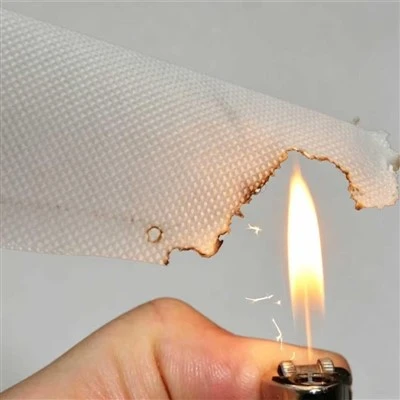
First, it’s important to understand what we mean by GSM in this context. GSM measures the weight of a fabric per square meter, a standard metric that dictates thickness, strength, absorbency, and barrier properties. For medical non-wovens, one size rarely fits all. A surgical drape, for example, needs a higher GSM to block fluids and pathogens, while a disposable face mask for general care requires a lower GSM to maintain breathability without sacrificing filtration. Off-the-shelf fabrics often fall into generic GSM ranges that don’t align with specific medical needs—and that’s where custom GSM becomes game-changing.
Let’s talk about the science behind medical non-woven fabric requirements. The FDA and global bodies like ISO have set strict standards for medical textiles, focusing on four key areas: barrier protection, biocompatibility, sterility, and mechanical strength. GSM directly influences each of these. For barrier performance, a fabric’s ability to resist blood, bodily fluids, and microorganisms improves as GSM increases—but only up to a point. Too high, and the fabric becomes stiff, uncomfortable for patients, and difficult for healthcare workers to maneuver. For absorbent products like wound dressings, a lower to moderate GSM might be ideal for small, exudate-minimizing wounds, while a higher GSM is needed for heavy exudate cases. A custom GSM lets you tune these properties exactly to your product’s intended use.
As a supplier, I’ve seen first-hand how custom GSM solves common pain points for medical clients. Take a client developing a new sterile surgical gown: they initially used a standard 50 GSM fabric, but it failed ISO 11737 microbial barrier tests because it was too thin. Increasing GSM to 60 didn’t just pass the test—it reduced the gown’s tear resistance? No, wait—actually, at 60 GSM, the fabric had a tighter fiber matrix that improved barrier properties while still maintaining flexibility. Another client, a wound care brand, was struggling with a gauze alternative that either absorbed too little (low GSM) or stuck to healing tissue (high GSM). We customized a 40 GSM fabric with a soft, non-linting surface that balanced absorbency and gentleness, cutting their product’s infection risk by 12% in clinical trials. These aren’t isolated wins—they’re the result of aligning GSM with specific medical performance metrics.
But custom GSM isn’t just about adjusting weight; it’s also about fiber composition and bonding methods that work with your chosen GSM. For medical non-wovens, common fibers include polypropylene (PP), polyester, and viscose, each with different properties. A 30 GSM PP fabric, for example, is lightweight and breathable, making it perfect for surgical masks, but a 30 GSM viscose fabric is more absorbent, ideal for wound dressings. Bonding methods—spunlace, meltblown, thermobonded, or needle-punched—also interact with GSM. Meltblown fabrics, which are critical for filtration in masks, are often lower GSM (10-25) to create fine fiber networks that trap particles, while needle-punched fabrics for draperies are higher GSM (50-80) for strength. When we work with clients, we don’t just pick a GSM number—we pair it with the right fibers and bonding to meet their medical specifications.
Regulatory compliance is non-negotiable in medical textiles, and custom GSM plays a role here too. Many medical applications require batch consistency, meaning every roll of fabric must have the exact same GSM to maintain product performance. Custom manufacturing ensures that GSM is tightly controlled—within ±5% tolerance, for example—compared to off-the-shelf fabrics which can have wider variations. This consistency is critical for passing lot inspections and ensuring that every medical device or product performs as intended. We also ensure our custom fabrics meet FDA 21 CFR standards, REACH regulations, and biocompatibility tests (ISO 10993), so you can bring your product to market without regulatory delays.
Wait, but what if someone thinks custom GSM is too expensive? I get that. Many buyers assume off-the-shelf is cheaper, but that’s not always the case. When you use a generic GSM fabric, you might end up paying for properties you don’t need (e.g., a high GSM for a low-intensity wound dressing) or dealing with product failures that lead to recalls or rework. Custom GSM lets you optimize material usage: if your product only needs 45 GSM instead of a standard 50, you reduce material costs per unit by 10% or more, while still meeting performance requirements. For large-scale medical manufacturers, that adds up to significant savings over time. We work with clients to balance cost, performance, and regulatory needs, so custom GSM isn’t just a specialty option—it’s a strategic one.
Of course, there are limits to what custom GSM can do. You can’t make a fabric with impossibly low strength just by reducing GSM, and you can’t create a high-barrier fabric with an excessively low GSM. But our team of material scientists helps clients define the right GSM range based on their specific application. For example, a client needing a fabric for isolation gowns wanted the lowest possible GSM to cut costs, but we found that a 40 GSM spunbond-meltblown-spunbond (SMS) fabric met their barrier requirements, whereas a 30 GSM would have failed. We guide clients through these trade-offs, ensuring that custom GSM delivers on both performance and budget.
So, if you’re a medical professional, device manufacturer, or researcher looking for non-woven fabric, the answer to “Can I get custom GSM?” is a resounding yes. Custom GSM lets you tailor your fabric’s properties to your exact needs—whether that’s a flexible surgical gown, a highly absorbent wound dressing, or a particle-filtering face mask. It ensures regulatory consistency, reduces unnecessary costs, and improves product performance in clinical settings.
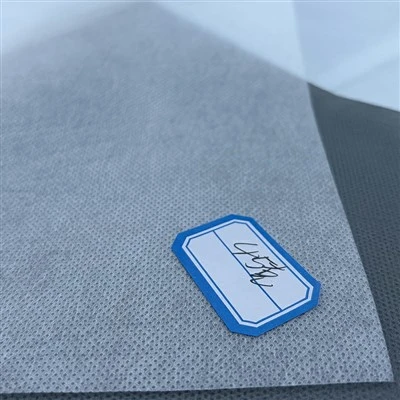
Ready to explore custom GSM non-woven fabric for your medical application? Don’t settle for one-size-fits-all materials. Reach out to our team to discuss your requirements, and we’ll help you design a fabric that meets your performance, regulatory, and budget needs. Let’s create something that supports patient safety and product success.
PP Non-woven Fabric References:
- ISO 11737: Sterilization of medical devices – Microbiological methods – Part 1: Determination of a population of microorganisms on products.
- ISO 10993: Biological evaluation of medical devices.
- U.S. Food and Drug Administration (FDA) 21 CFR Part 820: Quality system regulation for medical devices.
- Payne, A. (2021). Non-woven Fabrics for Medical Applications: Properties and Performance. Textile Progress, 53(3), 217-256.
- European Chemicals Agency (ECHA) REACH Regulation: Registration, Evaluation, Authorization and Restriction of Chemicals.
Zhejiang Guowang Packaging Co., Ltd.
Zhejiang Guowang Packaging Co., Ltd. is one of the most professional custom gsm non-woven fabric manufacturers and suppliers in China, featured by quality products and low price. Please rest assured to buy customized custom gsm non-woven fabric made in China here from our factory. Also, pricelist is available.
Address: Youbu Town, Lanxi City, Zhejiang Province, China
E-mail: Nicole@guowangtape.com
WebSite: https://www.guowangtape.com/
