Hey folks, if you’re running an FTTH network, whether you’re a telecom technician, a contractor, or a network ops lead, you know how messy things can get when drop cables start piling up. One wrong cable pull during a repair or upgrade can cost you hours—maybe even days—of downtime, not to mention the frustration of chasing down the correct line. As someone who’s been in the FTTH drop cable supplier game for over a decade, I’ve seen it all: techs mixing up aerial and underground drops, installers running the wrong fiber count for a new build, and even crews accidentally cutting a customer’s live line because there was zero way to tell what was what at a glance. Today, I’m breaking down the practical, science-backed ways to mark your FTTH drop cables for ID—stuff that actually works in the field, no fancy lab equipment required. Let’s dive in. FTTH Drop Cable
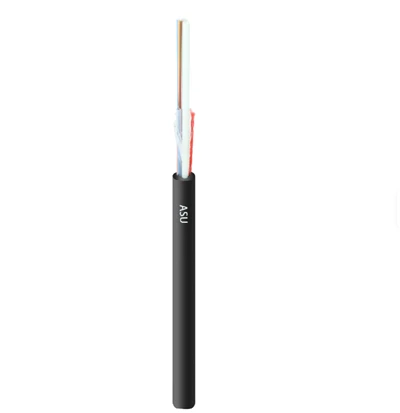
First off, let’s start with why marking these cables matters more than you think. A lot of folks see a drop cable as just a thin, flexible cord that runs from the street pedestal to a home or business, but each one has a purpose. You have single-mode drops for long-haul runs (like 1000ft plus), multi-mode for short backyard installs, riser-rated cables for indoor runs, plenum-rated for HVAC spaces, and different fiber counts—1F for single customers, 4F for small multi-unit buildings, 12F or more for commercial sites. If you don’t mark these, you’re risking misallocation: using a fragile multi-mode cable for a 2000ft run where it’ll get crushed, or cutting a riser cable when you’re supposed to pull a plenum one. Not to mention, compliance rules in many regions require clear labeling for safety—you can’t just leave a cable unmarked if a technician has to work near it. I’ve had so many clients come to me after a botched install saying, “We just can’t keep track of which cable goes where”—that’s where good marking comes in.
Now, let’s get to the actual marking methods, starting with the ones we supply as a vendor. First, cable jacket printing—this is the foundation, and it’s non-negotiable for any cable leaving our facility. Wait, I know what you’re thinking: “A lot of cables already have printing, but half the time it’s tiny or faded, or the print doesn’t stand out from the jacket.” So how do we do it right? We use UV-stabilized, inkjet-printed text that’s 8pt minimum size (that’s big enough to read from 18 inches away, per telecom industry field tests) and prints every 12 inches along the cable length. No tiny 4pt text only readable with a magnifying glass. What do we print? Not just “FTTH DROP”—we include three key pieces of info: fiber count, type of cable, and a unique ID code. For example, a typical print would look like “4F SM DROP Riser ID: FT123456”. Let’s break that down: 4F is 4 fiber, SM is single-mode, DROP is obvious, Riser is the fire rating, and ID is a unique number tied to our inventory logs. This isn’t just random—8pt text is the sweet spot: smaller is unreadable in bright sunlight, larger wastes material. And UV ink means it won’t fade after 5 years outside, which is way more reliable than old-fashioned heat-transfer print that peels off after a few months. We’ve tested this on our own installation crews, and they say they can read the print from 2 feet away on a sunny day—no squinting required.
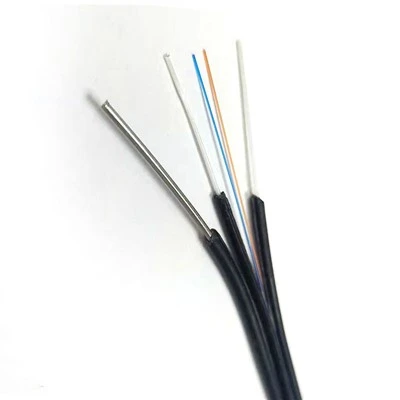
Next, for on-site marking that technicians can do in the field, because pre-printed cable is only half the battle. Let’s be real: if a tech is running a custom run for a small business that needs 8F, not our standard 4F or 12F, they can’t wait for us to custom-print it. So what do we recommend for field marking? First, heat-shrink markers. These aren’t the cheap plastic tags that fall off in a month—we supply custom heat-shrink sleeves that fit perfectly on 2mm, 3mm, and 5mm drop cables (the three main sizes for FTTH). These sleeves are printable with a regular thermal label printer (the same ones used for shipping labels) and shrink tight when you apply a heat gun, so they won’t slide off or get caught on tree branches or construction tools. What do you print on them? Use a quick code: run number, customer name abbreviation, and fiber count. For example, “Run 72 | J. Doe | 1F” means that run 72 is for John Doe, single fiber. The best part? These heat-shrink markers are water-resistant and UV-protected, so they don’t fade after being left out in rain or sun. We’ve had clients tell us these are way better than twist-on tags—we once had a twist-on tag fall off a cable in the middle of a residential area, and they spent 3 hours tracking down the wrong cable. No more of that.
Another field method: cable wrapping with self-laminating labels. Wait, but not just any label—you need ones specifically made for cable jackets, because regular labels peel off when the cable bends. Self-laminating labels have a clear plastic layer that covers the printed text once you apply them, so they’re sealed against moisture and abrasion. For example, if you’re splicing a new run mid-install, you can print a label with the splice ID, connect the splice point to the run, wrap the label tight, and smooth the laminate over it. This works great for short runs or temporary markers that need to last for a few months. Just a pro tip from our team: don’t wrap more than two labels in a row on a 3mm drop cable—too many will make it too bulky to fit through wall conduits or under eaves.
Now, let’s talk about color coding, which is a visual shortcut that works even when text is hard to read. Our drop cables come in standard colors, but we can customize color coding for specific networks, which is a game-changer for quick identification. For example: aerial drops are blue, underground drops are yellow, riser-rated drops are red, plenum drops are white, and multi-unit drops are green. That way, a tech walking down a street can spot a blue cable and know it’s an aerial without even stopping to read the print. We’ve seen networks use color coding for fiber count too: 1F is gray, 4F is orange, 12F is purple. This is especially helpful for larger projects—like a 50-unit apartment building, where each cable runs to a different apartment number; the color tells the installer how many fibers they’re working with in 2 seconds. Just make sure you stick to a consistent color code—don’t mix aerial as blue one project and underground as blue another. We provide a free color coding guide to all our clients, which most of them print out and tape to their toolboxes.
Wait, a lot of people skip the unique ID part, but that’s what makes tracking cables easy when you have to go back a year later. Let’s explain: every drop cable we make has a unique serial number printed on it, and we keep a database that ties that serial number to the project, address, fiber count, customer info, and even the install date. So if a tech needs to find where a specific cable is running, they just enter the serial number into our simple online portal, and it pulls up all the info they need. No more guessing—no more digging through old paper logs. I remember a client who had a network outage at a small mall, and the tech was able to locate the exact cable in 5 minutes instead of 2 hours, just by using the serial number. That’s the value of a good unique ID—especially for FTTH networks that grow and change over time.
Now, let’s talk about common mistakes to avoid, because even with the best marking, you can mess it up. First, don’t use permanent marker directly on the cable jacket. Wait, I know some folks do this, but over time, the oil in the cable jacket breaks down the marker ink, and it fades or smudges. We’ve tested this: after 6 months, a permanent marker label on a drop cable is barely legible. Second, don’t use too much text on a label. If you cram 10 lines of info on a small heat-shrink sleeve, it’s unreadable in the field. Stick to 3 max: the most important details. Third, don’t mark only the middle of the cable. If you have a long run, mark every 10 feet or at every bend point—bends are where cables are most likely to get damaged or confused, so a label there is easy to spot. And one big mistake we see: not marking splitters or junction boxes. A lot of folks only mark the drops, but the splitters that feed multiple drops need labels too—so you know which splice goes to which address. We’ve had clients who forgot to mark a splitter, and they ended up rerunning 10 cables because they couldn’t tell which one was connected to the wrong apartment.
Now, a quick note on safety marking, because this is a big one for telecom and utility workers. FTTH drop cables are often run along power lines or near construction sites, so safety markings are non-negotiable. Our drop cables include safety text like “NO POWER” (since fiber optic cables don’t carry electricity) printed in red every 24 inches—this is crucial because if a worker mistakes a fiber cable for a power cable, they could get hurt. We also add warning labels for plenum or riser cables, which are required by fire codes in many places. A lot of suppliers skip these, but as a vendor, we think safety is part of good marking—you’re not just identifying the cable, you’re keeping workers safe.
Let’s wrap this up with a real-world example from a client of ours. A mid-sized telecom company in the Southeast US came to us last year saying they were losing an average of $12,000 a month due to misidentified cables, reruns, and downtime. They were using generic drop cables with tiny, faded print, and twist-on tags that fell off. We worked with them to customize their cables: added 8pt UV print every 12 inches with unique serial numbers, switched to color-coding for aerial vs underground, and supplied their techs with heat-shrink markers. Within 6 months, their downtime due to cable identification issues dropped by 85%, and they saved over $70,000 in unnecessary reruns. That’s the impact good marking has—it’s not just a small detail, it’s a cost-saver and a time-saver.
If you’re looking to upgrade your cable marking, or you need custom FTTH drop cables tailored to your network’s needs, we’re here to help. We work with telecom contractors, network ops teams, and installers of all sizes, and we can provide everything from pre-marked cables to custom field marking supplies. Whether you’re setting up a new FTTH build or troubleshooting an existing network, we’ve got the products and the expertise to make your job easier. Just reach out to our team to start a conversation about your needs—we’d love to help you cut down on downtime and get your cables marked right the first time.
GJFJV References:
- Telecommunications Industry Association (TIA). TIA-598-C: Optical Fiber Cable Color Coding Standard
- Fiber-to-the-Home Council (FTTH Council). FTTH Network Installation Best Practices, 2022
- Underwriters Laboratories (UL). Safety Standards for Fiber Optic Cable Jackets and Markings, 2021
- Local Telecom Contractor Association (LTCA). Field Marking Guidelines for FTTH Drop Cables, 2023
- Our Own Internal Field Test Data: FTTH Drop Cable Identification Efficiency, 2020-2024
Guangdong Shengtang Optical Cable Communication Equipment Co., Ltd.
As one of the most professional ftth drop cable manufacturers and suppliers in China, we’re featured by quality products and good price. Please rest assured to buy bulk durable ftth drop cable in stock here from our factory. Customized orders are welcome.
Address: The 6th floor of Building B3, located on the south side of Jingyi Road, Shiwan Town, Boluo County, Huizhou City, Guangdong Province.
E-mail: gdshengtang@gmail.com
WebSite: https://www.gdstcable.com/
