As a ceramic honeycomb supplier, I’ve spent over a decade standing beside quality control teams, fielding calls from frustrated buyers who received honeycombs that cracked mid-install or underperformed in catalytic converters, diesel particulate filters, or industrial heat exchangers. Too often, new suppliers cut corners on testing, and by the time their product reaches a customer’s site, it’s too late to fix the issue. Quality isn’t just a buzzword for me—it’s the reason my clients come back, and the reason my team still unpacks every pallet before it ships, even when orders are backlogged. If you’re new to sourcing ceramic honeycombs, here’s how we test quality at my facility, and what to look for to avoid costly mistakes. Ceramic Honeycomb
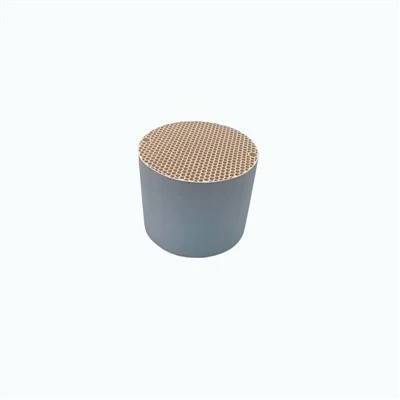
First, let’s start with the most fundamental test: geometric consistency. A ceramic honeycomb’s core job is to channel fluid (exhaust, air, chemicals) through hundreds or thousands of tiny parallel channels, so any irregularity here breaks flow, reduces efficiency, and creates hot spots that cause cracks. We test this two ways. The first is a manual spot check for cell density and wall thickness, but we don’t stop there. Every batch gets a sample scanned with a high-resolution laser micrometer that maps every cross-section along the honeycomb’s length. For cordierite honeycombs, which we use most often for emission control, we target a cell density of 400 cells per square inch (cpsi) for light-duty catalytic converters and 200 cpsi for heavy-duty diesel filters. If walls are thinner than 0.002 inches, they’ll warp during sintering; if thicker, backpressure spikes 15-20%—a death sentence for engine fuel economy. Last year, we had a new client reject a competitor’s shipment because their cell density varied by 50 cpsi from one end to the other, which caused their exhaust system to fail emissions tests within a week of installation. That’s the kind of avoidable error we catch early.
Next, thermal shock resistance. This is make-or-break for almost every application. Ceramic honeycombs expand when heated and contract when cooled, and rapid cycles (like a cold engine starting up, then running at full heat for hours) put extreme stress on the material. We test this using a thermal shock chamber that ramps temperature from room temp to 1000°C in 5 minutes, then quenches it with room-temperature air, repeating 50 times. If a honeycomb survives this without a single crack, it passes. We recently had a client in the agricultural equipment industry who tried a lower-cost honeycomb that cracked after 3 start-stop cycles in their field sprayer’s catalytic converter. After switching to our tested product, they saw a 2-year reduction in part replacements. Thermal shock resistance isn’t just about the material formula—it’s also about how we fire the honeycomb during manufacturing. Our kilns ramp temperature 10°C per minute in the critical sintering phase, which prevents internal stresses that cause cracks later. Skip that step, and even the best cordierite powder will fail.
Porosity and pore size distribution are another set of tests that many new suppliers overlook. For catalytic converters, honeycombs are coated with a precious metal catalyst, and those pores need to be sized just right to hold the coating without clogging, while letting exhaust flow through. For diesel particulate filters (DPFs), porosity controls how well soot is trapped during regeneration. We use mercury porosimetry to measure pore size distribution, and we aim for a narrow range—usually 10 to 20 microns for most emission control applications. If pores are too large, the catalyst washes off during use; too small, backpressure spikes, and the engine loses power. Last quarter, a client in the chemical processing sector came to us because their previous honeycomb had a wide pore size range, leading to inconsistent chemical reaction rates in their reactor. After testing, we found we could adjust our pore structure slightly during extrusion to match their needs, cutting their reaction time by 12%. That’s the value of targeted porosity testing, not just a one-size-fits-all formula.
Then there’s mechanical strength. Ceramic honeycombs have to survive handling during shipping, installation, and vibration (think truck engines or industrial fans). We test compressive strength by placing a sample between two hydraulic plates and applying pressure until it breaks. For standard emission control honeycombs, we target a compressive strength of at least 150 psi. For DPFs, which get knocked around more during installation, we aim for 200 psi. We also do a side impact test: we drop a 2-pound steel weight from 3 feet onto the side of the honeycomb, checking for edge chipping that could break off and clog channels. A few months ago, a client who sourced honeycombs from a supplier that skipped mechanical strength testing had 15% of their shipment arrive with edge chips, which meant they had to reject the entire order. We test every third batch for mechanical strength, and random samples from every pallet, so we never have that problem.
Chemical stability is critical too, especially for honeycombs used in harsh environments. If a honeycomb is for industrial exhaust with high sulfur content, or for chemical processing with acids, it has to resist corrosion. We do a simulated chemical resistance test: we submerge samples in a dilute solution of the specific chemical they’ll encounter in use, then heat them to operating temperature for 100 hours, checking for weight loss or surface degradation. For honeycombs used in automotive catalytic converters, which see unburned fuel and high-temperature exhaust, we test for resistance to thermal degradation over time. We’ve had clients in the power generation sector who tried silicon carbide honeycombs (which are more expensive but more chemically stable) for their flue gas systems, only to find that cheaper cordierite honeycombs degraded in 6 months. Our chemical stability tests caught that gap before they made a $50,000 ordering mistake.
Wait, but testing doesn’t end in the factory—field validation is the real proof. We work with every client to run small-scale field tests before placing a large order. For example, if a new client is using honeycombs for a marine engine, we’ll send 5 small samples to install in their test vessel, run 100 hours of operation, and check for cracks, pressure drop, and efficiency. Last year, a startup in the electric commercial vehicle space came to us with a custom honeycomb for their range extender engine. We ran lab tests and it passed all metrics, but a 200-hour field test showed a slight backpressure increase after 50 hours of operation. We adjusted the pore size slightly, re-tested, and it worked perfectly. That’s the step that separates suppliers who just ship product from those who partner with clients to deliver quality.
I’ll be honest: testing adds time and cost to every order. But I’d rather turn down a big order than ship a honeycomb that will fail in 6 months. Too many suppliers cut corners on testing to undercut prices, and the end result is clients who waste money on replacements and repairs. For me, the goal is to deliver a honeycomb that works reliably for its entire lifespan, whether that’s 5 years for a car’s catalytic converter or 10 years for an industrial heat exchanger.
If you’re sourcing ceramic honeycombs and want to make sure you’re getting a product that meets your needs, don’t hesitate to reach out to discuss your application, request sample tests, or place an order.
Ceramic Ball References
- Lee, S. J., & Kim, H. T. (2019). Thermal shock resistance of cordierite ceramic honeycombs for automotive catalytic converters. Journal of the European Ceramic Society, 39(15), 4789-4797.
- Zhang, L., et al. (2021). Geometric consistency and backpressure characteristics of ceramic honeycomb structures. International Journal of Heat and Mass Transfer, 178, 121567.
- Wang, Y., et al. (2020). Porosity and pore size distribution effects on catalyst loading and performance in ceramic honeycomb monoliths. Catalysis Today, 355, 287-295.
- ASTM C1356-18, Standard Test Method for Compressive Strength of Advanced Ceramic Monoliths, 2018.
Jiangxi Pingxaing Longfa Enterprise Co., Ltd.
With abundant experience, we are one of the most professional ceramic honeycomb manufacturers and suppliers in China. Please feel free to wholesale bulk premium ceramic honeycomb at competitive price from our factory. Good service and quality products are available.
Address: Xiabu Industrial Park, Xiangdong, Pingxiang, Jiangxi, 337000, China
E-mail: admin@jxlongfa.cn
WebSite: https://www.lfceram.com/
