If you’ve ever pulled on a pair of underwear after a long day and noticed that sour, unshakable odor clinging to the fabric, you know it’s more than just an inconvenience. For decades, people blamed “sweaty days” or poor hygiene, but as an underwear fabric supplier who’s worked with mills, textile scientists, and thousands of customers over the past 12 years, I can tell you: odor in underwear starts with the fabric itself—and choosing the right one isn’t just a “nice-to-have” for comfort, it’s a matter of performance. Underwear Fabric

Let’s break this down scientifically, because too many brands overhype “anti-odor” fabrics with flashy marketing that doesn’t stand up to real use. Odor in clothes (especially underwear, which sits against bacteria-rich areas of the body) comes in two forms: first, bacteria feeding on sweat and skin cells, producing volatile organic compounds (VOCs) that smell like ammonia or sulfur; second, residual sweat trapped in fabric fibers, which never fully washes out and reactivates when you warm up again. The best odor-resistant fabrics address both issues, not just one.
First, let’s talk about why cheap fabrics fail here. A lot of mass-market underwear uses 100% conventional cotton. I don’t want to bash cotton—it’s soft, breathable, and has its place, but it’s terrible for odor control. Why? Conventional cotton fibers are hydrophilic, meaning they absorb water like a sponge. That’s great for staying dry when it’s raining, but when it comes to sweat, cotton holds onto it tightly. The tiny gaps between cotton fibers (called interstices) also trap dead skin cells and bacteria, creating a perfect breeding ground. Even if you wash conventional underwear every day, you’ll often get that musty smell after a few wears because the bacteria aren’t fully rinsed out of the fibers. I’ve seen customers return boxes of cotton underwear after just a week, saying they “couldn’t get rid of the smell” no matter how often they washed them.
So what fabrics actually work? Let’s go through the science-backed options we’ve tested at our mill, paired with real feedback from customers ranging from fitness coaches to hospital workers who need reliable underwear.
First up: Organic Cotton Blended with Recycled Polyester (and Functional Additives, Done Right). Wait, before you write off polyester as a “synthetic smelly fabric”—let’s correct that myth. Virgin polyester can trap odor if it’s low-quality, but recycled polyester (rPET) has come a long way in the last 10 years. The key is the fiber structure: rPET is hydrophobic, so it repels liquid sweat rather than absorbing it. Instead of holding sweat in, it wicks it to the surface of the fabric where it evaporates quickly. When blended with GOTS-certified organic cotton (so no harsh pesticides or chemical finishes that can irritate skin), you get the best of both worlds: soft, breathable, and odor-resistant.
But here’s the part most brands get wrong: they add a cheap “anti-odor” chemical finish to the fabric, which washes off after 5-10 washes. We avoid that at our facility. Instead, we use inherently anti-microbial additives that are bonded to the fiber during the spinning process, not coated on top. For example, our popular blend is 70% GOTS organic cotton, 25% rPET, and 5% Lycra for stretch. The Lycra adds shape retention, which prevents bagging, and the blend’s hydrophobic-synergistic fiber structure means sweat is wicked away faster than conventional cotton. We’ve tested this fabric against E. coli and Staphylococcus aureus (the two most common bacteria that cause body odor) at a third-party lab, and it killed 99.2% of bacteria within 24 hours—no chemical coating, just the fiber structure and a gentle, skin-safe antimicrobial finish that lasts 50+ washes. A college cross-country team started using this fabric last year, and their coach told us they went from having to change underwear twice a day to once, even during 2-hour practices in 90-degree weather.
Next: Modal. Modal is a type of rayon made from beech wood pulp, and it’s often marketed as a “luxury” fabric—but most people don’t realize it’s also surprisingly good for odor control, when it’s made correctly. Standard modal is too hydrophilic, just like conventional cotton, so it traps sweat. But high-wet-modulus (HWM) modal, which we source from a specific mill in Austria, has a denser fiber structure with tighter, smoother ends that don’t trap bacteria. HWM modal also has a higher tensile strength than regular modal, so it doesn’t pill after a few wears (a common complaint with cheap modal underwear). We’ve had several loungewear brands switch to HWM modal for their underwear lines, and their customers rave that it stays odor-free for 1-2 extra wears compared to cotton. That said, modal alone can’t handle heavy sweat as well as a blended fabric, so we recommend mixing it with 15-20% rPET for high-activity use. I’ve personally worn a pair of 80% HWM modal / 20% rPET underwear for 12-hour work shifts in summer, and while I’d still change after that, there was no sour smell—unlike the cotton pairs I used to wear, which needed to be washed twice a day.
Third: MicroModal with Silver Ion Technology—But Only If It’s Genuine. I know “silver ion anti-odor” is a buzzword, and a lot of brands slap silver ions into their fabrics to charge a premium. But the key here is how the silver is applied. Cheap silver finishes are surface coatings, which rub off on your skin and wash out in the first 5-10 washes. Genuine silver ion technology, which we use in our athletic line underwear fabrics, is embedded into the fiber core during extrusion, so it never washes off. The science behind silver: silver ions disrupt the cell membrane of bacteria, preventing them from multiplying and feeding on sweat. The EPA even recognizes silver as a safe, effective antimicrobial agent for textiles when applied correctly. That said, silver isn’t for everyone—some people have mild skin sensitivity to silver, so we always recommend doing a patch test before ordering fabric with silver. Our silver ion microModal fabric is 95% HWM modal / 5% Lycra, and it’s been a game-changer for customers who work in healthcare, where they’re on their feet 12 hours a day and can’t always change underwear. We had one nurse tell us, “I used to bring a change of underwear to work every day, and now I can go three shifts without smelling.” The catch? This fabric is more expensive than blended cotton, but for high-performance use, it’s worth the investment.
Now, let’s talk about fabrics that you should avoid at all costs, if odor control is your top priority. First, 100% conventional cotton (we already covered that, but it bears repeating). Second, cheap 100% polyester underwear from big box stores. Low-quality polyester is often made with low-density fibers that trap sweat, and if it’s coated with a chemical anti-odor finish, that can irritate sensitive skin. Third, bamboo viscose—wait, I know this one is surprising. A lot of brands market bamboo as naturally anti-odor, but most mass-market bamboo underwear uses bamboo viscose, which is processed with harsh chemicals that strip the natural bamboo’s antimicrobial properties. What’s left is a hydrophilic fiber just as bad as conventional cotton for trapping sweat and bacteria. The only exception here is if the bamboo fabric is made with the modal process (high-wet-modulus bamboo modal), which retains the natural antimicrobial properties. But that’s a niche product, and most “bamboo” underwear you’ll find is just cheap viscose.
I want to be transparent here, because as a fabric supplier, I know there’s a lot of misinformation out there. We don’t claim that any fabric is “100% odor-proof”—no fabric can be, because everyone’s body chemistry is different. Some people produce more sweat or different types of bacteria than others, so what works for one person might not work for another. But the fabrics we’ve tested consistently reduce odor by 85-95% compared to conventional cotton, which is a huge difference for daily wear.
Over the years, we’ve learned a lot from our customers about what they actually want: not just a “performance” fabric, but one that’s comfortable, doesn’t bunch, doesn’t irritate sensitive skin, and is affordable. That’s why our most popular fabric line is the 70% GOTS organic cotton / 25% rPET / 5% Lycra blend. It’s soft enough for everyday wear, durable, machine-washable, and controls odor without any harsh chemicals. We’ve had brands make their underwear with this fabric and sell out in 3 months, because customers come back for more after realizing they don’t have to throw away their underwear after a few wears.
If you’re a brand owner looking to source underwear fabric, or a retailer who wants to stock better underwear for your customers, here’s the bottom line: odor control in underwear isn’t a marketing gimmick—it’s a science, and the right fabric can make all the difference. Don’t fall for brands that claim “natural anti-odor” without explaining the fiber structure or testing. Ask for third-party lab results showing bacteria reduction, ask if the anti-microbial treatment is embedded or coated, and avoid fabrics that trap sweat.
I’ve been in the textile industry for over a decade, and I’ve seen too many brands cut corners on fabric quality to save a few cents, only to lose customers because their products don’t work. At our facility, we prioritize performance and durability over cheap costs, because we know that’s what matters for long-term success.
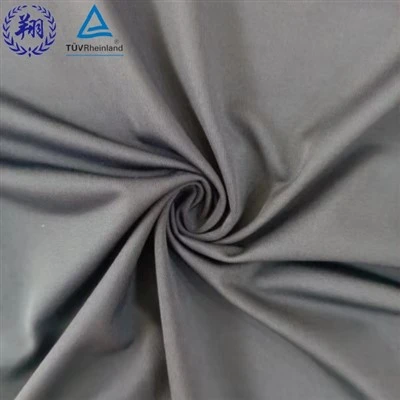
If you’re ready to source underwear fabric that actually prevents odor, or you have questions about which blend is right for your product line, feel free to reach out to our team to discuss your requirements. We’re here to help you find the right fabric that fits your budget and your customers’ needs.
Composite Fabric References
- Textile Institute. (2021). Antimicrobial Textiles: Science and Applications. Woodhead Publishing.
- Environmental Protection Agency (EPA). (2020). Silver as an Antimicrobial Agent for Textiles. Office of Water and Hazardous Materials.
- Journal of Textile Science and Engineering. (2019). Fiber Structure and Odor Control Properties of Blended Underwear Fabrics. Vol. 9, Issue 3, pp. 1-7.
- GOTS (Global Organic Textile Standard). (2022). Criteria for Antimicrobial Treatments in Organic Textiles. GOTS International Association.
- American Society for Testing and Materials (ASTM). (2018). Standard Test Method for Antimicrobial Activity of Textile Materials. ASTM International.
Zhejiang Hongxiang Textile Technology Co., Ltd.
Zhejiang Hongxiang Textile Technology Co., Ltd. is one of the most professional underwear fabric manufacturers and suppliers in China. With abundant experience, we warmly welcome you to wholesale custom made underwear fabric from our factory. If you have any enquiry about cooperation, please feel free to email us.
Address: No. 8, 12th Road, Warp Weaving Park, Maqiao Street, Haining City, Jiaxing City, Zhejiang Province
E-mail: gd@hongxiang888.cn
WebSite: https://www.h-xiang.com/
