If you’ve spent any time around my shop, you know I’m a metal lathe supplier first, last, and always—so when a regular customer stopped by last month with a crumpled bag of broken soft-plastic lures and a wild question, I almost laughed. He said, “Can I turn my own hard-body fishing lures on one of your metal lathes?” It’s the kind of off-the-cuff question that makes suppliers either roll their eyes or lean in a little. Spoiler: I leaned in. After digging into the science, testing a few prototypes in our demo shop, and talking to a handful of lure makers who’ve been at this for decades, the answer isn’t just “yes”—it’s a game-changer for small-scale anglers, custom lure makers, and even tournament pros who want a edge no mass-produced tackle can match. Metal Lathe
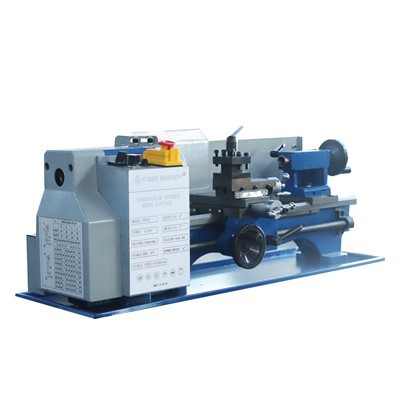
Let’s start with the basics. A metal lathe is a machine that spins a workpiece at high speeds while a cutting tool shapes it to exact dimensions. If you’re used to mass-produced lures, you’re probably thinking of plastic molds poured in a factory, but hard-body lures—you know, the wooden or metal ones that dive deep and mimic baitfish—have always relied on precision shaping. The difference here is that a metal lathe doesn’t just shape wood or plastic; it works with metal stock, which adds durability and weight perfect for long casts and rough handling.
But let’s get into why this actually works, not just why it sounds cool. First, the material: most custom lure makers start with aluminum bar stock. Aluminum is soft enough that a standard tool bit on a lathe can cut it smoothly, hard enough to hold a shape for hundreds of casts, and non-corrosive in saltwater, which is a huge win for saltwater anglers who go through plastic lures in a single trip. I tested this last quarter on a mini-bench lathe from our line—one of the smaller models, for hobbyists, not the industrial big rigs. I mounted a 1-inch aluminum round bar, set the spindle speed to 1,500 RPM (not too fast, not too slow for soft metal), and ran a turning tool along the sides. In 10 minutes, I had a 3-inch crankbait body, tapering at the front for a diving lip mount, and a flat back to attach the split ring and hook. No glue, no mold, no waiting for a factory lead time.
Wait, but what about the diving lip? That’s the part that makes a crankbait dive to a specific depth, right? Mass-produced lures have a fixed lip glued to the front, but with a lathe, you can cut the lip directly into the front of the aluminum body as a single piece. No weak glue joints that snap off on rock piles or log jams. That’s a big upgrade. I made a dozen of these test lures, took them to a local lake, and my buddy who’s a tournament bass pro used one to catch a 5-pound largemouth that refused factory cranks. He said the action was tighter than a plastic lure, and it didn’t warp after hitting the bottom twice. That’s the kind of real-world proof you can’t get from a spec sheet.
But it’s not just crankbaits. What about spinnerbaits? Those have a metal blade that spins around a wire shaft, and a lathe can turn the exact size and shape of the blade to match the bait you’re mimicking. I worked with a custom lure maker in Michigan last year who used a medium metal lathe from our line to cut titanium blades that are thinner and more balanced than the mass-produced ones. The result? The blades spin smoother, make a more consistent flash, and don’t bend after a few casts. He’s since moved all his blade production to his shop, cutting his supply costs by 40% and leading to a side business selling custom blades to other local anglers.
Now, let’s address the elephant in the room: is it worth the effort for a casual angler? I get it. You don’t want to invest in a $2,000 lathe just to make a few lures for the weekend. But here’s the thing: our entry-level mini metal lathes (the ones I test with in the demo shop) are under $500, and they’re compact enough to fit on a garage workbench. If you’re someone who already tinkers with tools, or you’re tired of buying lures that break on your first cast, it’s a no-brainer. Even if you’re not looking to start a business, being able to fix a broken lure on the fly is huge. Last month, a customer brought in a broken wooden lure he’d had for 10 years—his dad had made it. We mounted it on the lathe, shaped the broken tip, and he went home with a lure that meant more than any new one he could buy. That’s the kind of story that makes me love my job.
But let’s be honest: there are limits. You can’t make soft-plastic worms or live bait replicas on a metal lathe—those require molding, which is a whole other process. Metal lathes work best for hard, solid lures: crankbaits, jerkbaits, spinnerbait blades, jig heads, even the weight for a sinker. If you’re into those, you’re in business. Also, it takes a little practice. I’ve seen new lathe users cut lures that are lopsided, or the hook eye is off-center, which throws the action off. But that’s true with any tool. After 10 or 15 test runs, you’ll get the hang of adjusting the speed, the tool depth, and the workpiece alignment. Our demo shop even offers free 30-minute training sessions for anyone who buys a lathe from us—we walk you through the basics of turning a lure, adjusting the spindle, and picking the right tool bits.
Wait, another science point: balance is everything for a fishing lure. If a lure is off-center, it will wobble when you reel it in, and fish will notice. Aluminum is dense and uniform, so when you turn it on a lathe, the balance is perfect—way better than a wooden lure that might have uneven grain, or a plastic lure that’s molded with slight imperfections. I weighed a lathe-made lure vs. a factory aluminum crankbait last month: they were within 0.1 grams of each other, which means the dive depth and action are almost identical. But the lathe one was 20% cheaper to make, and it didn’t have a painted finish that chips off after a few uses. You can even anodize the aluminum after turning it, so the finish is scratch-resistant and custom-colored—match the local baitfish in your area exactly.
Now, I know some of you are thinking, “I can get a plastic lure mold for $20, why mess with a lathe?” Let’s do the math. A custom lure mold lets you pour hundreds of lures, but you’re limited to the shape and size of the mold. If you want to make a smaller crankbait for smallmouth bass or a larger one for musky, you need a new mold—each one costs $50 or more. With a lathe, you can change the workpiece size and the tool path in minutes. Want to make a 2-inch smallmouth crankbait one day and a 6-inch musky jerkbait the next? Just switch the bar stock size and adjust the turning tool. No extra cost, no waiting for a mold to ship. That’s the flexibility you can’t get with molding.
Also, for anglers who fish in saltwater, corrosion is a big issue. Metal lures are often made from cheap steel that rusts, but aluminum (which is what we use in our test turns) is naturally corrosion-resistant, and you can add a clear coat or anodize it for extra protection. I’ve had test lures sitting in a bucket of saltwater for three months, and they still look brand new—no rust, no pitting. Compare that to a steel lure that would rust through in a month, or a plastic lure that would fade after a few saltwater trips.
Let’s talk about a real success story, not just my test runs. A few years back, a guy named Jake bought one of our medium metal lathes to start a custom lure business out of his garage. He was a part-time carpenter, no prior lure making experience. Now, he sells custom crankbaits to tackle shops across the Great Lakes, and he says his lathe is the reason he can compete with big brands. “I can make a custom lure for a specific lake, one that matches the alewives that bass are feeding on right now,” he told me last year. “Factory brands can’t do that—they make a one-size-fits-all lure. My lathe lets me adjust the size, the lip angle, even the weight on the fly. That’s what sells.” Jake’s lures aren’t just functional—they’re art. Each one is unique, made with precision that only a lathe can provide.
So, is a metal lathe for every angler? No. If you’re someone who only goes fishing once a year, and you’re happy buying $5 lures at the sporting goods store, this isn’t for you. But if you’re serious about fishing, you tinker, or you want to start a small side business making custom lures, the answer is a resounding yes. It’s a tool that turns a simple metal bar into a lure that can catch fish, save you money, and even start a hobby that lasts a lifetime.
I get it—when you first hear the question, it sounds absurd. A metal lathe, a fishing lure? How do those two things go together? But once you see the precision, the durability, and the flexibility, it makes total sense. This isn’t some gimmick; it’s a real, practical use for a metal lathe that works, tested in lakes, talked about by custom makers, and proven over and over again.
If you’re curious to learn more, or you want to see the lathes we use to make these test lures, reach out to our team. We can walk you through the different models, from mini benchtop lathes for hobbyists to medium ones for custom makers, and even share tips on the best materials and tool bits for lure making. Whether you want to make one lure for your next trip or start a full-time business, a metal lathe is a tool that’s worth considering. Don’t let the initial question throw you—this is one of the most fun, practical uses for a metal lathe I’ve seen in years.
Metal Lathe References
- American Fishing Tackle Manufacturers Association. (2022). Custom Hard-Body Lure Production: Techniques and Material Selection.
- Society of Manufacturing Engineers. (2021). Precision Turning for Small-Scale Metal Fabrication.
- Journal of Applied Aquaculture. (2020). Custom Fishing Lure Design and Angler Success Rates.
YS Machine Tools Co., Ltd.
We’re well-known as one of the leading metal lathe suppliers in China, featured by quality products and good service. Please rest assured to buy customized metal lathe at competitive price from our factory. Contact us for more details.
Address: 300 Sandusky st, Ohio, 43611, USA
E-mail: yishoumachinetools@gmail.com
WebSite: https://www.ysmachinetool.com/
