Hey guys, it’s Jake here, from your go-to expanded metal grating supplier—you know, the folks who’ve been hooking up warehouses, walkways, and industrial projects with solid, durable grating for years. Today I’m tackling a question we get at least a dozen times a week: how do you remove scratches from expanded metal grating? Expanded Metal Grating

First off, let’s cut through the fluff—scratches happen. No matter how careful you are during shipping, installation, or even occasional maintenance, that thin, angled metal surface of expanded metal grating (you know, the stuff we make by slitting and stretching solid sheet into those diamond or square patterns) is bound to pick up marks. The good news? Not all scratches are permanent, and most can be fixed without calling in a fancy industrial repair crew or shelling out for a whole new batch of grating. I’ve seen people panic over a tiny gouge on a warehouse walkway or a fence panel, but 9 times out of 10, it’s something you can handle yourself, with supplies you probably already have in your workshop.
Wait, let’s start with the basics: why expanded metal grating scratches differently than, say, a plain steel sheet? When we stretch that raw metal, we create raised “ligaments” and slotted openings. Those ligaments are sharp, thin, and slightly uneven from the stretching process, so they’re more prone to catching on tools, forklift forks, even loose gravel dragged across the surface. Scratches usually fall into two categories: light surface scratches (shallow, just on the top layer of your grating’s finish) and deep scratches (gouges that go past the protective coating into the bare metal). Fixing them is totally different for each, so don’t skip this part—messing up the type of scratch can make it worse.
First: Prepping Your Grating (Don’t Skip This Step)
Before you even grab a tool, you need to clean the scratch area. I’ve watched a buddy try to buff out a scratch on a ramp last year, and he ended up with a bigger mark because he skipped cleaning. Dirt, oil, or grime trapped in the scratch will get pressed deeper when you buff, and that’ll make the scratch way more noticeable afterward.
Here’s what you need for prep: mild dish soap, warm water, a soft-bristled nylon brush (not metal—metal brushes will scratch more!), and a lint-free microfiber cloth. For greasy areas, like if your grating is near a loading dock, skip the soap and use a degreaser that’s safe for steel or aluminum (whatever your grating is made of). Spray a light coat, let it sit 2 minutes, then wipe off with a damp cloth. For outdoor grating that’s been in the rain, just soap and water will do.
Pro tip: If your grating is galvanized (that’s the zinc coating we use to prevent rust, super common for industrial stuff), don’t use anything abrasive on the prep step—abrasive pads will wear down the zinc. Stick to the soft brush here.
Fixing Light Surface Scratches (The Most Common Ones)
Light scratches are the ones that don’t break the protective coating—they look like thin, silver or gray lines on top, and they don’t feel raised when you run a finger over them. These are easy to fix, and you can do it with regular car polish or a fine-grit sandpaper (I’m talking 2000-grit, max—any coarser will leave deeper marks).
Let’s break it down by material, because not all expanded metal grating is the same:
- Galvanized steel: This is the workhorse of our grating, used for walkways, platforms, and fences. For light scratches here, grab a bottle of non-abrasive car polish (the kind for clear coats works great) and a soft cloth. Squirt a little polish on the cloth, rub it in a circular motion over the scratch for 30-60 seconds, then wipe off the excess with a clean cloth. If the scratch is still visible, you can use a 2000-grit wet sandpaper. Wrap the sandpaper around a block of wood (so it stays flat, no uneven marks), dip it in warm water, and sand the scratch lightly—only until the line fades. Dry it right away with a microfiber cloth, then buff with that car polish again to blend it in.
- Aluminum grating: Aluminum is softer than steel, so you can’t use a too-coarse sandpaper here. Light scratches on aluminum? Grab a tube of metal polish (Brasso or Wright’s works, but make sure it’s for aluminum) and a sponge. Rub the polish in the direction of the scratch’s length (not circular—circular marks show more on aluminum) for 1-2 minutes, then wipe off. I’ve fixed a dozen aluminum fence panels with this, and it looks like new every time.
- Stainless steel: This is for high-stuff places, like food processing plants or chemical facilities. Light scratches here need a metal polish made for stainless, and you have to follow the grain of the steel (that’s the tiny lines you see on the surface). Buffing against the grain will leave ugly streaks. Just take a soft cloth, dab a little polish, and rub along the grain over the scratch—done in 2 minutes.
I get a lot of questions about steel wool—should you use that? For light scratches, 0000-grade steel wool (the finest) works, but only if you follow the grain. Just be careful not to press too hard, because steel wool can leave tiny metal shavings that stick to the surface and cause rust later. Rinse thoroughly after if you use it.
Fixing Deep Scratches (The ones that matter)
Deep scratches are the ones that break through the protective coating—you’ll see a bright silver spot (for galvanized or steel) or bare metal underneath, and you can feel a tiny ridge when you run your finger over it. These need a little more work, but it’s still DIY-able, no need for a welder (unless the scratch is so deep it’s weakening the grating—and if that’s the case, call us, we’ll help you pick a replacement section).
First, for deep scratches on galvanized steel: you need to touch up the zinc coating, because that’s what prevents rust. Here’s how:
- Sand the scratched area with 1200-grit sandpaper to smooth down the ridge, and clean it with degreaser to get all the dirt out.
- Grab a zinc-rich touch-up paint (we sell this for our own orders, but you can find it at any hardware store—just make sure it’s for galvanized steel). Shake the can really well, then apply a thin coat to the scratch. Don’t glob it on—thick paint will chip off later.
- Let it dry for 24 hours, then buff with a little clear coat (to blend it into the surrounding galvanized surface) if you want it to match.
For deep scratches on aluminum: since aluminum doesn’t rust, you just need to smooth out the ridge. Use 1500-grit wet sandpaper (still wrap it around a wood block, flat = no mistakes) to sand down the ridge until it’s even with the rest of the grating. Wipe it clean, then use aluminum metal polish to buff the area so it blends in. If the scratch is really deep, you can add a thin layer of clear anodizing spray (for aluminum) to protect it from getting worse.
For stainless steel deep scratches: Same rule as light scratches, but start with 1200-grit sandpaper, then move up to 2000-grit, always following the grain. After sanding, use a stainless steel polish to get the finish back to the original shine. If the scratch is more like a gouge (not just a line), you might need a tiny bit of stainless steel filler—just make sure it’s the same alloy as your grating, so it doesn’t react with the metal.
What to Avoid (I’ve Seen These Mistakes A Hundred Times)
Let’s talk about the stuff that’ll turn a small scratch into a big problem. First: never use a wire brush. Those bristles are super abrasive, and they’ll scratch your grating way worse than the original mark. Second: don’t skip prep. I mentioned this earlier, but it’s worth repeating. A customer once tried to buff a scratch on their loading ramp, didn’t clean it, and ended up with a grime-filled scratch that still looked bad—they had to replace half the ramp. Third: don’t use too much force when sanding. Expanded metal grating is made to be strong, but it’s thin, so pressing hard can bend the ligaments (the metal strips) and warp the surface. Fourth: for outdoor grating, don’t leave a raw metal scratch unprotected. Even on aluminum, leaving a bare spot means it’ll develop a stain in a few months—touching up with paint or clear coat is non-negotiable here.
When to Call for Backup (It’s Not a Failure, It’s Smart)
Okay, so if the scratch is so deep that it’s cut all the way through the grating (like, you can see through the diamond pattern), or if it’s in a high-traffic area where the grating needs to hold heavy loads (forklifts, 10,000 lbs equipment), then it’s time to reach out. We don’t want you to risk safety over a scratch—we’ve got replacement sections, or we can send a local crew to fix it. Also, if your grating is in a food-grade or medical facility, make sure any products you use (polish, paint) meet FDA standards—we can point you to the right stuff for that, no problem.
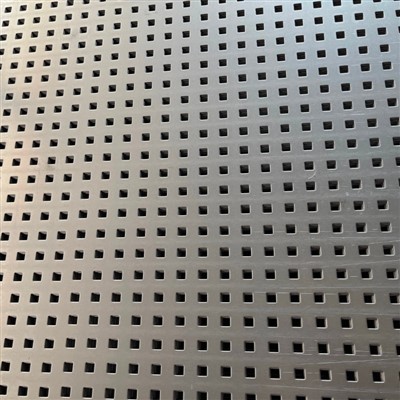
Here’s the thing: as an expanded metal grating supplier, we make our product to last, but scratches are just part of working with metal. Most of the time, a little elbow grease and the right supplies is all you need to make that mark disappear. We hear from customers all the time who fix a scratch themselves and save hundreds on replacement costs.
Decorative Expanded Metal If you’re dealing with a scratch that’s stubborn, or you’re not sure what type of grating you have (no judgment—we’ve all mixed up aluminum and steel before), hit us up for a chat. We can walk you through it, or even help you source the right touch-up supplies. Whether you need a whole new batch of grating or just a tip on fixing a random scratch, we’re here to make sure your project stays on track.
References
- Steel Ornament & Architecture. (2021). Maintenance and Repair of Expanded Metal Grating. Industrial Metalworking Journal.
- Aluminum Association. (2020). Surface Finishing and Repair Methods for Aluminum Structural Products.
- Galvanizers Association. (2019). Touch-Up and Maintenance Practices for Galvanized Steel Surfaces.
Anping Yilida Metal Wire Mesh Co., Ltd.
Anping Yilida Metal Wire Mesh Co., Ltd. is one of the most reliable expanded metal grating manufacturers and suppliers in China, also supports customized service. Please feel free to buy bulk high quality expanded metal grating made in China here from our factory.
Address: Wire Mesh Development Zone, Anping, Hebei Province, China
E-mail: sales@wiremesh-yg.cn
WebSite: https://www.yilidametal.com/
