If you’ve ever walked through a commercial fermentation facility—whether it’s for brewing craft beer, producing industrial enzymes, or growing mammalian cells for biopharmaceuticals—you’ll notice a lot more going on than just mixing nutrients and microbes in a tank. One of the quiet, often overlooked forces that can make or break a fermentation batch is shear stress. As a fermentation system supplier, I’ve seen firsthand how misunderstanding or mismanaging shear stress can turn a perfectly good run into a costly failure, while mastering it unlocks consistent, high-yield results. Today, I want to break down what shear stress really is in fermentation systems, why it matters, and how our team helps clients navigate it to keep their processes running smoothly. Fermentation System
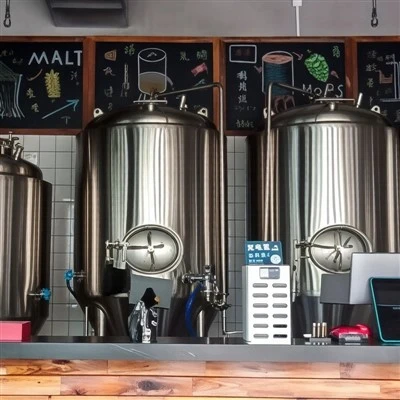
First, let’s start with the basics: shear stress is a force that acts parallel to a surface, or between adjacent layers of fluid that are moving at different speeds. Think about stirring a glass of water with a spoon—the water right next to the spoon moves fast, while the water further out moves slower. The difference in speed between those layers creates a shear force, and the stress (force per unit area) of that interaction is what we call shear stress. In fermentation, this force isn’t just gentle stirring, though. It comes from a few key places: impeller agitation (what we use to mix nutrients and oxygen into the broth), gas bubbles rising through the liquid (especially in aerobic fermentations where oxygen is sparged into the tank), and even the movement of the microbial cells themselves as they grow and multiply in the broth.
Now, why does this matter so much for fermentation? Because different organisms are incredibly sensitive to shear stress. For example, if you’re working with simple bacteria like E. coli, they’re pretty tough—you can stir them hard and they’ll keep growing no problem. But delicate cells are a different story. Fungal mycelia, which are long, thread-like structures used to produce antibiotics or enzymes, can get stretched and broken apart if shear stress is too high. Mammalian cells, which we use for things like monoclonal antibodies, are even more fragile: they have no cell wall, and too much shear from impellers or bubble bursting can cause their membranes to rupture, killing large portions of the culture before you harvest any product. Even yeast, which is usually resilient, can have reduced growth rates or altered product quality if exposed to consistent high shear over long fermentation times.
I remember a client who reached out to us a couple years ago with a big problem. They were running a batch fermentation for a specialty enzyme using fungal mycelia, and every third run, their yield would drop by 40%. They’d checked nutrient levels, pH, oxygen saturation—all the usual suspects. When we visited their facility to take a look, we ran a quick shear stress test on their existing system. Their impeller was a standard marine blade, spinning at a speed that was great for mixing but created a lot of high-shear zones right at the blade tips. The mycelia in those zones were breaking, and the broken pieces couldn’t produce the enzyme as well as intact filaments. We swapped out their impeller for a hydrofoil blade we designed to create more gentle, uniform mixing, and adjusted the sparging rate to reduce bubble size (smaller bubbles burst with less shear than large ones). After that, their yield was consistent every single run—no more mysterious drops. That’s the kind of impact understanding shear stress can have.
It’s not just about too much shear, either. Too little shear can be just as bad. If your fermentation broth isn’t mixed enough, nutrient-rich zones and oxygen-poor zones form. The cells in the low-oxygen areas stop growing, and waste products can build up, stalling the fermentation or contaminating the batch. So it’s a balancing act: you need enough shear to keep the broth homogeneous and deliver oxygen and nutrients, but not so much that it damages your cells or product. That’s where our expertise as fermentation system suppliers comes in—we don’t just sell tanks and impellers; we work with clients to calculate the right shear parameters for their specific organism and product.
Let’s get a bit more technical for anyone who’s looking to dig deeper. Shear stress is usually measured in units of Pascals (Pa) or dynes per square centimeter (dynes/cm²). For context, mammalian cells typically handle shear stress below 10 Pa, fungal mycelia can usually handle up to 50 Pa, and bacteria often tolerate up to 100 Pa or more. But it’s not just the magnitude of shear stress that matters—it’s also the duration and frequency. A single, brief burst of high shear (like a bubble bursting) might not harm cells, but being exposed to low shear for hours on end can cause gradual stress responses in organisms, leading to lower product quality.
Another key point is that shear stress is non-uniform across a fermentation tank. The highest shear zones are almost always near the impeller blades, where the fluid velocity is highest, and around gas bubbles, where the surface tension creates localized shear when the bubble moves or bursts. That’s why using computational fluid dynamics (CFD) has become a game-changer in modern fermentation design. Our team runs CFD simulations for every custom system we build, mapping out exactly where shear is high, medium, and low. We can adjust impeller design, tank geometry, and sparging positions to shift shear away from sensitive areas of the tank where your cells are growing, and keep it concentrated only where it’s needed for mixing.
We also recently worked with a biotech client developing a new vaccine using insect cells, which are very shear-sensitive. Their original system used a conventional sparging method that created large, fast-rising bubbles, and the cell viability was dropping to 60% by the end of the run. We suggested a sparging system with micro-bubbles and a surface aeration impeller, which adds oxygen from the top of the tank instead of sparging through the bottom. The result? Cell viability stayed above 90%, and their vaccine yield increased by 35%. That’s the kind of targeted adjustment that comes from understanding shear stress’s role in cell health.
I should also mention that shear stress affects non-cellular products too. If you’re fermenting something like a protein or a polysaccharide, high shear can alter the molecular structure of the product. For example, a polysaccharide that’s meant to be thick and gel-like might get broken down into smaller molecules, reducing its functionality as a food additive or pharmaceutical excipient. So it’s not just about keeping cells alive—it’s about preserving the quality of the product itself.
One common mistake we see from new operators is that they assume “bigger impellers = better mixing = higher yield.” But if that bigger impeller creates too much shear, you’ll get the opposite result. It’s counterintuitive, but sometimes reducing agitation speed can lead to higher yields because the shear stress is lower, and the cells stay intact. That’s why every fermentation is unique: a process that works for brewing beer (which uses yeast, pretty shear-tolerant) won’t work for a mammalian cell culture. As a supplier, we take the time to learn about your specific organism, product, and goals before recommending any equipment.
Now, let’s talk about how to measure shear stress in your own fermentation system, because you can’t manage what you don’t measure. There are a few methods: indirect methods, like tracking cell viability or product yield under different agitation and sparging conditions, and direct methods, using sensors or tracer particles that can detect fluid velocity gradients. CFD simulations are becoming more accessible, too—even if you’re not an engineer, our team can run a simple simulation for your current system to show you where the high-shear zones are. For small-scale fermenters (like benchtop bioreactors), there are also portable shear sensors that can give you real-time data on stress levels.
If you’re currently dealing with inconsistent fermentation yields, or you’re launching a new process with shear-sensitive organisms, chances are shear stress is playing a role. It’s one of those factors that’s easy to overlook until it’s causing problems, but addressing it early can save you thousands of dollars in wasted batches and downtime.
At the end of the day, our job as fermentation system suppliers isn’t just to provide equipment—it’s to be a partner in your process success. We’ve spent years studying how shear stress interacts with different fermentation systems, organisms, and products, and we use that knowledge to design systems that balance mixing efficiency with gentle, controlled shear. Whether you’re scaling up from a benchtop bioreactor to a full production tank, troubleshooting a consistent yield issue, or developing a new process with a sensitive cell line, we can help you understand and manage shear stress to get the results you need.

If you’re ready to take a closer look at your fermentation system and see how shear stress might be impacting your runs, we encourage you to reach out for a consultation. Our team can review your process data, run a quick shear analysis, and suggest adjustments to help you improve yield, consistency, and product quality.
Craft Brewing Equipment References
- Garcia-Ochoa, F., & Gomez, E. (2009). Bioreactor scale-up and oxygen transfer rate in microbial processes: An overview. Biotechnology Advances, 27(2), 153-176.
- Zhang, J., et al. (2019). Shear stress in fermentation systems: Effects on microbial cells and products. Journal of Biotechnology, 295, 45-56.
- Nienow, A. W. (2006). Agitation in bioreactors: Types of impellers and their performance. Advances in Biochemical Engineering/Biotechnology, 101, 1-46.
- Moreira, A. R., et al. (2021). Shear stress management in mammalian cell culture bioreactors for biopharmaceutical production. Biotechnology Progress, 37(3), e3098.
Wenzhou Jinggong Machinery Equipment Co., Ltd.
We are one of the most professional fermentation system manufacturers and suppliers in China. With abundant experience, we warmly welcome you to buy customized fermentation system at competitive price from our factory. If you have any enquiry about quotation, please feel free to email us.
Address: No.Jiadi Industrial Zone, Yaoxi Town, Longwan District, Wenzhou City, China.
E-mail: jinggong2026@163.com
WebSite: https://www.jg-ind.com/
