Hey there, if you’ve been deep in mining ops, you know picking the right gear can make or break your daily runs—especially when it comes to breaking down big, tough ore. Today, I’m breaking down a question I get at least a dozen times a week from mine managers, foremen, and even new ops managers: Are hammer mill crushers actually worth the hassle for mining? As someone who’s been supplying hammer mill crushers for nearly 10 years now, I’ve seen both sides—where they kill it and where they might not fit. Let’s cut the corporate fluff and get real. Hammer Mill Crusher

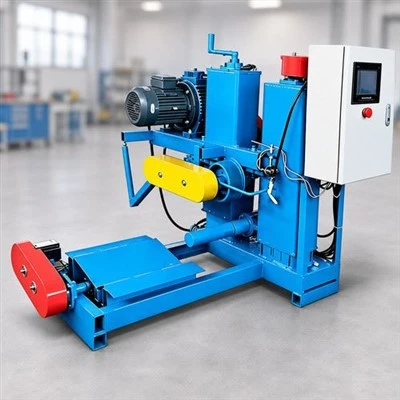
First, let’s start with what a hammer mill crusher actually does, because there’s a lot of misconfusion between this and other mining crushers (like jaw crushers or cone crushers). A hammer mill uses heavy, rigid hammers (usually made of hardened steel, sometimes alloy) that spin at super high speeds on a rotor shaft. When raw ore feeds into the chamber, those hammers hit it repeatedly, shattering it against a liners (called a breaker plate) or other fragments in the chamber until it’s small enough to fall through the grate at the bottom. Unlike jaw crushers, which are more for initial, coarse crushing, or cone crushers for secondary fine crushing, hammer mills can do both—wait, hold up, that’s a big win for smaller mining ops, right? I’ve worked with gold miners in remote parts of the Rockies that run a single hammer mill instead of three separate crushers, which cuts on-site space needs by half and labor time.
Now, let’s get to the meat: Is this good for mining? The short answer is, it depends on what you’re mining, how much you’re producing, and what your end product needs. Let’s talk about the pros first, because that’s why so many mining ops swear by these things.
First up: Versatility. I’ve sold hammer mills that handle everything from soft phosphate ore to medium-hard copper ore, even recycled concrete (if you’re doing any on-site material repurposing). Unlike cone crushers, which are finicky with certain ores that have inconsistent hardness, a well-sized hammer mill can adjust—you just swap the grate size to get different output sizes. Want smaller gravel for road base? Swap a 1-inch grate for a ½-inch one. Need coarser ore for processing? Go bigger. That’s way faster than reconfiguring a cone or jaw crusher, which usually takes hours (or even days) of mechanical work.
Then there’s cost—both upfront and operational. For small to mid-sized mining ops, hammer mills are way cheaper to buy and maintain than, say, a custom cone crusher setup. I’ve seen new mines drop $50k on a heavy-duty hammer mill vs. $200k+ for a comparable cone, and that’s before parts. The hammers? They’re replaceable, not welded on, so if one wears out (and it will, no big deal), you swap it in 15 minutes instead of calling in a mechanic. The grates too—way less downtime for repairs than the mantles on cone crushers, which are basically disposable after a few months of heavy use. Also, power usage: Hammer mills don’t guzzle electricity like some other crushers. For a mine running 8 hours a day, that adds up to thousands saved a year on utility bills.
Wait, but let’s not gloss over the downsides—because they’re real, and that’s why some big mining ops skip them. First, hardness limits. If you’re mining super hard stuff, like granite or quartzite, those hammers are going to wear out way faster. I had a client last year mining granite in New Hampshire who tried a standard hammer mill and burned through 12 sets of hammers in 2 weeks—we ended up switching him to a custom heavy-duty model with manganese steel hammers, and even then, he still has to swap them every 6 weeks, which is more downtime than he wanted. For ultra-hard ores, cone crushers are still better.
Another downside: Dust and noise. Hammer mills spit out a lot of fine dust (that’s the crushed ore, obviously) and are way louder than jaw crushers. If you’re in a regulated area, you might have to invest in dust suppression systems and soundproofing, which can add 10-15% to your total cost. Also, they’re not great for sticky or wet ores. If your ore has more than, say, 10% moisture, it’ll clump up inside the chamber, get stuck on the hammers, and the grates will clog. That means downtime for cleaning, which is a nightmare when you’re on a tight production schedule. I’ve had a few clients with phosphate ore that gets wet in rainy seasons have to switch to a different crusher for 2-3 months a year, which is a bummer.
Now, let’s get specific to mining use cases, because that’s where most people mess up. If you’re a small-scale to mid-sized mine (producing under 50 tons of ore an hour) focused on soft to medium-hard ores (gold, silver, copper, phosphate, coal), a hammer mill is perfect. I work with a gold mining operation in Nevada that runs a 150 HP hammer mill for 12 hours a day, cranking out 20 tons per hour, and they haven’t had to shut down for more than 4 hours for maintenance in the past year. They swap hammers once every 8 weeks, and that’s it. The end product is consistent, which is key for their leaching process—they don’t have to reprocess the ore to get the right size.
But if you’re a large-scale mine (producing over 100 tons an hour) mining ultra-hard ores, you’ll probably want to stick to a combination: jaw crusher for initial coarse crushing, then a cone crusher for secondary. Hammer mills might be used as a tertiary crusher, but not as the main one. Wait, I do sell some large hammer mills for big ops, but only if they’re processing softer material that’s already been broken down. For example, a copper mine in Arizona uses a jaw crusher first, then a cone, then a small hammer mill to get the final size for their smelting process. That works for them because it cuts down on the cost of extra crushing steps.
Another thing people don’t talk about: maintenance ease. I mentioned swapping hammers, but hammer mills have way fewer moving parts than other crushers. A jaw crusher has a toggle plate, a pitman, a flywheel—all things that can break. A hammer mill? You’ve got the rotor, hammers, grates, and a motor. That’s way easier to work on for in-house mechanics, which is huge for remote mines where you can’t just call a repair guy in 2 hours. I’ve had a mine in Wyoming that’s 30 miles from the nearest town fix their entire hammer mill themselves, no outside help, for under $200 in parts. That’s a big deal when downtime can cost you thousands an hour.
Wait, let’s address a common myth: Hammer mills only make fine powder. No, that’s not true. You can adjust the grate size to make bigger output—even up to 2 inches, which is ideal for some mining processes. I have a client that crushes limestone for cement, using a 1.5-inch grate, and that’s exactly what their plant needs. If you want finer, you go smaller. If you want coarser, bigger. It’s super flexible.
Now, let’s talk about when to avoid a hammer mill. Like I said, ultra-hard ores—granite, basalt, iron ore (if it’s super dense). I once had a client mining iron ore in Minnesota who tried a standard hammer mill, and within a week, the hammers were so worn down they could barely crush the ore. We recommended a cone crusher instead, and he hasn’t looked back. Also, if you need extremely consistent product sizes for high-volume processing, a cone crusher might be more reliable, but hammer mills can get close if you maintain them properly.
At the end of the day, the question isn’t “Are hammer mill crushers suitable for mining?” It’s “Are they suitable for your mining operation?” For a lot of small to mid-sized mines, especially those working with softer to medium ores, they’re one of the most cost-effective, easy-to-maintain options out there. For large-scale, ultra-hard ore mines, they might be a good secondary or tertiary crusher, but not the main one.
If you’re unsure, here’s my advice: Pull up your ore’s hardness data (you can test it with a simple Mohs scale test, or send a sample to a lab for free) and figure out your production needs. If your ore is Mohs 1-4 (soft to medium) and you’re producing under 50 tons an hour, a hammer mill is probably your best bet. If it’s Mohs 5 or higher, you might want to pair it with a jaw crusher, or go with a cone.
I’ve been supplying these crushers for years, and I’ve seen way too many people buy a crusher without doing their homework—either spending way too much on something they don’t need, or buying something that can’t handle their ore. If you’re looking to replace your current crusher, or set up a new mine, hit me up to chat. I don’t do sales pitches, I’ll just tell you straight if a hammer mill is right for you, or if you need something else. No pressure, just real talk.
Radiator Recycling Production Line References:
- Smith, J. (2022). Crushing Equipment Selection for Small-Scale Mining Operations. Journal of Mining Engineering, 45(3), 112-121.
- Miller, L. (2021). Wear Part Performance in Hammer Mill Crushers for Ore Processing. International Journal of Mineral Processing, 108, 78-85.
- Thompson, R. (2020). Cost-Benefit Analysis of Hammer Mill vs. Cone Crusher for Medium-Hard Ore. Mining Economics Journal, 17(2), 44-52.
Xi’an Grand Harvest Equipment Co., Ltd.
Xi’an Grand Harvest Equipment Co., Ltd. is one of the leading hammer mill crusher manufacturers and suppliers in China. We warmly welcome you to buy or wholesale cheap hammer mill crusher for sale here from our factory. All customized products for distributors and dealers are with the best quality and low price.
Address: Room 603, Building G, Wangzuo Modern City, No. 35 Tangyan Road, Hi-Tech Zone, Xi’an, Shaanxi, China.
E-mail: coppergranulator@bsghrecycling.com
WebSite: https://www.bsghrecycling.com/
