When I started my career as an analyzing instruments supplier 12 years ago, I used to get the same question from new lab managers and startup founders over coffee at industry trade shows: “Can I just use one instrument for all my testing?” Back then, I’d smile and explain that the answer is almost always no—but I didn’t always nail down exactly why. Now, after outfitting hundreds of labs in pharmaceuticals, environmental testing, and food safety, I know that the line between quantitative and qualitative analyzing instruments isn’t just technical jargon; it’s the difference between guessing and knowing, between compliance and confidence. Let’s break this down, because picking the right tool can make or break your work. Analyzing Instruments

First, let’s ground this in what each term actually means. Quantitative instruments are built to put a number on something. If you’re testing the amount of lead in drinking water, the purity of a drug’s active ingredient, or the concentration of microplastics in a river, you want a result that’s precise, repeatable, and measurable. These tools don’t just tell you “there’s lead here”—they tell you “there’s 12.3 parts per billion of lead, which is just under the EPA’s limit” or “98.7% of this drug’s active compound is present, meeting USP standards.” That precision comes from their design: quantitative instruments rely on hard, physical measurements that scale. Think of a high-performance liquid chromatography (HPLC) system, a lab balance accurate to four decimal places, or a gas chromatograph-mass spectrometer (GC-MS). These are the workhorses for regulatory compliance, because regulators don’t accept “a little too much” or “hardly any”—they require exact numbers.
Qualitative instruments, on the other hand, answer the question “what is this, exactly?” They don’t care about how much; they care about what’s there. If you’re identifying an unknown bacteria strain in a clinical sample, detecting a new adulterant in olive oil, or confirming that a synthetic compound matches a reference standard, you need a tool that can tell you the identity, not just the quantity. Qualitative instruments focus on patterns, spectra, and unique molecular signatures. A Fourier-transform infrared (FTIR) spectrometer, for example, will give you a fingerprint of a sample’s chemical bonds—each bond absorbs light at a specific wavelength, so the pattern it spits out is like a DNA sequence for chemicals. If your sample’s pattern matches a reference file for extra-virgin olive oil, you know it’s real; if it matches canola oil, you know it’s adulterated. Another common qualitative tool is a mass spectrometer run in full-scan mode, which can list every compound present in a sample without quantifying how much of each there is.
The biggest mistake I see customers make early on is treating these two types as interchangeable. Last year, a small food testing lab came to me panicking: they’d been using a qualitative FTIR to test a batch of baby food for pesticide residues, and when their client asked for a numerical report of residue levels, they couldn’t deliver. The FTIR could tell them that a pesticide was present, but not how much—so they had to scramble to rent a quantitative GC-MS, which is the only tool in their category that can measure trace pesticide concentrations accurately. That’s not a flaw in the FTIR; that’s a mismatch in purpose.
Quantitative instruments have unique features that make them ideal for number-heavy work. For one, they’re calibrated for linearity across a specific range. A good HPLC, for example, will create a calibration curve using known concentrations of a compound, then use that curve to convert a sample’s signal into a precise concentration. That linearity is non-negotiable—if a quantitative instrument drifts even a tiny amount from its calibration, your numbers will be off, which is why every quantitative tool comes with built-in validation protocols required by ISO, FDA, or other regulatory bodies. They also have high sensitivity, especially at low concentrations; for a lab testing for parts per billion of a contaminant, a quantitative instrument needs to pick up a signal that’s barely above background noise, and do it consistently.
Qualitative instruments, by contrast, are built for specificity, not linearity. Their strength is in their ability to distinguish between similar compounds. Two chemicals might have almost the same molecular weight, but a good FTIR will pick up tiny differences in their bond structures, so you can tell them apart. Or a DNA sequencer (which is a type of qualitative analyzing instrument for biological samples) can tell the difference between two nearly identical virus strains, even if their quantifiable concentration is the same. These tools don’t rely on calibration curves the same way quantitative ones do—instead, they rely on reference libraries of spectra, DNA sequences, or molecular profiles. If your sample’s profile matches a library entry, you have your identification; if not, you’re either dealing with an unknown compound that needs more testing, or an error in your sample preparation.
But here’s the twist: most modern labs don’t use just one or the other—they use both, often in tandem. Let’s take pharmaceutical quality control, the industry where I’ve seen this synergy play out most clearly. A manufacturer might first use a qualitative FTIR to confirm that a raw material is exactly the active pharmaceutical ingredient (API) they ordered, not a cheaper substitute. That’s the first line of defense: if the FTIR doesn’t match the reference profile, they reject the batch immediately, no need for further testing. Once the raw material passes the qualitative check, they move to a quantitative HPLC to measure the API’s purity, making sure it’s within the 98-102% range required by the FDA. If the HPLC numbers are off, the batch is rejected; if they’re within range, it moves on to production. Then, when the drug is finished, they might use both again: a qualitative tool to confirm the final product’s ingredients, and a quantitative one to check for contamination or incorrect dosing.
Environmental testing is another area where both types are essential. When a municipal water authority tests for contaminants, they start with a qualitative screening tool to check for the presence of any of 100 common pollutants. That quick scan tells them if there’s a problem, but not how much. If the scan comes back positive, they follow up with a quantitative instrument to measure the exact concentration, so they can alert residents if levels are above safety limits. Without the qualitative screening, they’d be running hundreds of quantitative tests for every sample, which would be slow and expensive. Without the quantitative follow-up, they’d know a contaminant is present but not whether it’s dangerous.
I’ve also seen how advances in technology are blurring the lines between these two categories, which is why it’s more important than ever to work with a supplier that knows both inside and out. Five years ago, a GC-MS was strictly quantitative, but today’s high-resolution GC-MS can run in both modes: it can quantify how much of a compound is present, and also identify unknown compounds that pop up in a sample. A lot of customers get excited about that flexibility, but I always warn them: a tool that does both isn’t as precise as a tool built for only one. If you’re running 100 samples a day for pesticide concentration, a dedicated quantitative GC-MS will give you faster, more repeatable results than a hybrid model that splits its time between quant and qual. That’s a trade-off you have to make, and it’s the kind of advice I live to give as a supplier—because my job isn’t just to sell instruments; it’s to make sure my customers don’t waste money on tools that don’t fit their needs.
One common myth I hear from newer lab managers is that qualitative instruments are “less accurate” or “less useful.” That’s simply not true. If you’re a researcher trying to identify a new disease-causing bacteria, a quantitative instrument can’t tell you what strain it is—only how much of it is present. The qualitative tool’s specificity is exactly what you need there. On the flip side, quantitative instruments aren’t “better” than qualitative ones; they’re just designed for a different job. A qualitative FTIR can’t measure the amount of a compound, and trying to use it for that will lead to unreliable results that can get you in trouble with regulators or compromise your work.
Last year, I had a customer who tried to do just that: a craft coffee roaster that wanted to test for caffeine levels in their beans, but only had a qualitative NMR spectrometer. The NMR is great for identifying chemical structures, but it’s not calibrated for quantitative measurements. They got results that said “caffeine is present,” but no number to tell them if their light roast had 1% caffeine or 5%, and they needed that number to advertise their products accurately to customers. They ended up coming to me for a quantitative HPLC, which gave them the exact numbers they needed, and they saved their qualitative NMR for testing new bean varieties to identify unique flavor compounds. That’s the right approach: match the tool to the question, not the other way around.
So what should you keep in mind when choosing between these instruments? First, define your goal clearly. If you need a numerical result to meet compliance standards, track concentrations, or measure purity, you need a quantitative instrument. If you need to identify an unknown, confirm a compound’s identity, or distinguish between similar substances, you need a qualitative one. Second, consider your workflow. Do you need to screen hundreds of samples quickly, or run in-depth analysis on a handful? Hybrid tools can work for some, but dedicated tools will outperform them in their core function. Third, talk to someone who knows the space—someone who’s outfitted labs like yours, not just a sales rep quoting prices. As a supplier, I spend time learning about each customer’s daily work, their regulatory requirements, and their budget, so I can point them to the right instrument, not just the most expensive one.
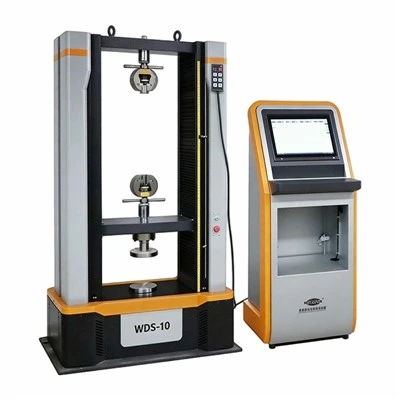
At the end of the day, analyzing instruments are tools, and like any tools, they only work well if you use them for the job they’re made for. Whether you’re testing food safety, developing new drugs, or cleaning up environmental contaminants, the difference between quantitative and qualitative instruments isn’t just a technical detail—it’s the difference between making a confident decision and a costly mistake. If you’re not sure which instrument is right for your lab, don’t guess. Reach out to us, and let’s walk through your testing needs together. We’ll help you pick the tools that fit your work, not the other way around.
Universal Materials Tester References
- Skoog, D. A., Holler, F. J., & Crouch, S. R. (2017). Instrumental Analysis (9th ed.). Cengage Learning.
- Ewing, G. W. (2018). Analytical Instrumentation Handbook (4th ed.). CRC Press.
- International Organization for Standardization (ISO). (2020). ISO 17025: General Requirements for the Competence of Testing and Calibration Laboratories. ISO.
- Mayer, G. S., & Butler, J. (2021). The Role of Analytical Instrumentation in Pharmaceutical Quality Control. Journal of Pharmaceutical and Biomedical Analysis, 201, 114892.
- American Public Health Association (APHA). (2019). Standard Methods for the Examination of Water and Wastewater (24th ed.). APHA.
Hebei Wanluda Testing Instrument Equipment Co., Ltd.
As one of the most professional analyzing instruments manufacturers and suppliers in China, we have world-leading production equipment and strong manufacturing capabilities. Please rest assured to buy advanced analyzing instruments made in China here from our factory.
Address: Zhouguantun Village, Xian County, Cangzhou City, Hebei Province, P.R.China
E-mail: wldinstrument@163.com
WebSite: https://www.wldinstrument.com/
