Yo, let’s cut to the chase—if you’re running a textile mill, you know a yarn winding machine isn’t just a “wind-it-up” tool. It’s the backbone of keeping your production smooth, your workers safe, and your bottom line from tanking. I’m gonna walk you through the safety features we build into every winding machine we make, because at the end of the day, a broken machine or a worker hurt is bad for everyone. No stuffy jargon here, just real talk from someone who’s been supplying these machines for over a decade. Yarn Winding Machine
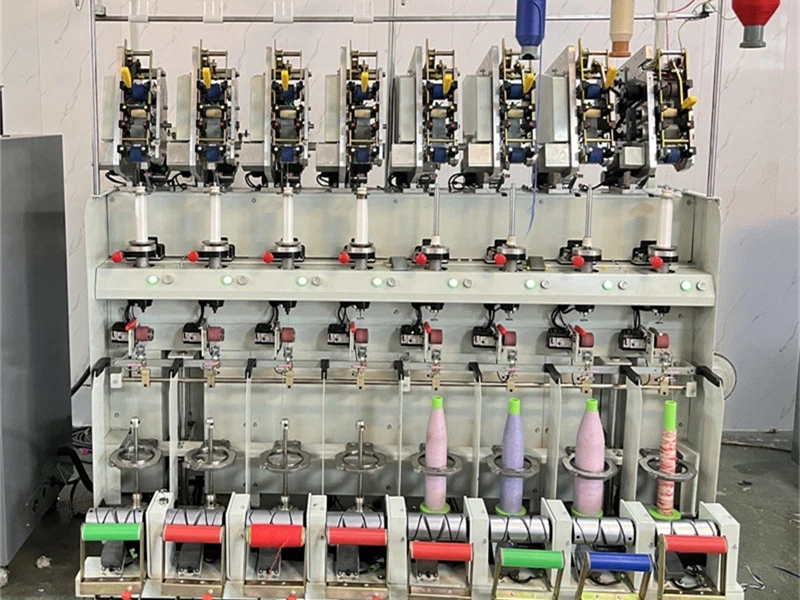
First off, let’s talk about pinch points. Anyone who’s stood near a running winding machine knows those rollers, gears, and guides are basically waiting to catch a finger, a sleeve, or even a strand of hair if you’re not careful. That’s why we lock in full, heavy-duty guarding on all moving parts—no half-assed plastic covers here. We’re talking steel guards that snap into place and don’t come off unless you use a tool, so some rookie can’t yank ’em off to “get a better look” mid-run. But wait, what if you do need to access the machine for maintenance? We added safety interlocks. If you even try to open a guard while the machine’s on, it’ll shut down instantly—no warning, no delay. I’ve seen a few mills skip those and end up with a workers’ comp claim that cost way more than installing the interlocks in the first place. Trust me, that’s a no-brainer.
Next up, yarn-specific safety. Yarn is slippery, especially synthetic stuff like polyester or nylon. If a strand snaps, it can whip around so fast it’ll cut your face or knock a tool out of your hand. We build yarn breakage sensors right into the machine—they don’t just stop the winding, they trigger an audible alert (not a shrill beep, something that’s loud but not annoying) and a small, slow-moving brake on the spindle to stop the cone gently. No sudden jerk that sends yarn flying everywhere. Also, we have over-spool prevention. If a cone gets too big, it can tip over, jam the machine, or drop on someone’s foot. Our sensors measure the diameter of the cone in real time; once it hits the set limit, it stops winding and the spindle retracts a little. I had a client a couple years ago who didn’t have that feature—they had a 15-pound nylon cone fall onto a worker’s boot, sprain his ankle, and miss a production deadline that cost ’em $20k. That’s the kind of mistake we’re not making for our customers.
Then there’s operator ergonomics and slip hazards. A lot of mills have concrete floors, and when yarn dust or oil leaks, it’s like a skating rink. We build non-slip foot pedals for any controls that need manual operation, and we route all hydraulic and electrical lines along the machine’s frame so they don’t hang loose on the floor. Also, the machine’s control panel is positioned at waist height, so you don’t have to hunch over or reach up to adjust settings—less back strain, and no risk of knocking a cup of coffee (or a soda, let’s be real for a sec) onto the electricals. Speaking of electricity, all our machines have ground fault circuit interrupters (GFCIs) for the power supply. If there’s a stray current or a leak, it cuts power instantly—no shocked workers, no fried motors. I’ve heard horror stories of old machines where someone spilled water on a control panel and got zapped, so we don’t skip that.
Wait, what about emergency stops? Everyone has an E-stop, right? But not all E-stops are made equal. We have big, bright red mushroom buttons on every corner of the machine—like, one near the operator, one at the end of the line, and one right by the spindle area. They’re recessed enough that they don’t get pressed by accident if you’re reaching for yarn, but they’re easy to hit if something goes wrong. Plus, when you press them, they not only shut down the machine but also unlock the guards so you can check what’s wrong without fumbling around. Some cheaper machines have E-stops that just cut power, leaving guards locked—total nightmare if you have to fix a jam mid-run. We fixed that years ago, and it’s been a game-changer for our customers.
Oh, and dust control. Yarn dust is a big deal—inhaling it can cause respiratory issues, and if it builds up in the machine, it’s a fire hazard. We have built-in dust extraction fans that suck up fine particles right at the point where the yarn is wound, so they don’t float around the mill. Also, the machine’s housing is sealed tight enough that dust can’t get into the electrical components or gear box. A few customers used to clean their machines with compressed air, which just blows dust everywhere—we tell ’em not to do that, and our sealed housing makes that easier because they can wipe it down instead of blasting dust around. That’s a safety win for both workers and the mill’s air quality.
Let’s not forget about maintenance safety. Our machines have clear access panels with labeled parts, so when a tech comes to fix something, they don’t have to guess what’s where. We also include lockout/tagout (LOTO) points for maintenance—so when a tech is working on the inside, they can lock the machine out, turn off the power, and leave a tag that says “Do not operate” so no one else accidentally flips it on. OSHA goes hard on LOTO, and we make sure our machines are set up to comply, no extra modifications needed. I’ve worked with mills that bought cheap machines and had to add LOTO points themselves, which is a hassle and another cost. We build ’em in, so that’s one less thing to worry about.
Wait, what about high-speed operations? Modern winding machines run way faster than they did 10 years ago—like, 1,500 meters per minute fast. That’s great for production, but it means more risk of parts flying off if there’s a jam. Our spindles are balanced to reduce vibration, so parts don’t shake loose, and we have a feature that slows the machine down gradually when a jam is detected, instead of slamming on the brakes. If a bobbin does come loose, the guard catches it—no flying metal hitting someone. A client in South Korea had a machine without that balance feature, and a bobbin flew off and hit a wall, almost hitting a worker. We never got that call as a customer complaint, but we heard about it through the grapevine, and that’s exactly why we built those balancing features.
Now, I know what you’re thinking: “All this safety stuff must cost a fortune.” Nah, we design it to be cost-effective. The interlocks, sensors, and GFCIs are standard on every machine, not add-ons. We don’t nickel-and-dime our customers for basic safety features because at the end of the day, a safe worker is a happy worker, and a safe machine is one that runs more reliably. If you’re looking at a cheaper machine that skips half these features, you’re gonna end up paying more in the long run—workers’ comp claims, production downtime, repairs. We’ve had customers switch from those cheap machines to ours, and they’ve saved 30% or more on those costs in the first year.

If you’re in the market for a yarn winding machine and wanna talk through what features make sense for your specific setup—whether you’re winding cotton, polyester, or something niche—hit us up. We’re not just a supplier; we’re people who’ve been in the textile game, so we know your pain points. We can walk you through each safety feature, show you how they work, and even connect you with a few clients who’ll tell you how these features helped their mill. No pressure, just straight talk.
References
Chenille Yarn Machine Occupational Safety and Health Administration (OSHA). (2022). Machine Guarding Requirements for Textile Manufacturing. U.S. Department of Labor.
Textile Institute. (2021). Safety Standards for Yarn Winding and Processing Equipment. The Textile Institute.
National Institute for Occupational Safety and Health (NIOSH). (2020). Respiratory Protection for Workers Exposed to Textile Dust. Centers for Disease Control and Prevention.
International Organization for Standardization (ISO). (2019). ISO 13849:2019 – Safety of Machinery – Safety-Related Parts of Control Systems.
Zhangjiagang Kingkangda Machinery Co., Ltd.
Zhangjiagang Kingkangda Machinery Co., Ltd. is one of the most professional yarn winding machine manufacturers and suppliers in China, specialized in providing high quality customized service. We warmly welcome you to wholesale yarn winding machine in stock here from our factory. Contact us for pricelist and quotation.
Address: Korea Industrial Park, Fenghuang Town, Zhangjiagang City, Jiangsu Province, China
E-mail: kingkangdacn@hotmail.com
WebSite: https://www.kingkangda.com/
