If you’ve ever walked past a substation, an industrial facility, or a commercial building’s electrical room, you’ve probably spotted a transformer tank tucked away—those large, sturdy metal boxes that keep power flowing safely. As someone who’s spent the last 12 years designing, fabricating, and supplying oil immersed transformer tanks, I get asked one question more than any other: “What’s the actual difference between an oil immersed tank and a dry type one? I see both everywhere, but I never really understand why.” Oil Immersed Transformer Tank

It’s a fair question. For most people, transformers are just part of the background infrastructure—until one fails, and suddenly the lights go out at a factory, or a hospital’s critical equipment loses power. The tank is more than just a metal shell, too; it’s the transformer’s first line of defense, its cooling system, and its structural backbone all rolled into one. So today, I want to break down the key differences between oil immersed and dry type transformer tanks, why those differences matter, and maybe help you figure out which one is right for your next project.
Let’s start with the basics, because you can’t tell the tanks apart without understanding what’s inside them. At its core, a transformer works by transferring electrical energy between two or more circuits through electromagnetic induction. To do that efficiently and safely, you need two things: a core (usually made of laminated silicon steel) and windings (copper or aluminum wires wrapped around that core). The material that surrounds and cools these parts is where oil immersed and dry type transformers—and their tanks—diverge entirely.
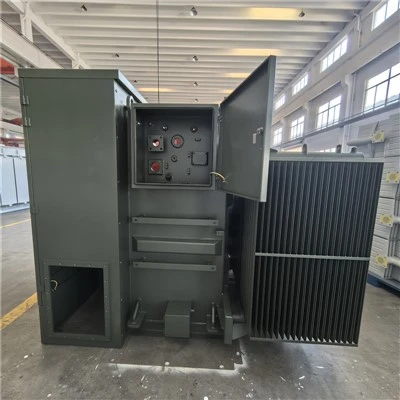
An oil immersed transformer, as the name suggests, uses mineral oil (sometimes synthetic ester oils these days, for more environmentally sensitive sites) as its insulating and cooling medium. The entire core and winding assembly is submerged in this oil, which fills the sealed tank. That’s the tank’s primary job here: it’s a pressure vessel that holds the oil, protects it from contaminants, and keeps it contained even when the transformer is operating at high temperatures. A good oil immersed tank isn’t just a simple steel box, either. We add features like corrugated fins, radiators, or cooling fans to help dissipate the heat the oil absorbs from the core and windings. Some of our larger tanks even have conservator tanks—extra spaces attached to the main tank that let the oil expand and contract as it heats up and cools down, without exposing it to outside air that would cause moisture or sludge buildup.
Dry type transformers, by contrast, use air as their insulating and cooling medium. The core and windings are wrapped in a resin—usually epoxy resin—that cures into a solid, insulating layer. There’s no liquid inside the tank at all; instead, air (either natural convection or forced air from fans) flows around the windings to carry away heat. The dry type tank’s job is totally different from an oil tank: it’s a sealed or ventilated enclosure that keeps the resin windings safe from dust, debris, and physical damage, while still letting air circulate. No oil means no need for pressure resistance, so dry type tanks are often thinner, lighter, and simpler in design than their oil immersed counterparts.
Now that we’ve got the basics down, let’s get into the practical differences that actually affect how these transformers perform, cost, and are installed. The first big one is cooling efficiency, and that’s where oil immersed tanks really shine. Mineral oil has a much higher heat capacity than air—meaning it can absorb and carry away far more heat per unit volume. That’s why oil immersed transformers are typically more efficient for high-power applications: a single oil immersed transformer can handle loads from a few kVA up to hundreds of MVA, while dry type transformers usually max out around a few MVA, and even that requires large cooling fans and plenty of space. For industrial sites with heavy machinery, large commercial buildings, or utility substations where power demand is constant and high, that cooling efficiency is non-negotiable. I’ve supplied oil tanks for transformers at manufacturing plants that run 24/7, and those units barely break a sweat even when they’re working at full capacity.
Dry type transformers, on the other hand, rely on air cooling, which is less efficient. That’s why they’re limited to lower power loads, but it also makes them better suited for locations where oil isn’t allowed. That leads us to the next big difference: safety and environmental impact. Oil is flammable, right? A leaking oil transformer can catch fire, and even if it doesn’t, spilled mineral oil is a hazardous substance that can contaminate soil and water if it’s not properly contained. That’s why oil immersed transformers can’t be installed indoors in many cities—residential high-rises, school buildings, hospitals, or downtown commercial spaces usually have strict codes banning liquid-filled transformers inside structures. The tank itself has to be designed to prevent leaks, and even then, you need secondary containment systems, like spill trays, to catch any oil that does escape.
Dry type transformers eliminate that risk entirely. No oil means no fire hazard, no hazardous spills, no need for secondary containment. That’s why you see dry type units installed in basement electrical rooms of apartment buildings, on college campuses, or near sensitive electronics like server farms. The tank here is just a protective casing, so it doesn’t have to be rated for pressure or contain flammable material, which cuts down on installation costs a lot. I remember a project we worked on for a downtown hospital a few years ago; they needed a transformer right next to the emergency power room, and oil wasn’t an option because of the risk to critical patient care equipment. The dry type tank we supplied was small, easy to fit in the tight space, and met all their local safety codes without any extra spill containment needed.
Next up is maintenance, and this is a big one that most people don’t think about until something goes wrong. Oil immersed transformers require regular maintenance, all centered around the oil. Every few years, you have to test the oil for moisture, acidity, and contaminants; filter or replace the oil if it breaks down; and inspect the tank for rust, leaks, or seal degradation. Even with the best tank design, over time, gaskets can fail, and oil can seep out or absorb moisture from the air. That maintenance adds up in cost and downtime, especially for large industrial transformers that are critical to operations.
Dry type transformers have way less maintenance. You don’t have to test or replace oil, so the only real upkeep is inspecting the tank for physical damage, and maybe cleaning the cooling vents to make sure air can flow freely. That’s a huge plus for facilities that don’t have a dedicated maintenance team for electrical equipment. The tradeoff here, though, is that dry type transformers are more sensitive to dust and humidity. If the ventilation system gets clogged, or if air moisture levels get too high, the resin coating on the windings can degrade, leading to failure. So even though they don’t need oil testing, they do require regular checks of their air flow and environment, especially in dusty or humid locations.
Cost is another key difference, and it’s not as straightforward as you might think. Upfront cost: oil immersed transformers and their tanks are usually cheaper per kVA for large loads. The materials for the tank (heavy steel, pressure-rated seals, corrosion-resistant coatings) are manageable, and the cooling efficiency means you don’t need extra fans or large ventilation systems. Dry type transformers, especially for higher kVA loads, are more expensive upfront because of the specialized resin coating and the larger enclosure needed for air cooling. But when you add in the extra costs of installing oil units—spill containment, fire suppression systems, regular oil testing and replacement—dry type can end up being more cost-effective in the long run for indoor, low-power applications. For large outdoor or industrial sites, though, the lower upfront and operational cost of oil immersed units usually wins out.
Durability is the last big practical difference. Oil immersed transformers, with their sealed tanks and oil insulation, are built to withstand harsh environments. Extreme temperatures, heavy vibration from industrial equipment, even exposure to rain and dust don’t bother them much, as long as the tank is properly sealed and coated to prevent rust. I’ve supplied oil tanks for transformers in mines, on oil rigs, and in remote utility substations where maintenance is hard to access, and those units have run reliably for 20+ years with minimal issues. Dry type transformers, while durable in their own right, are more sensitive to environmental extremes. Extreme cold can make the resin brittle, and extreme heat can cause the resin to break down, so they’re not ideal for very hot or very cold outdoor applications.
So which one is right for your project? There’s no one-size-fits-all answer, but the key questions to ask are: Where will the transformer be installed? If it’s indoors in a public or sensitive space, dry type is almost always the safe, code-compliant choice. If it’s outdoors, in an industrial facility, or in a remote utility location, oil immersed is going to be more efficient, reliable, and cost-effective. What’s the power load? For loads under 2 MVA, dry type can work, but for anything larger, oil immersed is the standard. What’s your maintenance capacity? If you have a team that can handle regular oil testing and tank inspections, oil is fine. If you want minimal upkeep, dry type is better.
As someone who’s spent years working with oil immersed transformer tanks, I can tell you that we don’t just sell metal boxes—we sell reliable power infrastructure. A good tank is the difference between a transformer that runs for 25 years without a hitch, and one that fails prematurely due to a leak or poor cooling. We design our oil tanks with corrosion-resistant coatings, robust seal systems, and tailored cooling features depending on where the unit is going. For a mine site in the desert, we add extra cooling fins to handle high ambient temperatures. For a coastal power substation, we use special steel alloys to resist saltwater corrosion.
If you’re planning a new substation, renovating a commercial building, or upgrading an industrial facility’s power system, choosing the right transformer tank is one of the most important decisions you’ll make. The wrong choice can lead to code violations, costly downtime, or even safety hazards. Whether you’re weighing the efficiency of oil immersed tanks for a large outdoor application or the safety of dry type tanks for an indoor sensitive space, I’m here to help you work through the details. We can walk through your project requirements, answer any questions you have about tank design, materials, or maintenance, and help you find the solution that fits your needs and budget.
References
- American National Standards Institute (ANSI)/IEEE C57.12.00, Standard for General Requirements for Liquid-Immersed Distribution, Power, and Regulating Transformers
- National Electrical Manufacturers Association (NEMA) Standards Publication No. TP 1, Thermal Evaluation of Dry-Type Distribution and Power Transformers
- International Electrotechnical Commission (IEC) 60076-1, Power Transformers – Part 1: General Requirements
- Occupational Safety and Health Administration (OSHA) 29 CFR 1910.307, Electrical Equipment for General Use, Secondary System Requirements for Liquid-Filled Equipment
- Institute of Electrical and Electronics Engineers (IEEE) C57.112, Standard for the Identification of Insulation Systems for Dry-Type Transformers
Transformer Radiators By Surface Treatment To discuss your specific transformer tank needs or request a custom quote, reach out to our team. We specialize in engineering and manufacturing high-performance oil immersed transformer tanks tailored to industrial, utility, and commercial applications, with over a decade of experience delivering reliable solutions for projects of all sizes.
Nantong Joyue Electrical Technology Co., Ltd.
Nantong Joyue Electrical Technology Co., Ltd. is one of the most experienced oil immersed transformer tank manufacturers and suppliers in China, featured by quality products and good price. Please rest assured to buy advanced oil immersed transformer tank made in China here from our factory. Customized orders are welcome.
Address: No.99, Huayuan Avenue, Hai’an City, Jiangsu Province, China.
E-mail: info@joyueradiator.com
WebSite: https://www.joyueradiator.com/
