If you’ve ever stood on the tarmac watching a commercial jet taxi toward a gate, or listened to the steady thrum of a private business aircraft lifting off, you might not have stopped to think about the thousands of individual parts that keep that machine safe, compliant, and operational. For anyone new to the aerospace supply chain, one term that comes up constantly is “rotable aerospace parts”—and if you’re an operator, maintenance team, or fellow supplier, understanding exactly what these parts are, how they differ from expendable components, and why they matter could be the difference between a smooth turnaround and a costly, mission-delaying hold. As someone who’s spent the last 12 years sourcing, qualifying, and delivering aerospace parts for operators across North America and Europe, I’ve seen first-hand how rotable parts don’t just make a supply chain work—they make aviation work. Aerospace Parts

Let’s start with the basics: the global aerospace parts industry is split into two core categories: expendable and rotable. Expendable parts are the ones that get used up over a single cycle of operation, have a limited lifecycle, and are discarded after use. Think of air filters, seals, fasteners, or light bulbs; when an air filter reaches its maximum pressure differential after a few hundred flight hours, it’s removed and never reused. Rotable parts, on the other hand, are engineered to be removed from an aircraft at scheduled intervals, undergo a rigorous maintenance, repair, and overhaul (MRO) process, and then be returned to inventory for reuse on another aircraft. What makes a part rotable isn’t just its design—it’s its intended purpose: to serve multiple operational lifecycles over decades, as long as it meets strict aviation regulatory standards.
To put that in tangible terms, a rotable part isn’t a random bolt or a single sensor. It’s things like aircraft landing gear assemblies, turbine engines, auxiliary power units (APUs), control surfaces like ailerons or rudder actuators, avionics units like flight management systems (FMS), or even complete cabin systems like galley ovens. Take an APU, for example: the small gas turbine that powers an aircraft’s electrical systems when the main engines are shut down. A new APU can cost upward of $1 million, but with scheduled inspections, component replacements, and factory-overhauled parts, a single APU can stay in service for 20 to 30 years. That’s rotable. If it were expendable, every time an APU failed mid-flight, the airline would have to scrap it and buy a brand new one—costing tens of thousands of dollars in downtime and replacement fees for every incident.
Now, it’s not just large, high-cost parts that are rotable. Many smaller, lower-value components fall into this category too. A rotary actuator that controls wing flap positioning, for example, might cost a few thousand dollars, but it’s classified as rotable because it’s removed during scheduled heavy maintenance, inspected for wear, and sent out for repair if needed, rather than tossed. The key distinction here is the maintenance logic: expendable parts follow a “use and replace” model, while rotable parts follow a “remove, repair, re-certify, reuse” model. That difference saves airlines, corporate operators, and MRO providers an estimated 30 to 40% on annual parts costs, according to recent industry data, because the cost of repairing a rotable part is a fraction of the cost of a new one.
But for rotable parts to work the way they’re supposed to, they can’t just be repaired and stuck back on an aircraft. They have to meet a strict set of regulatory requirements that govern every step of their lifecycle. In the United States, that means compliance with Federal Aviation Administration (FAA) regulations, most notably 14 CFR Part 43 (Maintenance, Preventive Maintenance, Rebuilding, and Alteration) and Part 145 (Repair Stations). In Europe, it’s the European Union Aviation Safety Agency (EASA) Part 145 rules. These rules dictate every detail: how a part is removed from an aircraft, what inspections must be done, what repair methods are allowed, and how the part is documented before it’s reintroduced to service.
As a supplier, one of the most common questions I get from first-time clients is, “What makes a rotable part ‘good’?” It’s not just that it fits the part number or works with their aircraft. It’s about three core things: traceability, certification, and material integrity. Traceability means every rotable part has a complete paper trail (and digital log, these days) that follows it from the original manufacturing facility, through every removal, repair, and inspection. That’s non-negotiable for regulators—if a part fails, investigators need to be able to see exactly who worked on it, when it was repaired, and what components were used. Certification means the part has been re-approved by a certified repair station or the original equipment manufacturer (OEM) to meet the exact performance standards required for that aircraft type. For example, a repaired landing gear strut can’t just fit; it has to pass a hydraulic pressure test, a structural load test, and get a formal FAA Form 8130-3, which is the document that proves airworthiness.
Material integrity is another big one. Unlike expendable parts, which are often made with standard, easy-to-source materials, rotable parts are built to withstand extreme conditions: the 40-degree Fahrenheit drop at 35,000 feet, the vibration of turbine engines, the stress of landing gear absorbing a 100-ton aircraft’s impact. That means materials like titanium alloys, high-grade steel, and advanced composites that are precision-machined and tested for fatigue. If even a tiny crack is missed during a repair, that part could fail mid-flight—a risk no operator can take.
Another common misconception I hear is that rotable parts are “used” parts, so they’re less reliable than new OEM parts. That’s simply not true, if they’re handled correctly. I’ve seen a 15-year-old rotable APU that was fully overhauled and tested to perform just as well as a brand new OEM unit, at half the cost. In fact, many OEMs now offer rotable units as part of their service programs, because it’s more cost-effective for operators. The key is choosing a supplier that works with certified repair stations, has a rigorous inspection process, and can provide full traceability for every part they sell.
Now, let’s talk about how rotable parts fit into the broader aerospace supply chain. For a large commercial airline, the parts inventory is a huge investment—some fleets carry more than $100 million in parts stock, split between expendable and rotable. Rotable parts make up about 60% of that inventory value, because each unit is more expensive. But because they can be reused, airlines don’t have to keep dozens of identical landing gear assemblies or APUs on hand; they can have a smaller pool of rotable parts that are repaired and rotated between aircraft. That reduces inventory holding costs, frees up cash flow, and means an operator can get a replacement part much faster—because a repaired rotable part is often available in 24 to 48 hours, whereas a new OEM part can take weeks, or even months, to arrive.
For smaller operators, like corporate jet fleets or regional airlines, rotable parts are even more critical. They often don’t have the large budgets or inventory storage space that major carriers have, so relying on rotable parts lets them keep their aircraft in service without breaking the bank. I worked with a small corporate operator last year that had a faulty flight control actuator on one of their Gulfstream G650s. A new OEM actuator would have cost them $18,000, plus a 6-week lead time that would have pulled the aircraft out of service for months. We sourced a fully overhauled, FAA-certified rotable actuator for $7,500, and had it delivered and installed in 3 days. That’s the kind of impact rotable parts have on small operators—they don’t just save money, they keep their business running.
But it’s not all smooth sailing with rotable parts. The industry has faced a few challenges in recent years, most notably supply chain disruptions from the COVID-19 pandemic, which led to delays in both new OEM parts and overhauled rotable units. There’s also a growing issue with counterfeit rotable parts—unscrupulous sellers offering parts that look legitimate, but that haven’t been tested, certified, or traceable. That’s why working with a reputable supplier is non-negotiable: a good supplier will verify every part’s certification, track its entire lifecycle, and ensure that every repair meets regulatory standards.
Another challenge is the shift toward more sustainable aviation. As the industry works to reduce its carbon footprint, some operators are choosing to repair rotable parts instead of replacing them, because repairing a part uses a fraction of the energy required to manufacture a new one. A 2022 study by the Aerospace Industries Association found that repairing a rotable part reduces carbon emissions by an average of 75% compared to producing a new equivalent part. That’s a big win for sustainability, and it’s why rotable parts are becoming even more important as the industry moves toward net-zero goals.
So, what does all this mean for you, whether you’re an aircraft operator, a maintenance manager, or just someone interested in how aerospace works? It means that rotable parts are far more than just “used parts”—they’re the backbone of a cost-effective, efficient, and sustainable aerospace supply chain. They let operators keep aircraft in service longer, reduce costs, and stay compliant with strict safety regulations. As someone who’s been in this industry for years, I’ve seen how a well-managed rotable parts program can make or break an operator’s profitability. I’ve also seen how a poorly sourced part, with no certification or traceability, can lead to costly delays or, worse, safety risks.
If you’re in the market for rotable aerospace parts, the key is to partner with a supplier that understands not just the parts, but the regulations and the needs of your operation. A good supplier will work with you to identify the right rotable parts for your aircraft, provide full certification and traceability, and offer competitive pricing without sacrificing quality. They’ll also understand that downtime is expensive, and will prioritize fast, reliable delivery so you can get your aircraft back in the air as quickly as possible.
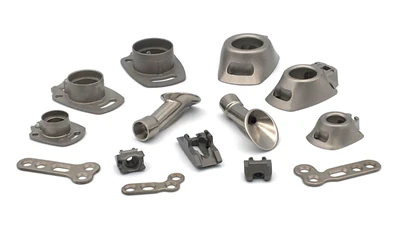
At the end of the day, aviation relies on two things: safety and availability. Rotable parts play a huge role in both. They turn high-cost, long-lifecycle components into a manageable, reusable resource that keeps aircraft flying, businesses operating, and passengers safe. If you’re looking to streamline your parts inventory, reduce costs, or ensure your rotable parts are compliant and reliable, I’m here to help. Reach out to me to discuss your specific needs, and let’s find the right solutions for your operation.
Injection Molding References
- Aerospace Industries Association. (2022). Sustainable Aerospace Maintenance: The Role of Rotable Parts in Carbon Reduction.
- Federal Aviation Administration. (2023). 14 CFR Part 43: Maintenance, Preventive Maintenance, Rebuilding, and Alteration.
- European Union Aviation Safety Agency. (2022). EASA Part 145: Approved Repair Stations.
- FlightGlobal. (2023). Global Aerospace Parts Market: Rotable vs. Expendable Trends.
- International Air Transport Association. (2022). Operational Cost Efficiency in Commercial Aviation: The Impact of Rotable Parts Management.
Shenzhen Jingcheng Dingyi Forming Technology Co., Ltd.
Shenzhen Jingcheng Dingyi Forming Technology Co., Ltd. is one of the most professional aerospace parts manufacturers and suppliers in China, also supports customized service with low price. Please feel free to buy bulk cheap aerospace parts from our factory. For quotation, contact us now.
Address: 1st Floor, Building 3, Huafeng Zhenbao Industrial Park, No.137 Shihuan Road, ShiYan Town, Bao’An District, ShenZhen, PRC
E-mail: info@jctop-cnc.com
WebSite: https://www.jctop-cnc.com/
