As someone who’s spent the last 18 years as a wastewater treatment equipment supplier, I’ve seen firsthand how the term “EPA” gets tossed around at client boardrooms, construction site meetings, and even casual chat with plant operators—sometimes with a mix of reverence and frustration. But here’s the thing: for anyone in the wastewater space, the EPA isn’t just a government acronym or a box to check on a compliance form. It’s the backbone that turns vague rules into actionable standards, and the partner that keeps small towns from flushing raw sewage into rivers while still letting large plants innovate. Let’s break down exactly what the EPA’s role in US wastewater treatment is, and how it shapes the work we do every day. Waste Water Treatment

First, let’s start with the foundation: the EPA’s legal authority here. Most people don’t know this, but the core framework for wastewater regulation comes from the Clean Water Act (CWA), which Congress passed in 1972. Back then, the US had roughly 18,000 municipal wastewater plants, and half of them were dumping untreated or barely treated sewage into lakes, rivers, and coastal waters. The CWA set a goal of making all US waters “fishable and swimmable” by 1983, and charged the EPA with writing the regulations to make that happen. That’s not a small task—we’re talking about setting limits for hundreds of pollutants, from basic nutrients like nitrogen and phosphorus to heavy metals, pathogens, and even industrial chemicals that didn’t exist in 1972.
For our business, that means every piece of equipment we engineer—whether it’s a membrane bioreactor (MBR) system for a city plant, a sludge dewatering unit for a rural facility, or a monitoring sensor to track effluent quality—has to be designed to meet EPA standards, not just our own performance specs. Back in the 1990s, when I first started out, a lot of small plants thought they could get away with basic aeration tanks and skip over nutrient removal. But the EPA’s 2004 Nutrient Strategy changed all that, setting strict limits on nitrogen and phosphorus to cut down on harmful algal blooms (the kind that closed Lake Erie’s beaches for weeks in 2014). Overnight, demand for our MBR systems and advanced filtration gear tripled. It’s not just us—any supplier in this space, from chemical dosing companies to pipe manufacturers, has to align their products with EPA regulations to even bid on a public works project.
Next, there’s the permitting and oversight piece, which is where the EPA’s role gets practical for operators. The CWA requires every wastewater treatment plant (municipal or industrial) to have a National Pollutant Discharge Elimination System (NPDES) permit. These permits aren’t one-size-fits-all; the EPA works with state environmental agencies (and in some cases, directly with large industrial plants) to set discharge limits based on the plant’s size, the body of water it’s discharging into, and local environmental risks. For example, a plant discharging into a small, shallow lake might get stricter phosphorus limits than one dumping into the Gulf of Mexico, which has more dilution capacity.
But here’s what operators don’t always tell you: the EPA isn’t just there to fine you if you mess up. They also provide funding and technical support—things that make our jobs as suppliers way easier. The EPA’s Clean Water State Revolving Fund (CWSRF) has provided over $150 billion in grants and low-interest loans to wastewater projects since 1987. Last year, we worked with a small town in rural Iowa that wanted to upgrade their old plant but couldn’t afford it on their own. The CWSRF covered 80% of the project cost, so they were able to buy our new advanced aeration system instead of patching up a 50-year-old tank. Without that funding, that town would’ve been stuck with a permit that was impossible to meet, and we wouldn’t have gotten the chance to deliver equipment that actually works.
Then there’s the technical standards and innovation piece, which is where the EPA’s role feels most forward-thinking, not just rule-based. The EPA doesn’t just set limits on existing pollutants; they fund research into new treatment technologies and test emerging contaminants—stuff that wasn’t even on the radar 10 years ago, like PFAS (forever chemicals), microplastics, and pharmaceuticals in wastewater. A few years back, the EPA launched a National PFAS Testing Strategy, because studies showed that these chemicals don’t break down in standard treatment and are ending up in drinking water. We were one of the suppliers invited to test a new activated carbon filtration system that the EPA helped validate—now that system is a staple for plants looking to meet the upcoming EPA PFAS discharge limits.
That’s a big point a lot of people miss: the EPA isn’t just a regulatory enforcer. They’re a bridge between research and industry. When they publish a new technology assessment, it’s not just a report on a shelf—it’s a signal to plant operators that a solution is proven, and a signal to us as suppliers that there’s demand for that gear. It takes a lot of the guesswork out of what we develop next. For example, when the EPA started focusing on microplastics, we shifted a portion of our R&D budget to designing filtration modules that catch microbeads and fibers from laundry and industrial runoff. That shift didn’t happen because a client asked for it specifically—it happened because the EPA’s research told us that microplastics were a growing threat, so we needed to prepare.
Of course, no role is without its challenges, and that’s true for the EPA too. One of the biggest complaints we hear from plant operators is that the regulatory process can be slow to adapt to new problems. For years, PFAS was classified as an “emerging contaminant” with no federal limits, so some states set their own rules that were stricter than what the EPA proposed. That created confusion for suppliers like us, because we had to build equipment that met both state and upcoming federal standards, which meant extra engineering costs. There’s also the issue of small communities struggling to keep up with compliance. A lot of rural plants have budgets that are smaller than the fines a big corporation might pay, so when permit limits get tightened, it’s a real strain. But the EPA has worked to address that in recent years, offering extended compliance timelines and small-plant grants, which has helped a lot.
As someone who’s been in this industry long enough to see how the EPA’s role has evolved, I’ll tell you this: it’s not perfect, but it’s irreplaceable. Before the Clean Water Act, I could take my kids to a local river that was thick with sewage, and now that same river is a spot where people fish and swim. That’s the EPA’s doing. For our business, that means every day, we’re aligning our work with rules that protect public health and the environment, while still giving plants the flexibility to find solutions that fit their budget.
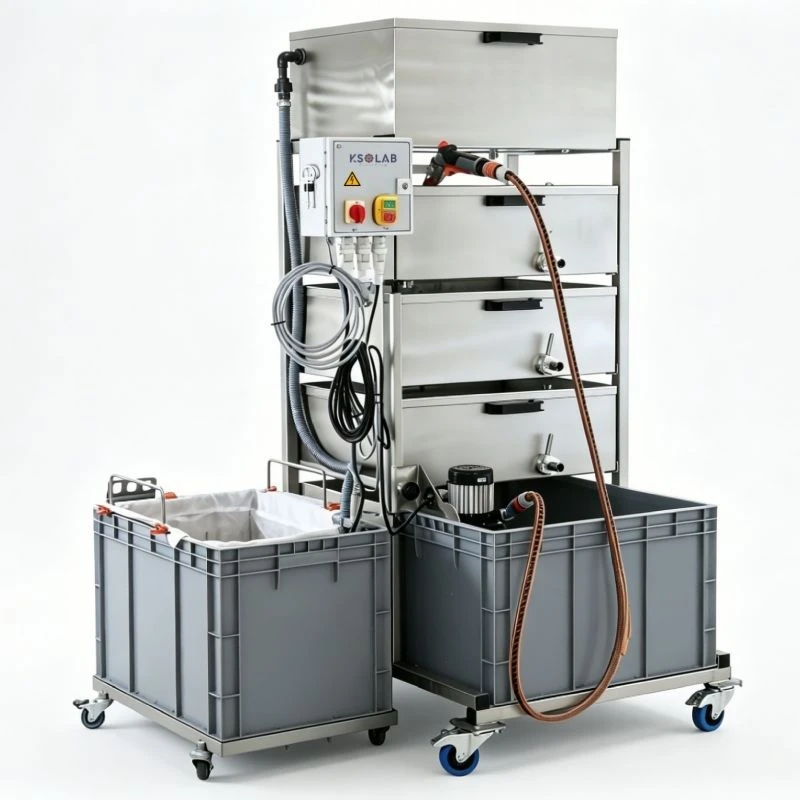
Now, if you’re a municipal plant manager, industrial wastewater supervisor, or a small community looking to upgrade your treatment system, you know how overwhelming compliance can get. The EPA’s standards are clear, but figuring out the right equipment to meet them—and stay within budget—takes expertise. We’ve worked with hundreds of facilities across the country to design custom treatment systems that meet all EPA requirements, from basic nutrient removal to emerging contaminant treatment. Whether you’re dealing with an upcoming permit renewal, need to upgrade your aging infrastructure, or want to test a new technology, we’re here to help. Reach out to our team to start a procurement consultation—we’ll walk you through the options, answer your questions about EPA compliance, and make sure you get a solution that works for your plant and your community.
Waste Water Treatment References
United States Environmental Protection Agency. (2023). Clean Water Act Overview.
United States Environmental Protection Agency. (2004). National Nutrient Strategy.
United States Environmental Protection Agency. (2022). CWSRF Fact Sheet: Funding Wastewater Infrastructure.
United States Environmental Protection Agency. (2021). PFAS Strategic Roadmap.
US Department of Health and Human Services. (2015). The Effects of Unprocessed Wastewater on Public Health and Aquatic Ecosystems.
KS Lab Finishing Co., Ltd.
As one of the most professional waste water treatment manufacturers in China, we also support customized service. We warmly welcome you to wholesale durable waste water treatment made in China here from our factory. If you have any enquiry about pricelist, please feel free to email us.
Address: No.11-14, Yantian Shuibei Commercial Street, Fenggang Town,Dongguan,China
E-mail: sales@kslabfinishing.com
WebSite: https://www.kslabfinishing.net/
