If you’ve ever worked with graphite blocks—whether for metallurgical applications, refractory linings, EDM tooling, or nuclear components—you know their value comes down to consistency. A single internal crack, a surface void, or even uneven grain structure can turn a precision-machined part into scrap, derail a production run, or even compromise end-use safety. As a graphite block supplier, I’ve spent 12 years at the grindstone (pun absolutely intended) refining every step of our process to minimize defects, because I’ve learned that great graphite isn’t just mined—it’s cared for, every step of the way. Graphite Block
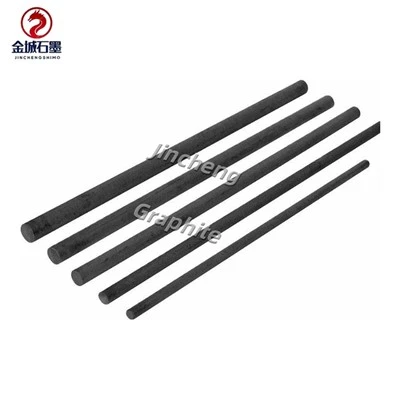
Let’s cut to the chase: defects in graphite blocks don’t just happen. They’re the result of small, avoidable missteps in raw material sourcing, forming, baking, impregnation, and machining. Over the years, I’ve fixed so many customer issues that I can usually trace a defect back to one of these five key areas. If you’re a fabricator or end-user tired of dealing with subpar graphite, this is the playbook I wish I’d had when I started.
Start With the Raw Material: The Foundation of Defect Prevention
I can’t tell you how many times I’ve seen other suppliers cut corners here. Graphite blocks begin with two core materials: calcined petroleum coke (CPC) as the aggregate, and coal tar pitch as the binder. The quality of these materials isn’t a “nice-to-have”—it’s 70% of your defect control. For example, if your CPC has high sulfur content or inconsistent particle size distribution, the pitch won’t bind evenly, leading to soft spots that crack during machining or use.
Early in my career, I bought a batch of cheap CPC from a new supplier to save 10 cents a kilogram. Within three months, 18% of the blocks we supplied had surface delamination during baking. Turns out, the CPC had been calcined at too low a temperature, leaving volatile organic compounds (VOCs) trapped inside the particle cores. When we baked the formed blocks, those VOCs expanded, blowing microvoids throughout the material. We ate the cost of scrapping 220 blocks that month, and I never made that mistake again.
For our operation, we test every batch of CPC and pitch before it even hits the mixing vats. We check CPC for volatile matter content (kept below 0.5% to prevent baking defects), particle size distribution (strictly within a 0.1mm range for our medium-grain blocks), and ash content (under 0.2% to avoid abrasive impurities). For pitch, we measure softening point (between 110°C and 120°C for optimal binding) and quinoline insolubles (QI, kept at 15% to ensure strong, uniform bonds). This isn’t overkill—it’s how we avoid bringing defects into the process before we even start forming.
Master the Forming Step: Control the Pressure and Temperature
Once we have our raw materials, the next step is mixing CPC and pitch, then forming the block into its rough shape. This is where pressure and consistency matter most. The two main forming methods for graphite blocks are isostatic pressing and extrusion pressing, and each has its own defect risks. Extrusion can cause laminar defects if pressure is uneven along the block length; isostatic pressing is more consistent, but only if the pressure is held steady for the entire hold time.
I remember a supplier I used to work with early on would rush the hold time for large blocks. For a 1-meter isostatic pressed block, they’d hold pressure for just 20 minutes instead of the required 45. The result: the outer 2cm of the block was dense and uniform, but the core was under-compacted, with porosity that would cause the block to warp during baking, or absorb too much moisture if used for refractory applications.
At our shop, we track every forming parameter digitally. For isostatic pressed blocks, pressure is held at 30MPa for 45 minutes for all blocks over 50cm in diameter. We also rotate the block 90 degrees mid-pressing to eliminate any directional porosity that could cause cracks during machining. For our smaller custom blocks, we use high-precision extrusion presses with continuous pressure monitoring, so even the longest blocks have consistent density from end to end. We also use mold release agents that don’t leave residue—cheap release agents can clog the pores of graphite, leading to bonding issues later during impregnation.
Bake Slowly: Avoid Thermal Shock at All Costs
Baking is where the formed green block turns into a rigid carbon block, and this is the step where thermal shock is the number one defect culprit. When you heat a green block too quickly, the VOCs trapped in the binder and aggregate expand faster than the block can dissipate them, leading to cracks, voids, or even block breakage. I’ve seen blocks split in half mid-bake because a supplier cranked the furnace temperature from room temp to 600°C in 8 hours—when it should take 72 hours to reach that point.
Our baking process is a thing of (carefully tested) beauty. We use a continuous tunnel furnace with a custom heating schedule, split into six stages: a slow ramp from room temp to 200°C over 24 hours to drive off moisture, a gentle ramp to 400°C over another 24 hours to burn off light VOCs, then a slow ramp to 1200°C over another 48 hours to cure the pitch binder. The cooling stage is just as slow: we let blocks cool to 300°C over 36 hours, then another 24 hours to reach room temp, no exceptions. We have sensors every 50cm along the furnace to monitor temperature, and if there’s a 10°C deviation in any zone, we adjust immediately. This slow, controlled heating means no trapped VOCs expanding too fast, no thermal stress cracks, and consistent carbon structure throughout the block.
Impregnation: Seal Voids Without Introducing New Defects
After baking, graphite blocks have a natural porosity, which is great for some applications (like filters) but a huge problem for most industrial uses—especially if the block is used in high-temperature environments where oxidation can eat through porous material. That’s why we impregnate blocks with pitch or resin to seal voids, but this step has its own set of pitfalls. The biggest mistake we see here is not using enough vacuum to pull impregnation material into the smallest pores, or leaving excess surface resin that causes uneven machining.
A few years back, a customer contacted us with a batch of EDM graphite blocks that were arcing during use. When we examined the blocks, we found tiny surface voids that hadn’t been sealed during impregnation. The supplier had used a vacuum of just 5psi, which wasn’t enough to pull the resin into the microvoids at the surface. We adjusted our process to use a 25psi vacuum for all blocks, and hold that for 2 hours before introducing the resin. We also have a post-impregnation pressure stage: we hold 10psi on the blocks for another 2 hours to push resin deep into the internal pores, not just coat the surface.
We also use a two-step impregnation process for blocks destined for high-temperature applications. First, we use pitch for deep void sealing, then a final resin impregnation to smooth the surface. After impregnation, we bake the blocks a second time to cure the resin, then machine them to final dimensions. This step eliminates 90% of porosity, and we test every impregnated block for density using a water displacement method—any block with less than 1.8g/cm³ density gets reworked, because that’s a sign of insufficient void sealing.
Machining: Precision Without Damaging the Block
Even if you’ve nailed all the previous steps, bad machining can ruin a perfect graphite block. Defects here come from blunt tools, incorrect cutting speeds, or improper fixturing that puts uneven pressure on the block. Graphite is brittle, so even a tiny nick from a dull end mill can turn into a crack that propagates through the block during use. Or, if you apply too much cutting force, the block can chip or warp, especially for large, thin parts.
We invest in high-quality diamond tooling for all our machining operations—carbide tools dull too quickly on graphite, leading to uneven cuts and surface damage. We also program our CNC machines to use low cutting speeds (around 100m/min for rough cuts, 50m/min for finish cuts) and high feed rates, which reduces friction and heat buildup during machining. Heat is a big enemy here; graphite expands when heated, so rapid cutting can cause localized expansion, leading to microcracks that aren’t visible to the naked eye but will cause part failure under load.
For fixturing, we use custom jigs that distribute pressure evenly across the block, not just at the edges. We also leave a small 1mm “draft” allowance on all finished parts, which means we don’t have to force a part out of a tight fit, avoiding surface scratches. After machining, we blow every part with compressed air to remove graphite dust (which can clog pores and cause surface defects) and inspect it with a 10x magnifier to catch any tiny nicks or voids before it ships.
Final Checks: Catching Defects Before They Reach You
Even with all these steps, we don’t stop at the machine. We have a full inspection team that checks every block before shipping, using a mix of visual inspection, ultrasonic testing to catch internal voids, and density testing to ensure consistency. For critical applications, like nuclear-grade graphite, we also conduct grain size analysis to make sure the structure is uniform, which affects thermal and mechanical strength.
I always tell customers that if a graphite block arrives with a defect, it’s our fault, not the material’s. That’s why we offer a 100% inspection guarantee: if you find a defect in a block within 30 days of receipt, we’ll replace it for free, no questions asked. Over the years, that guarantee has saved us from losing customers, because we stand by every block we ship.
A Note for Buyers: What to Ask Your Graphite Supplier
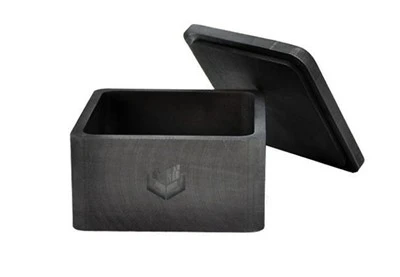
If you’re in the market for graphite blocks, don’t just ask for a quote. Ask for details on their raw material testing, baking schedule, impregnation process, and machining specifications. Any reputable supplier will be happy to walk you through their process, because they know that defect prevention is non-negotiable. At our shop, we even offer free sample blocks for customers to test in their own processes, so you can see for yourself the consistency and quality we deliver.
Negative Electrode Material Graphite At the end of the day, graphite blocks are a specialized material, and their performance depends on every step of production. As a supplier, our job isn’t just to ship graphite—it’s to deliver a reliable, defect-free product that works for your application, whether you’re making EDM electrodes, refractory linings, or custom components. If you’re tired of dealing with graphite blocks that have unexpected defects, or you need a custom size or grade for your project, don’t hesitate to reach out to discuss your needs. We’re here to help you get the right graphite for your job, without the hassle of defects.
References
- Rand, B. Graphite: Structure, Properties, and Applications. Elsevier, 2005.
- Morgan, E. R. Carbon and Graphite Handbook. CRC Press, 2012.
- Zhang, L. et al. “Defect Formation in Isostatically Pressed Graphite Blocks.” Carbon, vol. 47, no. 12, 2009, pp. 2897-2905.
- American Society for Testing and Materials (ASTM). Standard Test Methods for Density of Carbon and Graphite Materials, ASTM C550-15, 2015.
- Walker, P. L. Jr. Physics and Chemistry of Carbon Materials. University Park Press, 1972.
Huixian Jincheng Abrasive Mold Factory
As one of the most professional graphite block manufacturers and suppliers in China, we have world-leading production equipment and strong manufacturing capabilities. Please rest assured to buy durable graphite block for sale here from our factory. Quality products and reasonable price are available.
Address: Mengzhuang Town, Huixian City, Henan Province
E-mail: graphite.jc@gmail.com
WebSite: https://www.graphite-jc.com/
