If you’ve ever walked through a warehouse, loading dock, or distribution center, chances are you’ve rolled a plastic pallet sleeve box past dozens of times — sometimes dozens in a single shift. As a heavy pallet sleeve box supplier, the question I get more than any other isn’t about load capacity or size specs: it’s “How long will this thing actually last?” It’s a fair question. Plastic sleeve boxes are a big investment for any business, and no one wants to drop money on a product that cracks, warps, or falls apart after a handful of uses. Heavy Pallet Sleeve Box
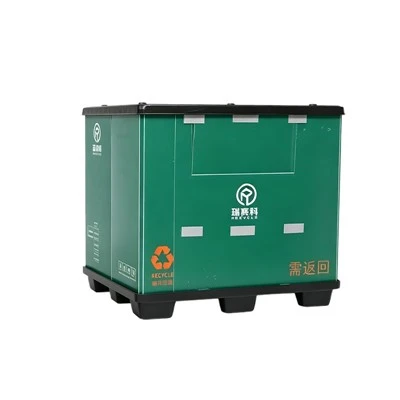
The truth is, there’s no one-size-fits-all answer to the lifespan of a plastic pallet sleeve box. It’s not like a lightbulb that burns out on a set schedule. How long a unit lasts depends on a mix of materials, usage, environment, and maintenance — all factors that change from one customer’s operation to the next. After 12 years of building heavy-duty plastic pallet sleeves, I’ve seen boxes last 5 years and others hit 15, all under different working conditions. Let’s break down what actually determines their lifespan, what we’ve learned on the production floor, and how you can maximize yours.
First, let’s start with the core material. Not all plastic is created equal, especially for heavy pallet sleeve boxes designed to hold 1,500 lbs or more. We use high-density polyethylene (HDPE) for our units, and for good reason. HDPE is durable, flexible, and resistant to many of the things that break down plastics: moisture, mild chemicals, and temperature swings. But not all HDPE is the same. Virgin HDPE, which we use exclusively for our heavy models, has a longer life than recycled HDPE. Recycled material might seem like a cost-saver at first, but it can have hidden contaminants — leftover chemicals from old plastic products — that make it more prone to brittleness over time. Even when recycled HDPE is treated, it can lose structural integrity faster than virgin material when exposed to repeated heavy loads or extreme temperatures.
That said, it’s not just the resin. The manufacturing process matters a lot, too. Our heavy pallet sleeve boxes are blow-molded, a process that melts plastic and shapes it into a single, seamless unit. This means there are no weak points from seams or glues, which is a huge advantage over cheaper injection-molded or folded plastic units. We add extra thickness to the walls on load-bearing sections, like the bottom corners where pallets connect and the top edges that support stacked boxes. For the customer running a 2-shift operation moving 10 pallets a day, that extra thickness adds months — sometimes years — to the life of each unit. I’ve seen a thin, low-quality box crack at the corner after three months of moving heavy auto parts, while our thicker model ran that same route for eight years without a structural issue.
Once we get past production, the real variables kick in. Let’s talk about usage, because that’s the biggest factor of all. A plastic pallet sleeve box used for holding light consumer goods, stored in a climate-controlled warehouse, and transported once a month will last far longer than one that’s dragged across concrete, stacked to the rafters in a busy distribution center, and exposed to rain and freezing temperatures week after week.
Heavy usage wears on plastic in specific ways. Every time you lift a loaded box with a forklift, there’s a small amount of stress on the corners, the handles, and the base. Over hundreds of lifts, that stress adds up. Similarly, stacking boxes too high — even a small overstack can put twice the normal pressure on the bottom unit — will cause warping or cracking over time. One of our clients in the grocery industry used to stack their heavy produce sleeve boxes 10 high, and within two years, the bottom row had so many warped lids they had to replace a third of them. After we recommended maxing out stack height at 6, those same boxes are still going strong four years later.
Then there’s the environment. Plastic is durable, but extremes do break it down. Freezing temperatures make HDPE more brittle; if you’re moving boxes in a cold-storage facility, you can expect faster wear than if you keep them in a 70-degree office warehouse. Direct sunlight is another big one. UV rays from the sun break down plastic over time, causing fading, cracking, and brittleness. A box left outside on a loading dock all day, every day, will lose 20-30% of its structural strength in 3-5 years, even if it’s high-quality HDPE. That’s why we offer UV-stabilized HDPE as an option for customers who use their boxes outdoors — it adds another 5-10 years of useful life by blocking those sun rays.
Chemical exposure is another often-overlooked factor. If your boxes are used to hold cleaning supplies, fertilizers, or even food processing byproducts, certain chemicals can eat away at HDPE over time. Mild detergents are fine, but strong acids or solvents can break down the plastic’s molecular structure. We test our heavy pallet sleeve boxes against a range of common warehouse chemicals, but if you work with a specific harsh chemical, we can recommend a modified HDPE formula to handle it — something that adds a bit of upfront cost but saves you from replacing boxes every two years.
Maintenance, too, plays a huge role in extending or shortening lifespan. Many operators treat plastic sleeve boxes like disposable, but a small amount of upkeep can add years. For example, regularly cleaning boxes to remove dirt, sticky residue, or spilled materials prevents the kind of buildup that can trap moisture and accelerate degradation. Checking for small cracks or bent handles early — instead of letting them turn into full breaks — also helps. We’ve had customers who repair small cracks with industrial plastic adhesive instead of tossing the unit, and those boxes have lasted 10+ years, compared to the average 7 for similar units that weren’t maintained.
Now, let’s get into the real-world numbers, because that’s what most people care about. From our decades of tracking our heavy pallet sleeve boxes, the average lifespan for a unit used in standard indoor commercial settings is 7-10 years. That number jumps to 10-15 years if you’re using UV-stabilized HDPE, operating in a climate-controlled environment, and keeping usage within the load and stack limits. On the other end, a box used outdoors, moved roughly 10 times a week, and exposed to freezing temperatures might only last 3-5 years. We’ve had one customer in the lumber industry whose boxes last almost 15 years — they use them infrequently, store them in a covered shed, and only move loaded units a few times a month. Conversely, a client in metal recycling uses their boxes daily to hold 2,000 lbs of scrap metal on concrete floors, and their units need replacement after 4-6 years.
You might be wondering how that compares to other packaging options, like wooden crates or steel containers. Wooden crates can last a long time, but they’re prone to rot, splinters, and insect damage, and they’re heavier, which adds to transportation costs. Steel containers are extremely durable, but they rust, they’re very heavy, and they cost 2-3 times as much upfront. That’s why plastic pallet sleeve boxes have become so popular: their lifespan is long enough to offset the higher initial cost compared to disposable options, but they’re lighter, reusable, and require far less maintenance than wood or steel.
As a supplier, we’ve seen a lot of trends change over the years, and one that stands out is how customers are starting to care more about total cost of ownership, not just upfront price. A cheap plastic box that costs $50 might seem like a deal, but if it cracks after a year and you have to replace it, you’re spending $50 a year, not to mention the downtime lost to broken packaging. A high-quality heavy pallet sleeve box from us costs more upfront, but with a 7+ year lifespan, that works out to less than $10 a year — a fraction of the long-term cost. We’ve had customers switch from cheaper boxes to ours and cut their packaging costs by 40% over three years, just by extending how long each unit lasts.
There are a few common mistakes we see that shorten a box’s lifespan that we want to call out. First, overloading. Every one of our heavy units is rated for a maximum load, usually between 1,500 and 2,500 lbs depending on the model. Going even 200 lbs over that puts extra stress on the base and corners, leading to cracks much faster. Second, using the wrong handling equipment. Some warehouses use pallet jacks with sharp forks that can puncture the sides of the boxes, or forklifts with tines that are too wide and bend the handles. We recommend customers use wide forks and avoid dragging boxes across concrete to prevent that kind of damage. Third, storing boxes improperly. Piling heavy items on top of unused boxes, or leaving them in direct sun for months at a time, will cut their life short.
At the end of the day, the lifespan of a plastic pallet sleeve box is whatever you make of it. It’s not a fixed number, but a range that depends on your specific operation. The right combination of high-quality materials, proper usage, and a little bit of maintenance will give you a unit that lasts a decade or more — while cutting your packaging costs and reducing waste compared to disposable options.
If you’re in the market for a heavy pallet sleeve box and want to know what would work for your operation, don’t rely on generic estimates. Talk to a supplier who knows heavy-duty plastic packaging inside and out, who can walk you through the materials, options, and how to maximize your unit’s lifespan. I’ve worked with everything from small businesses with 50 boxes to large distribution centers with 10,000 units, and every time, the best solution is one tailored to how you actually use your boxes.
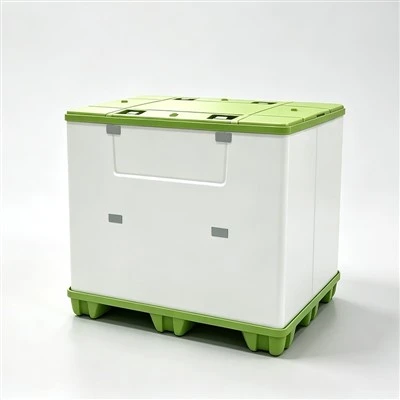
Ready to get the right heavy pallet sleeve box for your operation, and learn how to extend its lifespan? Reach out to our team to discuss your needs and get a customized quote.
Standard Pallet Sleeve Box References
- American Society of Plastic Engineers. (2019). Durability and Lifespan of Industrial HDPE Products. Plastics Engineering Publishing.
- Global Packaging Association. (2021). Operational Factors Affecting Reusable Packaging Lifespan. Industrial Packaging Standards.
- Center for Sustainable Packaging. (2020). Life Cycle Analysis of Reusable Plastic Pallet Systems. Packaging Technology and Science.
- International Organization for Standardization. (2018). ISO 175: Plastics – Determination of Resistance to Chemicals. ISO Press.
Jiangsu Recycle Logistics Technology Co., Ltd.
Jiangsu Recycle Logistics Technology Co., Ltd. is one of the most professional heavy pallet sleeve box manufacturers and suppliers in China. We have world-leading production equipment and strong manufacturing capabilities. Please feel free to wholesale bulk custom made heavy pallet sleeve box from our factory.
Address: Jiangsu Recycle Logistics Technology Co., Ltd., No. 6 Yongcheng Road, Shanghu Town, Changshu City, Jiangsu Province
E-mail: packing@szrecycle.cn
WebSite: https://www.js-recycle.com/
