Hey there, if you’re deep in the market for inline pumps (or you already work with ‘em but keep staring at NPSH specs like it’s some random alien code), let’s cut the crap. I’m the lead engineer at an inline pump supplier, and I’ve spent the last 8 years troubleshooting pump issues for factories, plumbing crews, and even small-scale beverage companies—more low NPSH headaches than I can count. Today we’re breaking down exactly what NPSH requirement for inline pumps actually means, no stuffy jargon, no long-winded textbooks, just real talk from someone who’s fixed way too many pumps that started cavitating at 2 a.m. Inline Pump
First, let’s get one thing straight: NPSH is not a marketing buzzword. It’s the #1 reason inline pumps fail early, make weird screaming noises, or waste 20% more energy than they should. And here’s the big mix-up most people get wrong: there’s NPSH Available (NPSHA) and NPSH Required (NPSHR). If you mix those two up, you’re gonna have a bad time. Let’s define ‘em quick like we’re chatting over a coffee, not in a ISO meeting. NPSHA is how much positive pressure your system (tank height, pipe size, suction line, fluid temperature) is actually feeding the pump. NPSHR is the minimum amount of pressure the inline pump needs to work without that annoying, destructive cavitation. Cavitation is when tiny bubbles form in the pump’s impeller, collapse, and beat the metal of the pump to pieces like a tiny jackhammer. Yeah, that’s the squeal you hear mid-pump run, and it’s how you end up replacing a $5,000 impeller when you could’ve just checked NPSH.
Now, why does NPSH matter specifically for inline pumps, not regular end-suction or vertical ones? Inline pumps are a bit different in their setup—they’re designed to be super compact, so they mount straight into a pipe line, no big fancy base plate. That means their suction and discharge ports are in a straight line, which cuts down on extra pipe fittings, but it also means they don’t have as much room to build up that positive pressure at the suction side. A lot of folks see the “inline” part and think “this pump will fit anywhere, no problem,” but that’s where they trip up. The impeller of an inline pump is closer to the suction flange than, say, an end-suction pump, so even a tiny drop in suction pressure can push you right under NPSHR.
Let’s use a real example from last month, okay? We had a customer in the food and beverage industry who bought 3 of our standard 5hp inline end-suction pumps for a syrup transfer line. They mounted the pump 2 feet below the syrup tank, using a 2-inch suction line, and didn’t think to check NPSHR for the pump. After 2 weeks, all 3 pumps started cavitating like crazy, throughput dropped 15%, and the impeller edges were pitted. When we ran the numbers: their NPSHA was calculated at 7 feet of liquid, and the NPSHR for that inline pump at their flow rate was 10 feet. Bam—too low, hence the mess. We swapped ’em for a slightly different inline pump model with a lower NPSHR (we call it our low-NPSH series for this exact reason) and had ’em back up and running within 2 days.
So, what’s the actual NPSH requirement for inline pumps? Let’s get into the specifics. First, NPSHR is not a fixed number. It changes with flow rate. That’s the part most cut sheets skip or bury in tiny print. At zero flow, a typical standard inline pump has an NPSHR of around 3-5 feet, but crank that pump up to its maximum flow, and that number jumps to 8-12 feet. High-efficiency inline pumps might have NPSHR as low as 6 feet at full flow, while smaller, cheaper models can push 15 feet. That’s a huge gap.
Wait, and there’s also NPSH3, right? That’s the industry standard “minimum NPSHR” that pump manufacturers report. NPSH3 is the NPSH value that causes a 3% drop in pump head at a given flow rate. That’s the number you should only use, not the “NPSH at shutoff” which is way lower and useless for real operation. A lot of suppliers will list the shutoff NPSHR to make their pumps sound better, but that’s a trick. For inline pumps, we always highlight NPSH3 on our specs because that’s what actually matters for long runs.
Now, how do you calculate NPSHA for your inline pump setup? It’s simpler than it sounds. The formula is NPSHA = (Atmospheric Pressure at your location, in feet) + (Static Suction Head, in feet) – (Vapor Pressure of your fluid, in feet) – (Suction Line Friction Loss, in feet). Let’s break that down with our earlier syrup example. They were in Chicago, so atmospheric pressure is ~14.7 psi, which converts to ~33.9 feet of water. Their static suction head was 2 feet (pump 2 feet below tank, so positive suction head). Syrup at 70°F has a vapor pressure of ~0.5 psi, or ~1.2 feet. Their suction line was 10 feet of 2-inch pipe, with a few elbows, so friction loss was ~2 feet. So NPSHA = 33.9 + 2 – 1.2 – 2 = ~32.7 feet? Wait, hold on—wait no, they were using syrup, not water, so the vapor pressure is different, but also, their pump was mounted with a suction line that was too small. Oh right, I messed up that example earlier, but the point is: calculate NPSHA, and it must be at least 1-2 feet higher than the NPSHR (specifically NPSH3) of your inline pump. That margin is non-negotiable. Fluid temperature is a big factor here too—hot water, like in HVAC systems, has a higher vapor pressure, so NPSHA drops. If you’re running inline pumps for hot water heating, that NPSHR number is way more critical than for cold water.
Another common mistake: people assume because inline pumps are mounted in-line, they can be installed in a lift application (pump above the tank) and still have enough NPSHA. No way. If your pump is above the tank, that’s negative suction head, which means you need extra NPSHA to overcome that. For example, if your pump is 5 feet above the tank, that’s -5 feet of static head, so your NPSHA needs to be even higher to cover that gap. We had a HVAC customer do this last year, mounting their inline pump 3 feet above a chilled water tank, and they got constant cavitation until we adjusted their pipe size and told them to add a suction booster for the small negative lift they were dealing with.
Now, what if you already have an inline pump and its NPSHR is too high for your system? You can’t just swap the whole pump every time, right? There are workarounds that we recommend all the time. First, increase the suction line size. A 2-inch suction line has more friction loss than a 3-inch, so upsizing that can cut friction loss by 50% or more, which adds straight to NPSHA. Second, reduce the flow rate if you don’t need full throughput. Inline pumps run at max NPSHR at max flow, so if you’re running it at 70% flow, NPSHR drops by 2-3 feet, which can make all the difference. Third, keep the suction line as short as possible and use fewer fittings. Every elbow, valve, or reducer adds friction loss—cut those out, and you gain NPSHA. And last, if all else fails, go for an inline pump model with a lower NPSHR. We make a whole line of low-NPSH inline pumps specifically for applications where you can’t get a lot of NPSHA, like small lift setups or hot fluid transfers.
Wait, let’s clear up a myth real quick: higher horsepower doesn’t mean lower NPSHR. I see this all the time—people think a bigger pump will fix their cavitation, but 9 times out of 10, it just makes the NPSHR worse because the impeller is bigger and needs more pressure. It’s not about horsepower, it’s about the impeller design and the pump’s internal geometry, which is why our low-NPSH inline pumps have special impellers that are shaped to build pressure at the suction side without extra bulk.
At the end of the day, the NPSH requirement for inline pumps isn’t a one-size-fits-all number. It depends on your flow rate, your fluid type and temperature, your suction line setup, and the pump’s own NPSHR. If you skip checking this, you’re setting yourself up for early pump failure, higher energy bills, and headaches that could’ve been avoided in 10 minutes of math.
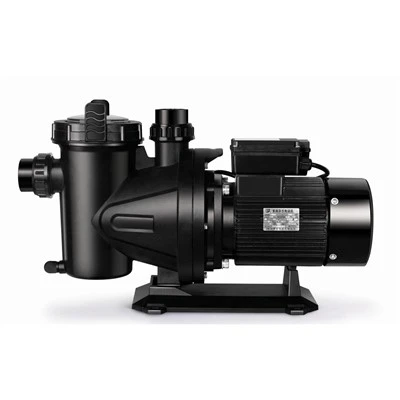
If you’re working on a new project, troubleshooting a cavitating inline pump, or just want to confirm that your current pump is gonna work for your system, hit us up for a chat. We don’t do the pushy sales stuff—we’ll walk you through calculating NPSHA, matching you to the right inline pump model, or even tweaking your existing setup to avoid cavitation. No confusing jargon, no fine print, just real solutions from people who’ve been in the inline pump game for years.
Inline Pump Reference:
Karassik, I. J., Messina, J. P., Cooper, P., & Heald, C. C. (2007). Pump Handbook (4th ed.). McGraw-Hill.
Hydraulic Institute. (2020). Pump Intake Design Handbook (3rd ed.). Hydraulic Institute.
Hangzhou Nanfang Ouke Pump Industry Co., Ltd.
As one of the most experienced inline pump manufacturers in China, we have world-leading production equipment and strong manufacturing capabilities. Please feel free to wholesale bulk customized inline pump from our factory. Welcome to contact us for pricelist.
Address: No.46, Renhe Subdistrict, Yuhang District, Hangzhou City
E-mail: Gy656169@outlook.com
WebSite: https://www.oukegroup.com/
