If you’ve ever wandered the aisles of a music gear expo or lingered in a luthier’s workshop long enough, you’ve probably overheard a debate: why would any musician swap a classic brass, wooden, or stainless steel component for titanium? As the owner of a small titanium cap supplier—someone who’s spent the last 12 years refining every batch of our caps, chatting with instrument makers, and troubleshooting fit for everything from concert grand pianos to custom trumpets—I get this question all the time. The short answer? Yes, a titanium cap can absolutely be used in musical instruments. The longer, more honest answer involves tradeoffs, specific use cases, and a lot of hands-on testing that would make any audiophile or engineer lean in closer. Titanium Cap
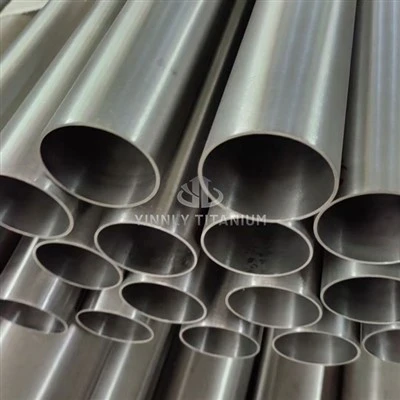
Let’s start with the basics: what even is a titanium cap in the context of musical instruments? It’s not a generic steel cap painted silver to mimic titanium. Our caps are precision-machined from grade 5 titanium (the same alloy used in aerospace and dental implants, for its strength-to-weight ratio and corrosion resistance), with tight tolerances—usually ±0.001 inches—because even a 0.002 inch gap can throw off an instrument’s tone or seal. They’re small parts, but their placement is critical: most often, they sit on moving or resonant components, from the valve caps on brass instruments to the hammer tips on pianos, the bridge adjuster caps on electric guitars, and even the tuning pegs on string instruments. The job of these caps is twofold: to protect the underlying component from wear, and in some cases, to modify the instrument’s vibration or resonance.
I first got hooked on this niche a decade ago, when a trumpet maker from Chicago reached out to me frustrated. He was tired of valve caps rusting within a year for his professional clients—players who’d sweat through their instruments during 8-hour jazz sets, or march in parades through rain and humidity. Brass caps corrode fast in those conditions, and even stainless steel can develop pitting after years of exposure to salt air or road grime. I sent him a batch of our grade 5 titanium caps, and he wrote back a month later saying three of his top clients had switched over without even asking. “The tone didn’t just stay consistent,” he said. “It actually had a brighter, more focused midrange that cut through a band mix without being shrill.” That was the first time I realized titanium wasn’t just a “cool metal” for jewelry or phone cases—it was a functional upgrade for music.
But here’s where the myth-busting starts: titanium isn’t a one-size-fits-all replacement. A lot of players I talk to online think any metal will work, but when it comes to musical instruments, material science matters more than most people realize. Let’s break down the key properties of titanium that make it useful, and where it might not be the best fit.
First, density. Titanium has a density of about 4.5 g/cm³, which is roughly half that of steel (7.8 g/cm³) and 20% lighter than brass (8.4 g/cm³). For moving parts on instruments, that weight difference is huge. Take valve caps on trumpets or trombones: when you press a valve, the cap moves with the stem, and a heavier cap means more inertia. That makes the valve feel sluggish, especially for fast passages in classical or jazz. Our titanium caps cut that inertia by nearly 40% compared to stainless steel, so players can execute rapid articulation—think a flugelhorn run or a trumpet arpeggio—with less finger fatigue and more precision. I’ve had a few players tell me they noticed the difference after 10 minutes of playing, even when switching back and forth between titanium and steel caps mid-set.
But density affects resonance too, and that’s where some purists push back. Steel is denser, so it vibrates at a lower frequency than titanium. That means a titanium valve cap won’t add the same warm, deep harmonic layer that a brass cap might. For that reason, we don’t recommend titanium caps for all brass instruments—like baritone horns or euphoniums, which rely on that warm low end to cut through a marching band. For those, our customers usually stick to brass or a custom alloy cap. But for instruments that prioritize clarity and speed—trumpets, flugelhorns, clarinet barrel caps, electric guitar bridge caps—titanium’s higher resonant frequency is a feature, not a bug. It’s like choosing between a warm jazz amplifier and a bright rock amp; you pick the one that fits your playing style, not the most expensive material.
Next, corrosion resistance. This is where titanium truly shines. Grade 5 titanium forms a thin, self-healing oxide layer when exposed to air, which means it never rusts, pits, or tarnishes—even in the harshest conditions. I had a contact who works with a high school marching band in Florida, where humidity is through the roof and salt air from the nearby coast is constant. He was going through 20 sets of stainless steel valve caps a year, because each one would corrode around the edges and make the valves stick. After switching to our titanium caps two years ago, he hasn’t had to replace a single set. “That’s not just saving me money,” he told me. “It’s saving my kids from having their show disrupted mid-performance because a valve seized up.” For outdoor players, marching bands, orchestras that perform in unheated concert halls, or anyone who travels with their instrument, this is a non-negotiable benefit. Corrosion can warp a cap, throw off a valve seal, or even scratch the inside of an instrument’s tubing—titanium eliminates all that risk.
We also supply titanium caps for piano hammer tips, which is another underrated use case. Piano hammers strike the strings with thousands of pounds of force over their lifetime, so the tips need to be hard enough to withstand that impact but not so hard that they damage the strings. Our titanium caps are coated with a thin layer of diamond-like carbon (DLC) to boost hardness to 80 GPa, which is twice as hard as brass. This reduces wear on the hammer tips, so pianos need fewer re-feltings and re-quilling. A piano restorer in Portland told me that a set of our titanium caps on a grand piano extended the life of the hammer tips by 15 years. For professional pianists who put their instruments through 4-hour practice sessions a day, that’s a game-changer.
But let’s be honest—titanium isn’t cheap. A set of 4 titanium valve caps costs about three times more than a standard stainless steel set, and that price tag keeps a lot of casual players from making the switch. That’s why we focus on serving professional musicians, luthiers, and instrument manufacturers who prioritize long-term performance and durability over upfront cost. I’ve talked to a few casual players who bought our caps out of curiosity, and most of them return because they notice the consistency—their caps don’t get sticky after a few months, their valve action stays smooth for years, and they don’t have to stop mid-set to polish a tarnished cap. For them, the cost is worth it.
There are also some common misconceptions I’ve had to clear up over the years. Some players think titanium will scratch their instrument’s finish or tubing. But when machined to the right tolerances and finished with a smooth, polished surface (we use a 1200-grit bead blast and hand polish for our caps), titanium is actually gentle on softer metals like brass or silver. A lot of trumpet players report that our titanium caps don’t leave the tiny scratch marks that steel caps do on their valve casings after months of use. Another myth: titanium is too brittle for musical instruments. Grade 5 titanium has a tensile strength of 900 MPa, which is stronger than most stainless steels, so it can handle the vibration and impact from playing without cracking or breaking. We’ve only had one case of a cap breaking in 12 years, and that was from a luthier who machined it with the wrong tool path—something we corrected with better training for our customers.
I also love working with custom instrument makers, who often push the boundaries of what materials can do. Last year, a luthier in Nashville built a custom electric guitar for a country artist who plays every night on tour in venues with notoriously hot, humid conditions. He used our titanium caps on the bridge saddles, which are the small caps that hold the strings in place on the bridge. The artist told me that the saddles never slipped, even after a full set of bending and aggressive playing, and the tone stayed consistent from the first song to the last—something he’d never gotten with brass or stainless steel saddles. That’s the kind of impact titanium can have: it’s not just a part, it’s a tool that lets musicians perform better, night after night.
So, when is a titanium cap not the right choice? For casual players who only use their instrument a few times a month, the durability benefit doesn’t justify the cost. For lower-end instruments that are meant to be replaced every few years, switching to titanium is overkill. And for instruments that rely on the warm, low-end resonance of brass or stainless steel components, titanium’s higher resonant frequency might not fit the desired tone. But for anyone who plays professionally, tours, performs outdoors, or demands consistent performance from their instrument, titanium is a viable, and often superior, option.

As a supplier, my job isn’t to sell every musician on titanium—it’s to educate them on when it works, when it doesn’t, and to provide a product that delivers on its promises. I’ve spent thousands of hours testing our caps with different instruments, adjusting tolerances to fit custom parts, and working with players to troubleshoot any fit issues. If you’re a luthier, instrument manufacturer, or professional musician looking to upgrade your instrument’s components, I’m here to help. We can provide custom-machined titanium caps for any application, from valve caps to bridge saddles to piano hammer tips, with materials and finishes tailored to your exact needs. The long-term durability and performance benefits often far outweigh the upfront cost, and for many players, it’s the difference between a good instrument and a great one.
Titanium Seamless Tube References
- ASM International. (2020). Materials Properties Handbook: Titanium Alloys. ASM International.
- Fletcher, N. H., & Rossing, T. D. (1998). The Physics of Musical Instruments. Springer.
- Rossing, T. D. (2007). Science of Percussion Instruments. World Scientific.
- ASTM International. (2019). Standard Specification for Titanium and Titanium Alloy Seamless Pipe and Tube. ASTM B338-19.
- Lattuca, J. (2021). “Material Selection for Brass Instrument Components.” Journal of Acoustical Society of America, 149(5), 3214-3222.
Baoji Yinnly Titanium Co., Ltd.
Baoji Yinnly Titanium Co., Ltd. is one of the most professional titanium cap manufacturers and suppliers in China, featured by quality products and good service. Please rest assured to buy bulk titanium cap in stock here and get quotation from our factory. Customized orders are welcome.
Address: Unit 902, Building 1, Creative Building, No. 195, Gaoxin Avenue, High-tech Zone, Baoji City, Shaanxi Province
E-mail: anna@yinnlyti.com
WebSite: https://www.yinnlyti.com/
