If you’ve ever gone to a coffee shop, a birthday party, or a company event and seen cups labeled “compostable” or “plant-based,” chances are you were looking at a PLA cup. For years, single-use plastics ruled the disposable cup space—they were cheap, durable, but a total nightmare for the planet. That’s where PLA cups come in, and as a PLA cups supplier, I get asked this question all the time: “Wait, what even are PLA cups? Why are they different from the plastic cups I’ve used my whole life?” Pla Cups
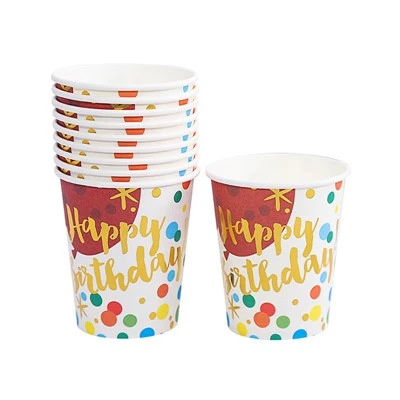
Let me break it down simply, no confusing jargon. First, PLA stands for Polylactic Acid. It’s not some fancy new chemical— it’s a polymer made entirely from renewable resources, no fossil fuels required. Unlike the #1, #2, or #5 plastic cups you grab at the gas station, which come from petroleum (a non-renewable, finite resource drilled out of the ground), PLA starts with crops. Most commonly, that’s corn starch or sugarcane— two crops that grow quickly, pull carbon dioxide out of the air while they grow, and are totally replenishable.
Here’s the basic process: farmers harvest the corn or sugarcane, process it to get the starch or sugar, then ferment that just like you’d ferment grapes for wine or barley for beer. That fermented liquid becomes lactic acid, which is then purified and turned into long chains of molecules to make PLA resin. Once the resin is made, it’s melted, molded into the shape of a cup, and trimmed— just like plastic cups, but the starting material is way different. I’ve been in the factory floor, watched the machines spit out 10,000 PLA cups an hour, and it’s wild how similar the production is to plastic, but the end product is night and day for the environment.
Now, I know what a lot of people are thinking: “If it’s made from plants, does that mean I can just toss it in my backyard compost pile and it’ll break down tomorrow?” Nope, not exactly— that’s a common misconception. PLA isn’t the same as a banana peel, which will rot in your backyard in a couple weeks. PLA needs specific conditions to decompose properly, and that’s where industrial composting facilities come in. These facilities control temperature, moisture, and oxygen levels to mimic the perfect environment for microorganisms to break down PLA. In those conditions, a PLA cup will fully break down into carbon dioxide, water, and organic matter in 90 to 180 days. That’s way faster than regular plastic, which can take hundreds of years, and way better than leaving plastic to leach toxic chemicals into landfills or oceans.
Wait, but what about recycling? Can you recycle PLA cups with regular plastic? Short answer: no. Most curbside recycling programs don’t accept PLA right now, because it can contaminate batches of plastic recycling. But before you write that off, let’s talk about the flip side. When regular plastic does get recycled, it often ends up as low-quality items (like park benches or fleece jackets) and eventually still gets thrown away, leaving behind microplastics. PLA, on the other hand, if it’s not composted, it actually breaks down much slower in a landfill than in industrial compost, but it’s not going to leach the same toxic chemicals as petroleum-based plastic. Also, more and more municipalities are starting to add commercial composting options, and even home composting kits are getting easier to find. As a supplier, I work with event planners and cafes to make sure they’re directing their PLA waste to the right facilities, not just tossing it in the trash.
Another big question: “Are PLA cups as good as plastic? Do they leak? Hold hot drinks? Fit in car cup holders?” Let’s be real— if a cup leaks when you’re carrying a latte to your car, no one cares how eco-friendly it is. PLA cups are designed to match the functionality of standard plastic cups. They’re BPA-free, which is a plus because regular plastic can leach BPA when heated. They can hold hot drinks up to around 140°F, which covers most coffee and tea orders, and cold drinks too— iced coffee, soda, even smoothies. They’re durable enough not to crumple if you squeeze them a little, and most standard sizes fit perfectly in car cup holders. I’ve had customers switch from plastic after a plastic cup leaked all over a customer’s laptop, and now they swear by PLA for events because it stands up to the chaos of a 500-person wedding or a trade show.
Now, let’s talk about the environmental benefits, because that’s why most people make the switch. Regular disposable plastics are a huge part of the plastic pollution crisis. It’s estimated that over 500 billion single-use plastic items are produced every year, and cups are one of the top offenders. When you use a PLA cup, you’re cutting out the fossil fuel input— each PLA cup uses about 25% less energy to make than a comparable plastic cup, and it produces way less greenhouse gas emissions. The corn or sugarcane that makes PLA also absorbs carbon dioxide as it grows, so the whole lifecycle of a PLA cup is a lot more carbon-neutral than plastic. Even if it ends up in a landfill, it will eventually decompose into organic matter, not stay as a harmful piece of plastic for centuries.
But there are some myths I want to clear up, because as a PLA cups supplier, I’ve heard them all. First, “PLA uses too much corn, which takes away from food supply.” That’s a valid concern, and it’s something we take seriously. Most of the corn used for PLA is corn that’s not fit for human consumption— right now, about 10% of corn grown in the U.S. goes to industrial uses, and most of that is for PLA, bioplastics, or biofuels. Also, sugarcane is a common alternative, especially in tropical regions, and it’s grown on land that’s not used for food crops. Some suppliers, including me, are also starting to source from sustainably grown crops that don’t compete with food production, so that myth is slowly fading as the industry improves.
Another myth: “PLA is more expensive than plastic, so we can’t afford it.” A few years ago, that was true— PLA resin was way pricier than plastic resin. But over the last 5 years, as more factories have opened to make PLA, and production processes have gotten more efficient, the price has dropped a lot. Now, PLA cups are often only 10-15% more expensive than comparable plastic cups, which is totally manageable for most cafes, event companies, and schools. Plus, many customers find that they can charge a little extra for PLA cups (most people are happy to pay a small premium for eco-friendly options) or get tax incentives for switching to sustainable products, so the cost gap is even smaller.
So, who uses PLA cups? Let’s see— big coffee chains, local bakeries, wedding planners, college campuses, even fast food restaurants. Last year, I supplied PLA cups to a major music festival, and they told me attendees loved them because they didn’t have to worry about plastic waste piling up in the festival grounds. Colleges are switching because they want to meet their sustainability goals, and small cafes are switching to stand out as eco-friendly to their customers. It’s not just for big companies, either— I supply small local businesses too, because any step to cut down on single-use plastic matters.
Now, if you’re reading this and wondering if PLA cups are right for you, here’s a quick checklist: do you need a disposable cup for hot or cold drinks? Do you care about reducing your environmental footprint? Do you have a way to dispose of them properly (industrial composting in most areas, or a home compost if you’re set up for it)? If yes, then PLA is a great option.
As a PLA cups supplier, my job isn’t just to sell cups— it’s to help people make the switch smoothly. I work with clients to figure out the right size (we have 8oz, 12oz, 16oz, 20oz, even 24oz for large iced drinks), the right finish (clear, white, or custom printed for branding), and I can even help connect you with local composting facilities if you don’t know where to start. I’ve seen so many clients go from skeptical to loyal customers because the cups work as good as plastic, and they feel good about not adding to the plastic waste crisis.
I know sustainability can feel overwhelming, especially when there are so many options out there, but PLA cups are a simple, impactful way to make a difference for your business and the planet. Instead of worrying about reusing cups (which is great, but not always practical for events or on-the-go orders), switching to PLA is an easy swap that doesn’t disrupt your daily operations.

If you’re ready to make the switch, or just have more questions about PLA cups, feel free to reach out and let’s chat. Whether you’re a small cafe needing 500 cups a month or a large event planner needing 50,000, I can work with you to find the perfect solution that fits your budget and needs.
Ice Cream Bowl References
- U.S. Environmental Protection Agency. "Composting: What You Need to Know." 2023
- Polylactic Acid (PLA) Association. "PLA Lifecycle Assessment & Environmental Impacts." 2022
- National Resources Defense Council. "Single-Use Plastics: The Hidden Cost of Our Takeaway Culture." 2021
- European Bioplastics. "PLA Production: From Renewable Resources to Biodegradable Products." 2023
- Food and Agriculture Organization of the United Nations. "Sustainable Crop Production for Bioplastics." 2022
Wuhan Green Treasure Industry & Trade Co., Ltd.
As one of the most professional pla cups suppliers in China, we also support customized service and OEM service. We warmly welcome you to buy durable pla cups made in China here from our factory. If you have any enquiry about free sample, please feel free to email us.
Address: T4-1106Dream Zone, No. 9 Hongtu 1st Road, Dongxihu District , Wuhan, China.
E-mail: info@greentreasured.com
WebSite: https://www.greentreasured.com/
