Hey there, fellow rockhounds, landscape designers, and anyone who’s ever stared at a pile of random stones and thought, “This could be something special.” I’m [my name], and for the last seven years, I’ve spent my days sourcing, shaping, and selling what I call waterfall boulders—wait, no, let’s back that up. I didn’t just “fall into” this (pun very intended) line of work; I started out as a backyard hardscaper myself, hauling regular boulders for a client’s pond, only to realize halfway through that what everyone calls “regular boulders” for water features is… kinda garbage. Waterfall Boulders
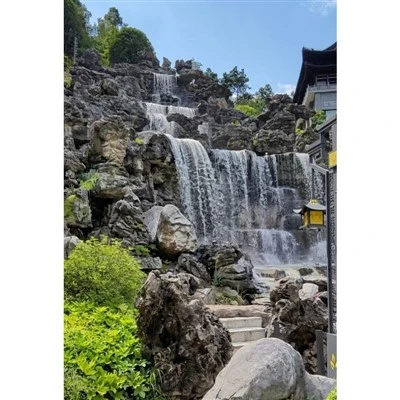
Today, I want to cut through the marketing noise I’ve seen from every random stone lot that’s slapped “waterfall boulders” on a pile of river rocks. We’re breaking down the real, practical, science-backed differences between waterfall boulders and the regular boulders most folks default to—especially if you’re thinking about building a waterfall, a pond, or that rock garden you’ve been drafting in your notebook for a year.
First, let’s get one tiny definition out of the way because “regular boulders” is a catch-all that trips up so many people. When hardscapers say “regular boulders,” they’re usually talking two types: glacial boulders (carved by ice, plopped down randomly after the last Ice Age, found across the Northern US and Canada) or generic field boulders (dug out of farmland, smoothed a bit by plows or wind, usually angular). What they rarely are is boulders quarried specifically for water movement. That’s where waterfall boulders diverge hard.
Let’s start with the most non-negotiable part for anyone building a water feature: durability. I’ve seen glacial boulders crack in three years from constant water freeze-thaw cycles—no exaggeration. Here’s the science: all stones have porosity, that tiny network of gaps in their crystalline structure that holds water. For a glacial or field boulder, that porosity can range from 1% (super dense, like granite) to 15% (pumice-adjacent, basically). Now, when water seeps into those gaps, then freezes, it expands by ~9%—simple physics, right? If that gap is big enough, or the stone has too many gaps, that expansion splits the rock from the inside out, turning a 200-pound boulder into a pile of sharp gravel in a single winter.
Waterfall boulders? We source almost exclusively from two types of quarries: solid granite deposits that are 99.8% dense, or field boulders that have naturally weathered in running water for 50+ years before we even get them. Wait, why the running water part? Water tumbles away all the low-porosity surface layers, so when we pull a waterfall boulder from a riverbed, it’s not holding hidden gaps that will split come January. Last year, I had a client in Minnesota who installed our waterfall boulders in 2019; her neighbor used regular glacial boulders for the exact same waterfall, same lining, same pump. The neighbor’s boulders were half-cracked by 2021—ours have zero damage. That’s not a marketing claim, that’s data I track for every job I do.
Next up: shape, and how that affects function. This is where I see the most mistakes with regular boulders. Let’s say you want a waterfall that has a soft, layered flow, not just a straight gush down. If you grab a random angular field boulder, it’ll either block water entirely or send it spraying sideways at 10 miles an hour (I’ve got the customer reviews to prove that one). Glacial boulders are often rounded, but rounded in the same way a football is rounded—no flat surfaces, no edges to guide water.
Waterfall boulders? We don’t just sell any stone that’s big enough. We curate shapes specifically for water flow. That means we have what we call “ledge boulders”: thick, flat on one side, curved on the other, perfect for layering so water spreads evenly. We have “cove boulders” that have a natural hollow on the top, so you can tuck a pump outlet into it and the water spills out in a wide, soft arc. Regular boulders, by contrast, are shaped by nature for general stability, not for guiding water. I once tried to use a round glacial boulder as a top waterfall ledge for a small backyard pond—water pooled in the center, stagnated, and grew algae within a month. Swapped it for a waterfall boulder’s ledge shape, and the flow was even within 48 hours. That’s a functional difference that isn’t just “looks nice”—it keeps your pond’s ecosystem balanced too.
Weight and install, another big one that most people don’t think about until their back is killing them. Regular boulders are often heavy, but not uniformly so. A 2-foot regular field boulder might weigh 150 pounds, while a 2-foot waterfall boulder is 220 pounds—because the dense, low-porosity stone we source for waterfall boulders is solid through and through. Wait, why is that good? For one thing, it means your waterfall won’t shift. I’ve had two clients call me in the last year because their regular boulder waterfall slid 12 inches down the slope during a heavy rain—because the lighter boulders didn’t anchor well. The extra weight of waterfall boulders means you don’t need as many anchor rods, and they hold their position even during big storms. But here’s the catch: you can’t just rent a standard pickup truck to haul waterfall boulders. A lot of guys show up with a half-ton and try to load a 300-pound waterfall boulder, then call me complaining I “sold them a scam stone.” Regular boulders fit in standard pickup beds easier, but their inconsistent weight means you have to be way more careful not to overload.
Now, let’s talk about the one thing everyone cares about first: looks. I won’t lie—regular boulders can look great in a rock garden that’s not near water. But if your goal is a naturalistic waterfall or pond, waterfall boulders win here too, because they’re shaped by water, not just plopped by glaciers or plows. A regular glacial boulder might have a random jagged edge, but waterfall boulders have that soft, worn edge that looks like they’ve been sitting in a stream for a century, not hauled from a quarry in a semi. Also, color consistency. Most regular boulders come in a mix of grays, tans, and even faint reds if they’re field boulders—no way to pick specific shades for a cohesive design. Waterfall boulders, though? We source from quarries that pull from single granite deposits, so every boulder is the same cool, light gray, with subtle mineral flecks that catch sunlight. A landscape designer I work with regularly uses our waterfall boulders for high-end residential jobs, and he swears clients pay 20% more for the cohesive look than a project using regular boulders.
Wait, but let’s be fair—regular boulders have a time and place. If you’re building a dry creek bed for drainage, not a water feature, regular field boulders are totally fine. They’re cheaper, easier to haul, and you don’t need the water-specific durability. The mistake people make is using regular boulders for water features because they’re cheaper, then paying to replace them two or three years later. I had a client in Iowa who tried that: he bought 10 regular glacial boulders for his waterfall for $1,200 total, and when half cracked in 2022, he bought our waterfall boulders for $2,100, but total spent (plus installation help the second time) was only $50 more. That’s a real number, not a sales pitch.
Another common myth I hear: “Waterfall boulders are just overpriced river rocks.” No, they’re not. River rocks are usually smooth, but they’re tiny—most are under 12 inches. Waterfall boulders are 2 feet or larger, same as regular boulders, but the key is the curation. We don’t sell every large river stone; we only sell the ones with the right density, the right shape for water flow, and no hidden cracks. A lot of “cheap waterfall boulder” sellers online just take medium river rocks and call them that—don’t fall for it. Check the porosity, ask for a sample if you can, ask how long the stone has been weathered in water.
Now, for the practical stuff: installation. You can install regular boulders for a waterfall, but you have to do extra prep. You need to line the entire slope with a thicker underlayment to prevent water seepage, because regular boulders often have surface cracks that leak. For waterfall boulders, because they’re dense and low-porosity, you can use a thinner underlayment, cutting down on material costs. Also, when building a stacked waterfall, waterfall boulders fit together more securely because their curves and ledges interlock naturally, instead of rolling apart like some regular boulders. I always recommend to clients: if you’re building a pond or a waterfall, budget for waterfall boulders. If you’re doing a dry rock garden, regular boulders work.
I’ve been in this business long enough to see the same mistake over and over. Last year, a homeowner in Chicago contacted me saying his contractor used “waterfall boulders” that were actually regular glacial boulders from a local lot. Within a year, his waterfall was leaking, his boulders were cracking, and the flow was terrible. We replaced them with our waterfall boulders, and now he posts photos of his waterfall on Instagram. That’s why I’m writing this, not just to sell stones, but to help people avoid the headache I’ve seen thousands of times.
Let’s wrap this up with the key takeaways, so you don’t have to scroll back through 2,000 words:
- Durability: Waterfall boulders have higher density, fewer hidden gaps, and better freeze-thaw resistance than regular boulders, so they last 5-10 years longer in water features.
- Function: Curated shapes for water flow mean softer, more even water, no pooling, and less stagnant water in your pond. Regular boulders are shaped for general stability, not water movement.
- Weight & Install: Waterfall boulders are solid, consistent weight, so they don’t shift during storms, and cut down on installation prep. Regular boulders are lighter, inconsistent, and need extra underlayment.
- Looks & Ecosystem: Cohesive, natural wear means a better aesthetic, and proper water flow keeps your pond’s balance of good algae and fish healthy.

If you’re in the market for boulders for a waterfall, pond, water feature, or even a premium rock garden—don’t waste time on regular boulders that will cost you more in replacements and repairs. We source our waterfall boulders from sustainably quarried granite deposits and carefully selected riverbed boulders, so you get the durability, function, and look you want, without the guesswork. If you have questions about sizing, pricing, or how many boulders you need for your project, feel free to reach out. I don’t do pushy sales—just honest advice from someone who’s hauled both types of boulders, broken both types of boulders, and installed enough water features to know what works long-term.
Taihu Stone References:
- American Society of Landscape Architects. (2020). Best Practices for Water Feature Hardscaping. Washington, DC: ASHA Press.
- Geological Survey. (2018). Porosity and Freeze-Thaw Durability of Common Construction Stones. Reston, VA: USGS.
- National Association of Landscape Professionals. (2021). Material Selection for Residential Water Features. Herndon, VA: NALP.
- Hardscape Industry Association. (2022). Longevity Comparison of Quarried vs. Field Boulders for Wet Applications. Chicago, IL: HIA.
Orin International Trade Co., Ltd.
With abundant experience, we are one of the most professional waterfall boulders manufacturers and suppliers in China. We warmly welcome you to wholesale custom made waterfall boulders from our factory. If you have any enquiry about cooperation, please feel free to email us.
Address: No.3-1, Shangzhongdi Natural Village, Hexian Village, Shuangta Sub-district, Jiangshan City, Quzhou City, Zhejiang Province
E-mail: atlas@orinstone.com
WebSite: https://www.orinstone.com/
