When I first started working in wastewater treatment equipment, I didn’t fully grasp how much regional context matters—until I spent two weeks in a remote desert community in southern Arizona. The locals there didn’t just need a system that cleans water; they needed one that works when every drop is scarce, when temperatures soar past 110 degrees Fahrenheit, and when power grids can be shaky at best. That trip rewrote how my team designs and delivers equipment, and it’s why arid-region wastewater treatment isn’t just about standard processes—it’s about adapting to thrive where water is non-negotiable. Wastewater Treatment Equipment
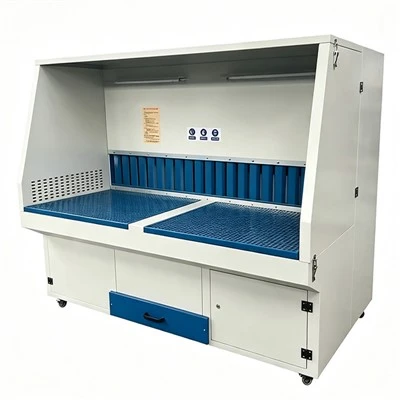
Arid regions, for anyone who’s not spent time in one, are defined by two key constraints: extremely low annual precipitation (usually less than 10 inches a year) and limited freshwater access for drinking, agriculture, and infrastructure. Wastewater, in these areas, isn’t just a waste product—it’s a potential resource. Cities, small towns, and even industrial sites here can’t afford to treat wastewater just to discharge it; they need to reuse it. That’s where our equipment comes in, tailored specifically to turn wastewater into a usable resource, all while working around the harsh environment.
Let’s break down how our systems work, step by step, and why they’re built differently than the ones we install in wetter climates. First, we start with collection, but even that has to account for arid conditions. In many places with low rainfall, storm drains aren’t designed for heavy flow, but wastewater from homes and businesses has to get to the treatment plant reliably. We install pre-treatment screens that are larger than standard ones, because in dusty environments, small debris and sediment clog things fast. In Phoenix, for example, we added grit removal chambers to one small system last year that cut down on equipment maintenance by 40%—the dust was wearing down standard screens every two weeks, so we adjusted the size and flow rate to match the local air quality.
Next comes the primary treatment step, where we separate solid waste from liquid. In humid regions, this is often a simple settling tank, but in arid climates, evaporation is a huge risk. If you leave a standard open settling tank out in 100-degree heat, 20% of the water can evaporate in a week—wasting the very resource we’re trying to save. That’s why we use closed, insulated primary tanks. They trap the heat inside, so the system operates at a consistent temperature, and no water escapes. The solids that settle out are then dewatered, not just dumped. We use compact screw presses that squeeze out 80% of the moisture from the sludge, turning it into a dry, solid byproduct that’s easy to transport and repurpose as fertilizer or soil amendment. That’s a big win in arid regions, where soil quality is already poor—we’re turning waste into something that supports local agriculture, too.
Then there’s secondary treatment, the part where we actually break down the organic contaminants in the wastewater. Standard systems here often use activated sludge, which requires a lot of power to aerate the tanks—but arid regions might have high electricity costs, or inconsistent power. So we switched to a trickling filter system for many of our clients, especially small towns. Trickling filters use a bed of rock or plastic media that bacteria grow on; when wastewater drips through the media, the bacteria eat the organic matter. It uses 30% less energy than activated sludge, which is a game-changer for places where power is expensive. For larger industrial sites, we use membrane bioreactors (MBRs), but we modify them. The membranes in MBRs get clogged quickly in dusty air, so we add a pre-filter stage before the wastewater reaches the membranes. That extends the membrane life from two years to five, which saves our clients thousands in replacement costs. We tested this at a manufacturing plant in New Mexico last year, and they haven’t had a membrane replacement in three years—way beyond the industry average.
The final step is disinfection, and this is where arid conditions force a real shift. In wetter climates, chlorine is common, but chlorine reacts with organic matter in water to form harmful byproducts, and in regions where we’re reusing water for crops or even groundwater recharge, those byproducts are a problem. Instead, we use UV disinfection, which doesn’t add chemicals to the water. But again, we had to adapt UV systems for high heat. Standard UV units lose efficiency when temperatures are above 95 degrees, so we installed small, integrated cooling systems that use a tiny bit of the treated water to keep the UV bulbs at the optimal temperature. At a small community system in Utah, this adjustment made the disinfection rate 99.99% effective, even during summer heatwaves. Another key point: in arid regions, groundwater is often shallow, so we have to make sure the treated water is pure enough to recharge aquifers. That means tertiary treatment, which we add only when needed, but it’s designed to filter out nutrients like nitrogen and phosphorus, which can cause algal blooms when water is reused or recharged.
Wait, but it’s not just the process steps—we also build the equipment to handle the environment. Arid regions have extreme temperature swings, from 20 degrees at night in winter to 115 during the day. Standard metal tanks expand and contract, leading to cracks and leaks. So we use corrosion-resistant, high-grade stainless steel for all our equipment, and we insulate all piping to prevent heat loss in winter and heat gain in summer. We also add automatic temperature controls that adjust the system’s flow rate based on outside air temperature. In El Paso, a local school district uses our system for their campus wastewater, and they told us it works so well that they now reuse the treated water for their football field and landscaping—cutting their freshwater use by 75%. That’s the kind of impact we want to see.
Another thing most people don’t talk about is maintenance. In arid regions, dust and sediment get everywhere, so routine upkeep has to be simpler. We design all our equipment with easy-access panels, so local workers who might not have specialized training can perform basic maintenance. We also offer on-site training for every client—no matter how small—to make sure they know how to clean the pre-filters, check the UV bulbs, and adjust flow rates. Last year, a small town in Arizona called us in a panic because their system’s pump had broken during a heatwave. Our team got there in 12 hours, but because we’d trained their local maintenance crew, they were able to switch to the backup pump while we repaired the main one. That reliability is non-negotiable when water is so precious.
Let me share a specific example that sticks with me. A few years ago, we worked with a remote mining operation in Nevada. They were using 2 million gallons of freshwater a day for their operations, and they were facing a ban because their water was coming from a local aquifer that’s already stressed. We installed our custom wastewater system that treats 1.8 million gallons of their daily wastewater, and they now reuse it for their mining processes. The mining company doesn’t draw from the aquifer anymore, and they even sell some of the excess treated water to nearby ranchers. That’s the circular economy in action, and it’s only possible because we designed the equipment to fit the arid context—low water loss, low energy use, and easy maintenance for a site where skilled labor is hard to find.
I’ll be honest: when we started focusing on arid-region systems, we made mistakes. Early on, we installed a standard open settling tank in a location where evaporation was 25% a week, and the client lost 10,000 gallons of water before we even fixed it. That’s why we test every design with local climate data before we ship equipment—we look at average temperature, rainfall, humidity, and even air quality. No two arid regions are the same; a system that works in Arizona won’t work in the Atacama Desert, which is even drier. That’s why we work closely with each client to assess their specific needs, not just sell a pre-made unit.
The biggest takeaway here is that wastewater treatment in arid regions isn’t about treating water to get rid of it—it’s about treating water to save it. Every drop of treated wastewater is a drop that doesn’t have to come from a stressed aquifer or a long pipeline. Our equipment is built to do that efficiently, affordably, and reliably, even when the environment is against you.
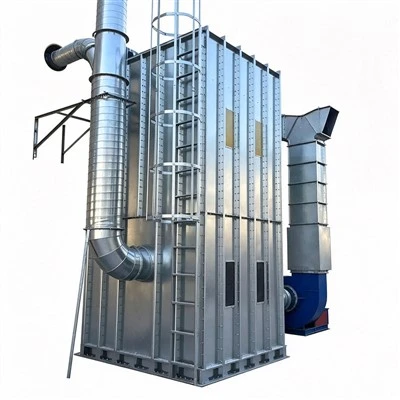
If your community, industrial site, or agricultural operation is facing water scarcity and needs a wastewater system that’s tailored to arid conditions, we can help. We don’t believe in one-size-fits-all solutions, so we’ll work with you to design, install, and maintain a system that meets your exact needs and helps you make the most of every water resource.
Grinding Table References:
- U.S. Environmental Protection Agency. (2022). Wastewater Treatment for Water Reuse in Arid Climates. EPA Office of Water.
- Desert Research Institute. (2021). Water Scarcity and Wastewater Reuse in Southwest Arid Regions. DRI Publications.
- Water Environment Federation. (2020). Customized Wastewater Treatment Systems for Arid Environments. WEF Technical Manual.
- Arizona Department of Water Resources. (2023). Arid Region Infrastructure Design Guidelines for Wastewater Systems. ADWR Engineering Division.
Ningbo Jialong Energy-saving and Environmental Protection Technology Co., Ltd.
As one of the most professional wastewater treatment equipment manufacturers and suppliers in China, we also support customized service. We warmly welcome to buy advanced wastewater treatment equipment in stock here from our factory. If you have any enquiry about quotation, please feel free to email us.
Address: Dong Village, Dongwu Town, Yinzhou District, Ningbo City, Zhejiang Province (No.63 Zhennan Road, Dongwu Town)
E-mail: Lin.cx@nb-jalo.com
WebSite: https://www.cnjialong.com/
