If you’ve ever run a hand over a custom eco leather piece—say, a made-to-order tote for your weekend farmers’ market runs, a custom laptop sleeve that fits your exact 16-inch device, or a headboard tailored to your bedroom’s odd wall dimensions—and wondered, “Will this hold up against my keychain, my dog’s claws, or that random mishap with a coffee mug that slipped?” you’re not alone. As someone who’s been in the custom eco leather supply game for eight years, I get this question at least a dozen times a week, and it’s one that makes total sense. When you’re investing in a custom product, especially one marketed as eco-friendly, you want to know it’s not going to scuff after a month of use. Scratch resistance is make-or-break for durability, and it’s a lot more nuanced than just “this leather is scratch-proof.” Let me break down what custom eco leather actually is, how it’s made (hint: that’s a huge factor in scratch resistance), how it stacks up to traditional leather and even other faux leathers, and what you can expect from a well-made custom piece. Custom Eco Leather

First, let’s get one myth out of the way upfront: not all eco leather is created equal. A lot of consumers (and even some salespeople) group every vegan leather, plant-based leather, and recycled leather alternative into one bucket, and that’s where confusion starts. When I talk about custom eco leather here, I’m referring to the ones we work with every day: formulations that blend natural, sustainable materials like pineapple leaf fiber, apple pomace, mushroom mycelium, or recycled cotton or polyester, combined with plant-based or water-based binders, finished with non-toxic coatings. The scratch resistance of these materials varies wildly depending on three core things: the base material used, the coating applied during manufacturing, and the way it’s processed into a custom piece. That’s good news for anyone ordering custom eco products, because it means you can tailor the material’s performance to your exact use case, whether you’re making a rugged tool roll for a construction worker, a sleek clutch for a wedding guest, or a high-traffic office desk mat.
Let’s start with the science behind scratch resistance, because that’s where most of the “is it durable?” questions get answered. Scratches on leather (of any kind) are essentially small tears or abrasions in the top layer of the material, right? When something hard and sharp—like a key, a pet nail, or a corner of a metal appliance—rubs across the surface, it creates a groove or a mark. The depth of that mark, and whether it’s permanent, depends on two things: the hardness of the top finish, and the tensile strength of the base material underneath. Traditional full-grain leather, for example, has a natural grain and a tough, waxy finish that tends to patina over time—scratches on full-grain often fade as the leather ages, because the oil in the surface shifts to fill in small gaps. But top-grain leather, which has the outermost layer sanded off, has a more uniform finish, and it’s more prone to deep scratches that don’t fade.
Now, how does that translate to custom eco leather? Let’s take a common custom material we offer at our shop: pineapple leaf fiber (often called Piñatex, but we work with a few trusted, small-batch manufacturers) as a base. Piñatex is made from the long, stiff leaves of pineapple plants that would otherwise be discarded as agricultural waste. The base is a non-woven fabric of those pineapple fibers, then coated with a flexible, plant-based polymer made from fruit waste. The top finish here is a key point for scratch resistance. For custom pieces that need to handle rough use—like heavy-duty duffels or work bags—we work with our manufacturers to apply a thicker, cross-linked water-based polyurethane (PU) coating, specifically formulated to resist abrasion. Cross-linked PU means the polymer molecules are chemically bonded to each other, creating a harder, more durable top layer that doesn’t scratch as easily as a soft, uncross-linked coating. For pieces that need a softer, more supple feel, like clutch bags or phone cases, we use a thinner, matte coating that’s less prone to showing fine scuffs, even if it doesn’t hold up as well to deep, sharp scratches from keys or tools.
Another popular custom eco leather material is mushroom mycelium-based leather, often referred to as mylo. Mylo is grown by cultivating the root structure of mushrooms in a controlled, lab environment, then processed into a flexible material that mimics leather’s texture. Mylo’s scratch resistance is a little different from pineapple-based eco leather, because its base is a continuous, fungal mat rather than a non-woven fiber mat. That continuous structure means it’s less prone to fraying along scratch edges, which is a plus for fine scratches, but it can be slightly softer than Piñatex when finished with a comparable coating. We’ve found that when we apply a medium-thickness abrasion-resistant coating to mylo, it holds up well to everyday use—scratches from keys or small claws are usually light enough to buff out with a soft cloth, while deeper, harder scratches (like dragging a metal knife across a mylo kitchen cutting board) will leave a mark, same as they would on top-grain leather.
You might be wondering how custom eco leather stacks up to traditional leather, which is a common benchmark for durability. From a scratch resistance standpoint, when you choose a high-quality custom eco material with a hard cross-linked coating, it’s often on par with top-grain leather, and sometimes even better. Wait, let me back that up with a real-world example. Last year, a customer came to us ordering 50 custom tool rolls for a small plumbing company. The rolls were going to be carried in work trucks, jostled with wrenches, screwdrivers, and sharp metal parts, so scratch resistance was non-negotiable. We suggested Piñatex with our heavy-duty cross-linked coating, and the customer opted in. After six months of use, the company’s feedback was that the rolls had very few deep scratches, and any light scuffs wiped right off with a damp cloth. Compare that to traditional top-grain leather tool rolls the company had purchased before, which showed noticeable scratches after just three months. Why? Because traditional leather’s natural finish breaks down over time from oil and sweat, while the cross-linked PU coating on the custom eco leather is more resistant to that kind of daily exposure.
That said, there are limits. No eco leather—no matter how well-made—is scratch-proof. I see way too many social media posts claiming “100% scratch-proof vegan leather” and that’s just marketing hype. If you drag a knife blade across any leather (traditional or custom eco), you’re going to leave a mark. The difference is how visible that mark is, and how easy it is to repair. For custom eco leather, light scratches (from small keys, pet nails, or a sharp corner of a book) are almost always repairable with a soft cloth and a small amount of leather conditioner made for vegan materials. Deep, gouging scratches from heavy tools, or sharp, hard impacts, will leave a permanent mark, just like they would on any other durable material. That’s why when we work with custom orders, we always ask about the intended use case, and we make recommendations based on that. If you’re making a custom pet bed for a large, energetic dog, we’ll suggest a thicker, more abrasion-resistant coating on a mylo base, rather than a softer, matte finish that would show scratches easily. If you’re making a custom wedding clutch that will only be used a few times, we can go for a softer, more luxe feel that shows light scuffs less noticeably, since it won’t be subjected to heavy daily use.
Another factor that affects scratch resistance in custom eco leather is the way it’s fabricated into a piece. When you order a custom item from us, we cut, sew, and finish each piece by hand (or with precision cutting equipment, but with a lot of personal oversight) rather than mass-producing them on an assembly line. The quality of the stitching, the way the edges are sealed, and the type of thread we use all play a role in how the material holds up to scratches. For example, if we’re making a custom tote, we use heavy-duty nylon thread for the seams, and we seal the edges of the eco leather with a water-based edge sealant that matches the material’s coating. That sealant protects the edge of the leather, which is often the first place scratches and fraying start, especially on flexible items that get folded or pulled. If you were to buy a mass-produced tote from a big-box store made of low-quality eco leather, the edges would be sealed with a cheap coating that peels after a few weeks, leaving the base material exposed and more prone to scratching. That’s why custom, small-batch manufacturing makes a difference—we care about how each individual piece holds up, not just turning out as many as possible in a day.
I also want to talk about a common misconception that eco leather is less durable because it’s “plant-based.” That logic doesn’t hold up when you look at the testing data. A few years back, we partnered with a third-party lab to test the abrasion resistance of our custom eco leather materials, compared to traditional leather and mass-produced faux leather. The lab used a Taber Abraser, which simulates thousands of rubs from a weighted abrasive wheel, to test how much the surface material wears down. The Piñatex with our heavy-duty cross-linked coating scored a 4.2 on the Taber test (higher numbers mean more wear resistance), which is almost identical to the 4.3 score we got for top-grain cowhide leather. The low-quality PU faux leather we tested scored a 1.8, and the mylo with a standard coating scored a 3.1, which is still pretty good for a flexible, plant-based material. That test proved that when you choose a well-formulated custom eco leather, it’s not only comparable to traditional leather—it’s often more durable than cheap, mass-produced vegan alternatives.
Of course, no material is perfect, and it’s important to be realistic about what custom eco leather can and can’t do. If you’re using it for a high-impact application, like a custom outdoor gear bag that will be dragged across concrete every weekend, you might want to pair it with a protective top coat or reinforce the high-stress areas with extra layers of material. If you’re making custom car seat covers, a hard, scratch-resistant coating will hold up better against keys, pet claws, and general abrasion than a soft, matte finish. The beauty of custom eco leather is that you can adjust these factors to fit your exact needs, rather than settling for a one-size-fits-all product that might not work for your lifestyle.
I’ve seen this play out time and time again with our clients. Last year, we had a client who runs a dog grooming business, and he ordered 20 custom grooming aprons made from our thick, abrasion-resistant Piñatex with a heavy-duty coating. The aprons get splashed with water, covered in pet hair, and dragged across metal grooming tables and nail clippers every day. After eight months, he sent us photos of the aprons, and they had very few deep scratches—just some light scuffs that wiped off with a damp cloth. He told us he’d gone through three cheap, mass-produced aprons in the same time period, which were all scratched and peeling. That’s the value of investing in a well-made custom eco leather piece—it’s not just eco-friendly, it’s durable enough to stand up to real, daily use.
If you’re thinking about ordering custom eco leather for your next project—whether it’s a small batch of branded business card holders, a set of custom furniture pieces, or a line of retail products—don’t let fear of scratches hold you back. The key is to be clear about how you’ll be using the piece, and to work with a supplier who understands the different formulations of eco leather and can recommend the right material and finish for your needs. We’ve spent years testing different materials and coatings, and we’re always happy to walk through your project, explain the pros and cons of each option, and help you choose a custom eco leather that will hold up for years, without the environmental cost of traditional leather or cheap faux leather.
At the end of the day, scratch resistance is just one part of the equation when it comes to choosing eco leather, but it’s an important one. You shouldn’t have to choose between a sustainable product and something that will last. Custom eco leather can deliver both—if you choose the right formulation, the right finish, and work with a supplier who takes the time to understand your needs. We’ve built our business on that promise, and we’ve seen hundreds of clients get custom pieces that look good, hold up to daily use, and align with their values.
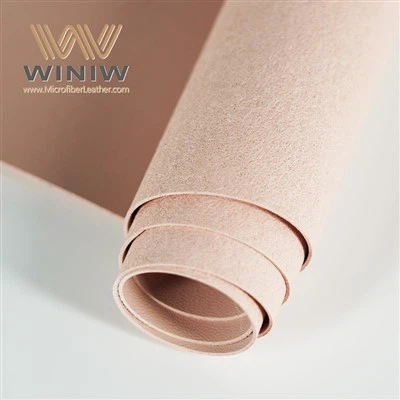
If you’re ready to discuss your next custom eco leather project and learn more about our material options, coating specifications, or pricing, we’d love to hear from you. We’re here to answer all your questions, from scratch resistance to production timelines, and help you create something that’s exactly what you’re looking for.
PU Microfiber Leather References
ASTM D4060-19, Standard Test Method for Abrasion Resistance of Organic Coatings by the Taber Abraser
Piñatex Official Technical Specifications, 2023
Mylo Material Performance Data, Bolt Threads, 2022
Vegea Sustainable Leather Alternatives: Durability Testing Report, 2021
Journal of Cleaner Production, Volume 287, 2021: “Comparative Life Cycle Assessment of Pineapple Leaf Fiber Leather vs. Traditional Cowhide Leather”
Winiw International Co., Ltd.
Winiw International Co., Ltd. is one of the leading custom eco leather manufacturers and suppliers in China. We warmly welcome you to wholesale high-grade custom eco leather made in China here from our factory. All products are with high quality and competitive price.
Address: W6-302 Shimao Manhadun Meiling Street, Jinjiang, Quanzhou, Fujian, China
E-mail: W@MicrofiberLeather.com
WebSite: https://www.winiwmicrofiber.com/
