If you’ve ever spent a full 10-hour workday hunched over a desk, watching your shoulders creep up toward your ears and your wrists ache so bad you can barely lift your coffee mug at the end of the day, you’ve felt the opposite of good ergonomics. I’ve been an armrest supplier for 12 years, and I’ve talked to thousands of office managers, remote workers, and equipment designers who brush armrests off as a “minor detail”—until that detail starts costing them in lost productivity, employee sick days, or even costly office equipment repairs. The truth is, armrests aren’t just a padded afterthought on a chair; they’re one of the most critical pieces of equipment for supporting upper body health, and their design can make or break a workday. Let’s break down what ergonomic armrest design actually is, why it matters more than you think, and what to look for when you’re choosing armrests for your space. Armrest

First, let’s ground this in basic human anatomy, because ergonomics is ultimately about fitting work tools to the way real people move, not the other way around. The part of your upper body that armrests interact with most is your shoulders, elbows, and wrists—three areas that take a ton of repetitive strain when you’re typing, using a mouse, or even scrolling on a laptop. When you sit at a desk with no arm support, your elbows hang down at a much sharper angle than they should, and your shoulders rise to compensate for the lack of a place to rest your arms. That constant tension in the trapezius muscles (the big muscles that run from the base of your neck to your shoulders) is what leads to that dull, throbbing neck and shoulder pain that so many office workers complain about. The goal of ergonomic armrest design is to eliminate that tension by keeping your upper body in a neutral, relaxed position—no hunching, no strained muscles, no awkward angles.
So what does that look like in practice? Let’s start with height adjustability, because this is the non-negotiable baseline for good armrest design. I see too many chairs (and too many aftermarket armrests) that are fixed at a single height, and that’s a huge mistake. For someone who’s 5’2”, an armrest set at 9 inches from the seat pan is perfect; for someone 6’2”, that same 9-inch height will force their elbows to bend at an awkward 90-degree angle, pulling their shoulders up and causing strain. The ideal adjustable armrests let you tweak height in small, incremental increments—usually between 6 and 11 inches from the chair seat—to match the unique height of each user. It should take less than 10 seconds to adjust, too; no one wants to fumble with a complicated lever mid-workflow, especially if multiple people are sharing a desk or chair throughout the day.
Next, there’s the angle of the armrest top. I’ve seen a lot of armrests that are flat, and while that’s fine for resting your entire arm for a minute or two, it’s not ideal for typing or mousing. When you’re working at a desk, your forearm should rest on a slight downward angle, matching the angle of your keyboard or mouse pad, so your wrist stays straight. If your armrest is flat, your wrist will bend upward as you type, putting pressure on the median nerve in your wrist—one of the leading causes of carpal tunnel syndrome. Good ergonomic armrests have a pivot feature that lets you adjust the top surface angle, usually between 0 and 15 degrees, so it aligns with whatever you’re working on. Some higher-end designs even have a slight concave curve that fits the shape of your forearm, distributing weight evenly instead of putting pressure on a single point.
Width is another element that’s often overlooked, but it makes a huge difference in comfort and functionality. Too narrow, and the armrest will only support your elbow, not your entire forearm, leaving your upper arm hanging and causing shoulder strain. Too wide, and it will get in the way of your desk, your keyboard tray, or even the armrest of the desk next to it in an open office. The sweet spot for ergonomic armrest width is usually between 1.5 and 3 inches, with plenty of room to adjust horizontally too. Horizontal adjustability is key for people who sit close to their desk (like if you’re using a small laptop on a side table) or for shared workstations where two people might be using the same space. You should be able to slide the armrest left or right by 2 to 4 inches without it wiggling or feeling unstable.
Then there’s material and padding, which are about more than just feeling soft—they’re about function too. Cheap armrests use hard, thin plastic that digs into your forearm after 15 minutes, especially if you’re resting your weight on them while leaning back in your chair. Good ergonomic armrests use high-density foam padding, usually 1 to 2 inches thick, covered in a breathable, durable fabric (like mesh or vinyl) that doesn’t stick to your arms in warm weather. The padding shouldn’t be too soft, though; if it compresses completely when you put your weight on it, you’ll end up with the same strain as a hard armrest. It’s a fine balance, and one that we’ve spent years testing with our own products—we work with physical therapists to adjust foam density so it provides support without bottoming out.
Wait, but what about armrests for different types of workspaces? A lot of people think all ergonomic armrests are the same, but they’re not. An armrest for a standing desk is completely different from one for a traditional office chair, or even an armrest for a classroom chair or a gaming setup. For standing desks, for example, armrests need to be adjustable vertically to match when you’re sitting and when you’re standing, and they should be able to fold out of the way completely when you’re standing up so you don’t bump into them. For gaming chairs, armrests might need extra horizontal adjustment to support players who lean side to side, or even the ability to adjust to a full 90 degrees so a player can rest their entire arm while taking a break. For industrial workstations, armrests need to be durable enough to handle heavy use, resistant to spills or chemicals, and easy to clean—no frills, just solid support for workers who are on their feet doing repetitive tasks all day.
I want to address a common myth here: many people think ergonomic armrests are only for people with existing pain, or for people who sit at desks all day. But that’s not true. A 2021 study from the International Journal of Industrial Ergonomics found that even people with no upper body pain who use properly designed armrests have 18% less muscle tension in their shoulders after an 8-hour workday, and 12% higher productivity because they’re less distracted by discomfort. Think about it: if you’re not constantly shifting in your chair to get comfortable, or rubbing your shoulders, you can focus on the task at hand. For employers, that means less employee turnover, fewer workers’ comp claims for repetitive strain injuries, and a more positive work environment. For remote workers, it means the ability to work comfortably from home without investing in a whole new desk and chair set—often, aftermarket ergonomic armrests can be added to your existing chair for a fraction of the cost of a full office chair upgrade.
Over the years, I’ve heard from so many customers who bought cheap, generic armrests online and were disappointed. They’d show up, they’d be too high, too narrow, or the padding would wear out in six months. That’s why, as an armrest supplier, I’ve made it my mission to build products that meet real ergonomic standards, not just what looks good on a spec sheet. We test every design with real people—from 5’0” administrative assistants to 6’4” software engineers—to make sure the adjustability works for a wide range of body types, not just the average. We also work with occupational therapists to ensure our armrests meet the guidelines set by the Occupational Safety and Health Administration (OSHA) and the American National Standards Institute (ANSI), so you can trust that what you’re buying is actually designed to support health, not just marketed as ergonomic.
Let’s talk about how to tell if your current armrests (or armchair) have bad ergonomic design, because that’s the first step to making a change. If you answer “yes” to any of these questions, it’s time to upgrade: Do your shoulders feel tense or elevated after an hour of sitting? Do your elbows hang down when you rest them on the armrest, or do you have to hunch forward to reach the desk? Do you have to adjust your armrest multiple times a day because it doesn’t fit your work or your position? Are your armrests fixed, with no way to adjust height, angle, or width? If so, you’re probably dealing with armrest design that’s causing unnecessary strain, and it’s likely impacting your comfort and productivity.
I’ve seen too many companies cut corners on office furniture to save money, only to end up paying more in the long run when employees call out sick for neck or shoulder pain, or when equipment gets damaged from workers adjusting it awkwardly. Investing in good ergonomic armrests is one of the most cost-effective upgrades you can make to your workspace. A set of high-quality ergonomic armrests costs a fraction of a new office chair, and they can be swapped between chairs or moved from your home office to your commercial office as your needs change.
If you’re in the market for ergonomic armrests, whether for a small home setup or a large commercial office, the most important thing is to prioritize adjustability and fit for your specific needs. Don’t settle for armrests that only adjust height—look for models that offer angle and horizontal adjustability too, because those small features make the biggest difference in comfort. Avoid cheap materials that will wear out quickly, and always check that the product meets recognized ergonomic standards.
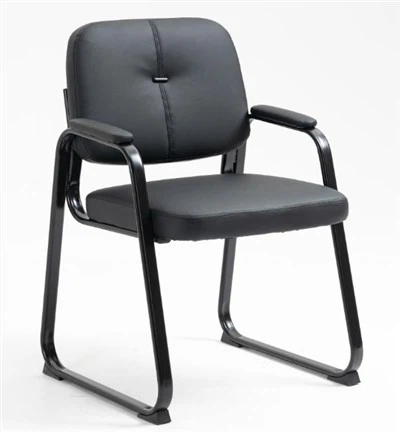
At the end of the day, ergonomic armrest design isn’t about perfection—it’s about supporting the way people actually work. It’s about giving you a place to rest your arms so you can focus on your work, not on your pain. For over a decade, I’ve watched our products help thousands of people work more comfortably, and that’s why I’m passionate about this work. If you’re ready to upgrade your workspace with ergonomic armrests, or if you have questions about what design is right for your needs, we’re here to help. Our team can work with you to find the perfect armrests for your chairs, your workspace, and your budget, whether you’re outfitting a single home desk or a 500-person office. We believe good ergonomics shouldn’t be a luxury—it should be a standard for every workspace, and we’re here to make that happen.
Wood Frame Bar Stool References
Occupational Safety and Health Administration. (2023). Ergonomics for Desk Workspaces. U.S. Department of Labor.
International Journal of Industrial Ergonomics. (2021). The Impact of Adjustable Armrest Design on Upper Body Muscle Tension in Office Workers. Elsevier.
American National Standards Institute/Business and Institutional Furniture Manufacturers Association. (2020). Ergonomic Requirements for Office Furniture. ANSI/BIFMA X5.1.
Zhejiang Zhenxing Furniture Technology Co., Ltd.
Zhejiang Zhenxing Furniture Technology Co., Ltd. is known as one of the most professional armrest manufacturers and suppliers in China. Our factory offers high quality armrest made in China with competitive price. Welcome to contact us for wholesale service.
Address: 1905#, Building 1, Financial Center Building, No. 61th South Of Fuyu Road, Lingfeng Street, Dipu town, Anji Country, Zhejiang, China
E-mail: andrew@zhenxingfurniture.com
WebSite: https://www.zxtopfurniture.com/
