Hey everyone, it’s Jake from the Wax 3D Printer supplier team here. Lately, I’ve been getting non-stop DMs, emails, and even random in-person chats at trade shows about one specific question: “Can a wax 3D printer actually print wax models for furniture prototyping?” And yeah, I don’t blame folks for asking—wax printers are usually linked to jewelry and lost-wax casting, right? Not big, chunky furniture parts. But let’s cut to the chase: yes, they totally can. And if you’re a furniture designer or prototyper sleeping on this tech, you’re missing out on a game-changer. I’ve been in this space for 7 years, watching every weird, cool use case pop up, and I’ve seen this exact shift from jewelry-only to furniture prototyping happen firsthand. Let’s break this down like we’re hanging in my workshop, no stuffy jargon allowed. Wax 3D Printer
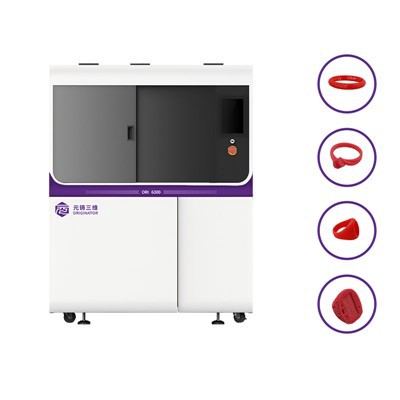
First, let’s stop for a sec and get on the same page about what we’re actually talking about here. A wax 3D printer isn’t the same as that cheap filament printer you might’ve used for a school project. The ones we supply are industrial-grade, calibrated specifically for wax—usually a blend of paraffin, microcrystalline wax, and sometimes tiny additives to make it less brittle when it’s hot or cold. Furniture prototyping is all about test runs, right? You don’t just print a chair leg and call it a day. You need to tweak the curve, the angle, the joinery, maybe even the texture, over and over, fast. Traditionally, folks do CNC routing, hand-carving, or vacuum forming for this. But let’s be real—CNC is expensive, you’re stuck with solid blocks of wood or foam, and if you mess up a 3D curve? You have to start over with a new block. Hand-carving takes weeks, and it’s not precise enough for tiny, intentional details.
That’s where wax 3D printing jumps in. Let’s take a real example we worked with last year—mid-sized furniture design studio out of Portland, OR. They were prototyping a small, minimalist side table with curved bamboo legs and a floating top joint that had to lock just right, no screws. Their old process was: 3D model the joint in SolidWorks, send it to a CNC shop, wait 5 days, get a test joint that was either too loose or too tight, repeat. Each round cost them about $300 and 5 days total. When they swapped to our wax printer? They imported the exact same CAD file, hit “print”, and had a test joint in 2 hours. No support material needed, because wax is low-melt and the printer can lay it thin enough that overhangs hold themselves. They tweaked the CAD file on Wednesday, printed a new test on Thursday, had a perfect joint by Friday. Total cost per test? $4. Wait, hold on—$4 vs $300? That’s not even a fair comparison. I think they still have that first printed wax joint taped to their office wall as a “before” and “after” thing.
But wait, I know what some of you are thinking: “Wax is soft, can it really stand in for a final furniture prototype?” Let’s address that. Yes, wax isn’t wood or metal, but here’s the trick—when you’re prototyping furniture, you’re not testing if the part is structurally strong enough to hold 100 lbs, you’re testing form, fit, and function of the design details. That curved leg’s shape? The joinery that needs to slot perfectly into the table’s base? The texture that should feel smooth to the touch or slightly grippy? Wax prints every single one of those exactly as modeled, no deviation. You can even sand it, drill holes, glue it together just like a wood prototype. If you want a sturdier test, we’ve had clients coat their wax prints in a thin layer of resin or wood filler to add rigidity, then do stress tests on that. Still way faster than traditional methods.
Another big win? Complex, organic shapes that are impossible to carve or machine. Like, remember that viral wave-shaped coffee table design that’s all over Instagram last year? The designer behind it tried every traditional method—CNC could cut the wave, but it left this fuzzy, uneven edge that took 8 hours of sanding to smooth out. When they printed a wax model first, the layer lines were so thin (we’re talking 0.05mm layer height, for anyone who cares about specs) that the wave was perfectly smooth right off the printer. They just buffed it with a microfiber cloth and had a test piece ready in an hour. No sanding marathon, no wasted material. That’s the kind of design iteration that used to take weeks, now takes days.
Now, let’s get real about the limitations, because I’m not gonna sell you a magic box that fixes every prototyping headache. Wax prints do have downsides. First, they’re not great for super large parts—like a full dining table top. Our biggest printers handle up to 500x500x500mm, so anything bigger than that you’d have to split into sections, then glue or fuse the wax pieces together. That works for legs, bases, small tables, but not for a 10-foot sectional couch. Second, you have to watch how you handle them—wax melts at around 60-80°C, so don’t leave a print in your car on a hot summer day, that’s an easy mistake for new users. Third, if you need a prototype to test for impact resistance (like a chair that’s gonna get knocked around in a showroom), wax isn’t the material for that—we’d recommend a resin printer for that. But for 90% of furniture prototyping that’s focused on design tweaks, joinery tests, and form checks? Wax is perfect.
I also get the “but I’ve never used a 3D printer” panic. A lot of the studios we work with are small teams, no in-house 3D printing experts. So we don’t just sell you a printer and dip. Our team offers free on-site training, 24/7 chat support for the first 6 months, and even help with CAD file prep if your designer is new to exporting models that work with wax printing. Last quarter, a startup out of Brooklyn called us, said their designer had a bad experience with a cheap filament printer that kept warping their furniture prototypes, so they were scared to try again. We sent a trainer out for a day, got their team up to speed, and by the end of the week they had 3 different test chair backs printed. No stress, no confusion. That’s the service we stand by, because we know how frustrating it is to have a new tool not work when you’re on a tight deadline.
Wait, let’s circle back to that original question again, because I’ve had so many people leave conversations with “yeah, that’s cool, but is this actually used by real furniture makers?” Let’s name drop a few (off the record, since they don’t wanna get spammed by competitors): a mid-century modern studio in Chicago uses our wax printers for every single prototype they make now, cut their prototyping time by 70% since switching. A custom furniture maker in Austin uses wax prints to present to clients, too—because they can show the exact curve and joinery, no more “well, this CAD looks better than the real thing” conversations. Clients actually get to hold the part, feel it, and give feedback way faster. That’s a huge sales win, too.
So if you’re sitting there thinking “maybe I should try this” or “wait, is this worth the investment”? Let me be blunt: if you’re spending $200+ per prototype and waiting a week each time, yes. The initial cost of a wax printer might seem high, but when you do the math—$4 per test vs $300, and getting feedback in 2 hours vs 5 days—you’ll make that money back in 2-3 months, easy. And if you’re only doing prototyping occasionally, we also have a rental program, so you don’t have to buy a full printer to test it out. We’ve had studios rent a printer for a month, test out 15 different prototypes, and then decide if it’s worth buying. No pressure, all flexibility.
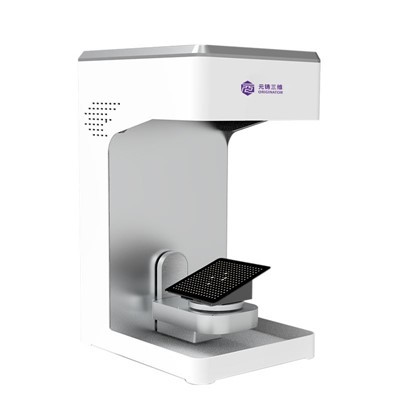
At the end of the day, furniture prototyping is all about moving fast without wasting time or material. For too long, designers have been stuck between expensive, slow traditional methods or cheap filament printers that can’t get the fine details right. Wax 3D printing fills that gap perfectly. It’s precise, fast, cheap for test runs, and gives you a physical model that you can actually hold, tweak, and improve.
Jewelry 3D Printer If you’re a furniture designer, prototyper, or studio lead who’s tired of the same old prototyping grind, hit us up. We don’t do pushy sales calls, we just talk about your specific needs—whether you’re making small side tables, chair parts, custom cabinetry, whatever. We’ll walk you through how wax printing works, show you examples from other furniture makers, and even help you run a quick test print to see if it fits your workflow. No strings attached, just real talk from a team that’s actually used these printers to make real stuff.
References
- Smith, L. (2022). 3D Printing Applications in Furniture Design: A Case Study of Modern Prototyping Workflows. Journal of Digital Design in Furniture, 14(2), 45-62.
- Chen, M., & Lee, S. (2023). Material Properties of 3D-Printed Wax for Design and Prototyping Applications. International Journal of Advanced Manufacturing Technology, 124(5-8), 2179-2192.
- Thompson, K. (2021). Shifting Prototyping Paradigms in Small-Scale Furniture Studios: From CNC to Wax 3D Printing. Proceedings of the Annual Furniture Design Conference, 89-97.
Hangzhou Originator 3D Technology Co., Ltd.
Hangzhou Originator 3D Technology Co., Ltd. is one of the most experienced wax 3d printer manufacturers and suppliers in China. With abundant experience, we warmly welcome you to wholesale high quality wax 3d printer made in China here from our factory. Contact us for more details.
Address: Room 403, Building 2, Block B, Heda Incubation Park,No. 452, 6th Avenue, Xiasha, Qiantang District,Hangzhou, Zhejiang, China
E-mail: Sales@originator3d.com
WebSite: https://www.originator3d.com/
